Jean-Pierre Jouffroy

Biography of Jean-Pierre Jouffroy

20 April 1933 (Paris) – 17 September 2018 (Arcueil)

French painter, drawer, engraver, sculptor, artistic director of periodicals, poster artist, art historian and writer.

French painter, drawer, engraver, sculptor, artistic director of periodicals, poster artist, art historian and writer.
Aged only eleven, Jean-Pierre Jouffroy discovered painting in 1944 at the Jeanne Bucher gallery, which exhibited works by César Domela, Vassili Kandinsky and Nicolas de Staël.
‘When I saw Kandinsky’s way of touching the unknowable, I was astounded, and knew immediately that this was for me, that it would be my domain, my territory’.
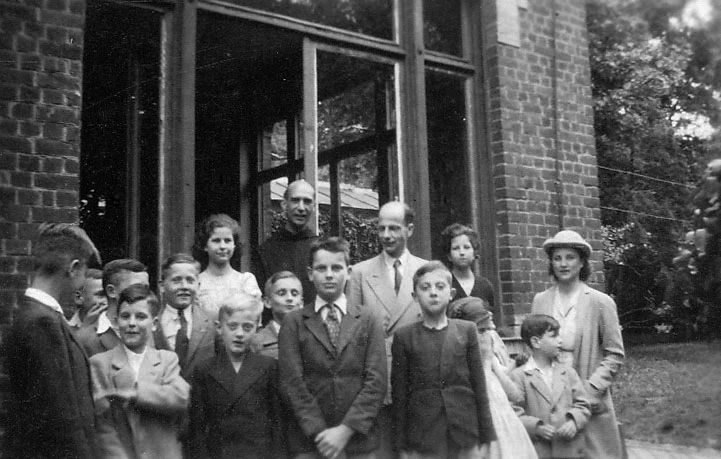
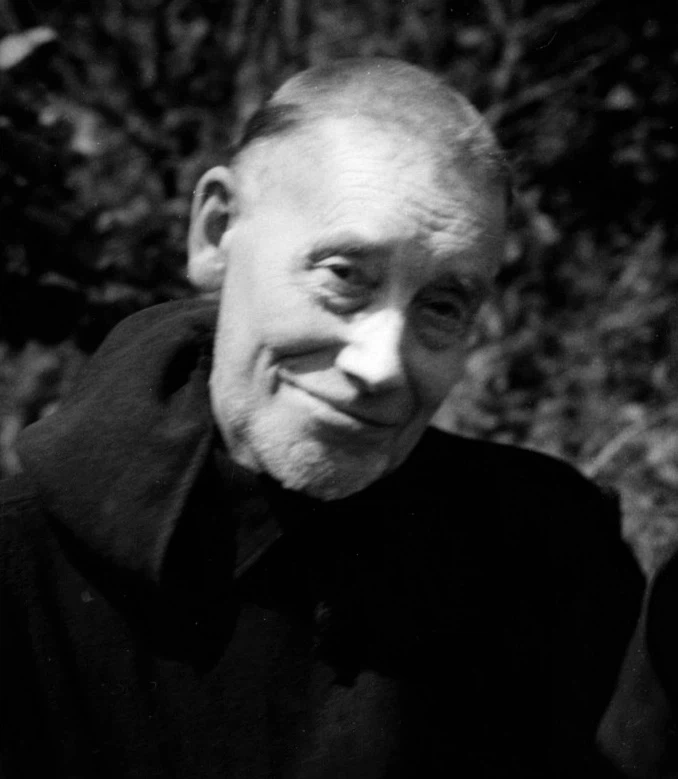
In 1945, sent to a Benedictine boarding school at La Pierre-qui-Vire in Morvan, he benefited from the teaching of one of the monks, Maurice Lavergne, who introduced him to the rudiments of drawing and painting: ‘It was there that I caught the painting bug, a place where I was unreachable’.

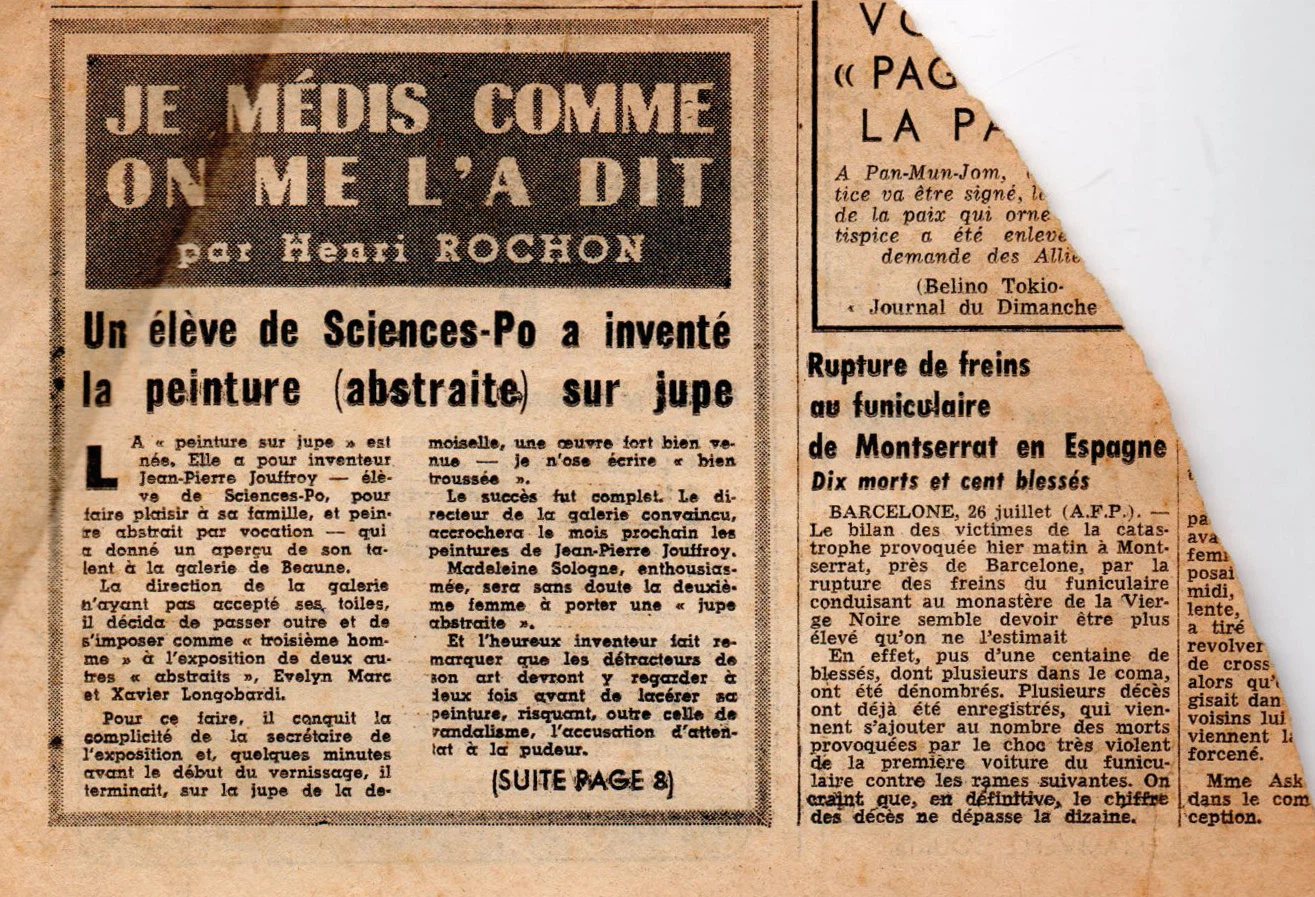
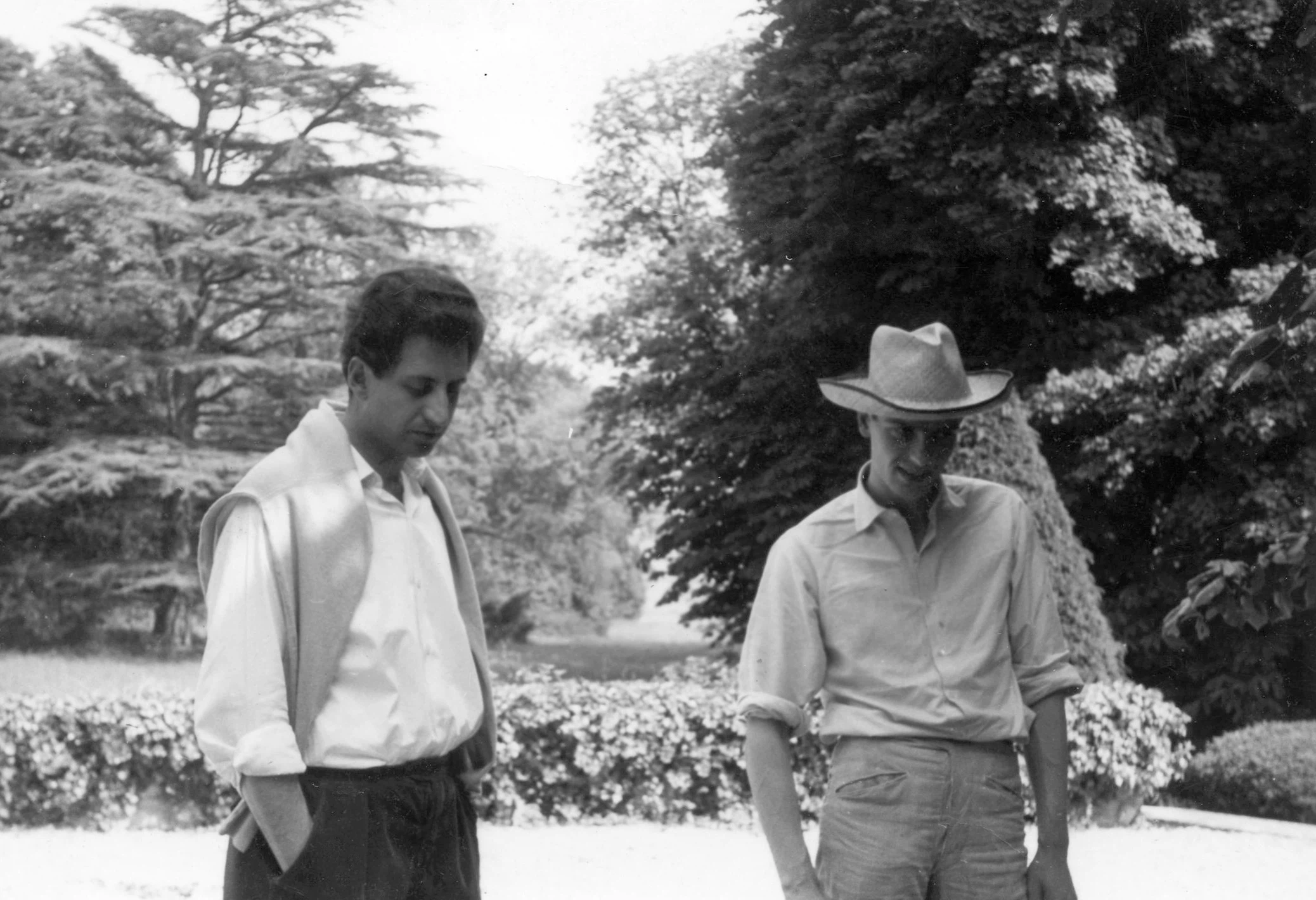
This passion never left him, and in 1950, while studying at Sciences Po, (Paris Institute of Political Studies), he sold his first painting to Alexandre Monnier (Claude Bernard’s successor as Chair of Physiology at the Sorbonne). Through this connection he met historian Pierre Francastel and painter Charles Lapique at a symposium on colour. It was during this period that he visited museums throughout Europe, studying classical painting. He met the painters who were to influence his work: Pablo Picasso, Jacques Villon, Georges Braque, Fernand Léger, Serge Poliakoff, Édouard Pignon, Jean Bazaine and Roberto Matta. He frequented the Beaune gallery run by Suzanne de Coninck. There, he met Xavier Longobardi and came across a brochure on Nicolas de Staël, whom he visited.
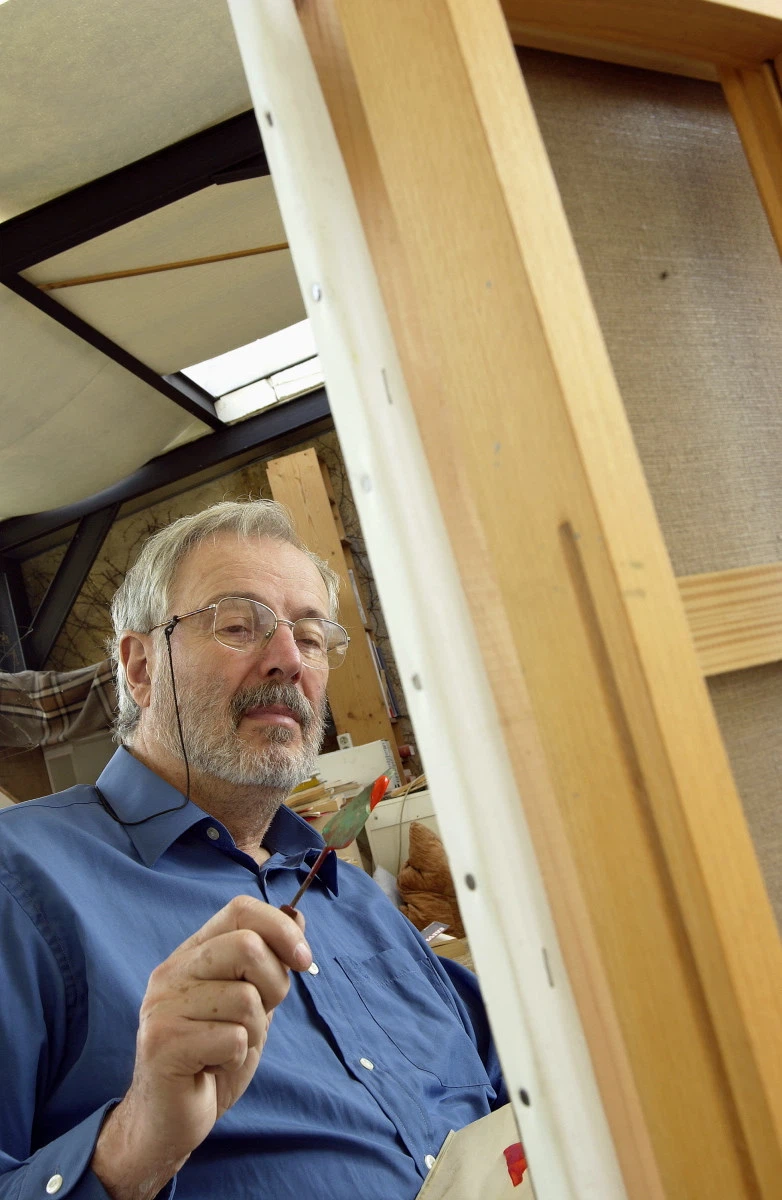
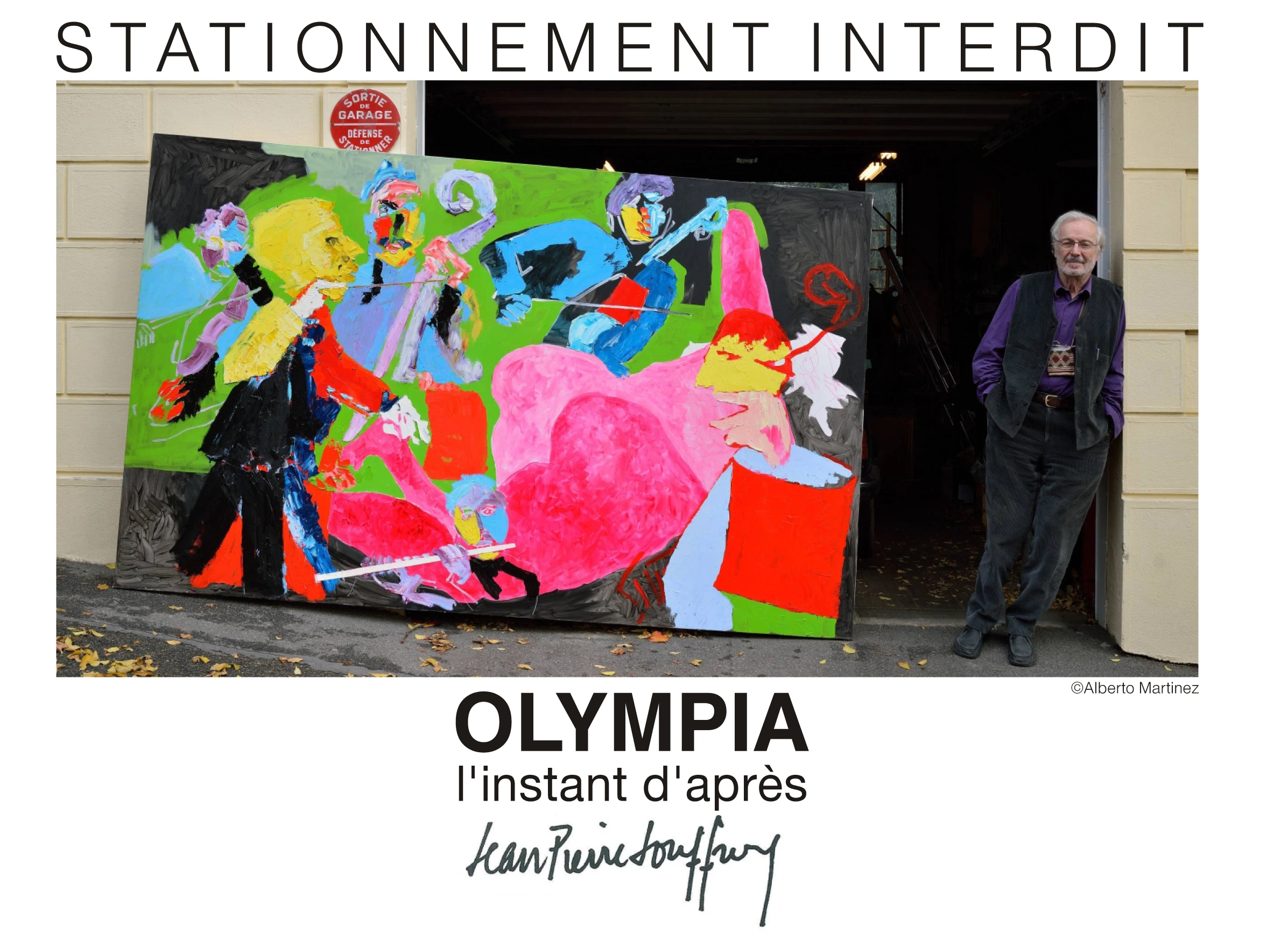
2012: Jean-Pierre Jouffroy rue Paul-Signac in Arcueil (94) with the 5th canvas
of the series ‘Olympia, l'instant d'après’. © Alberto Martinez.

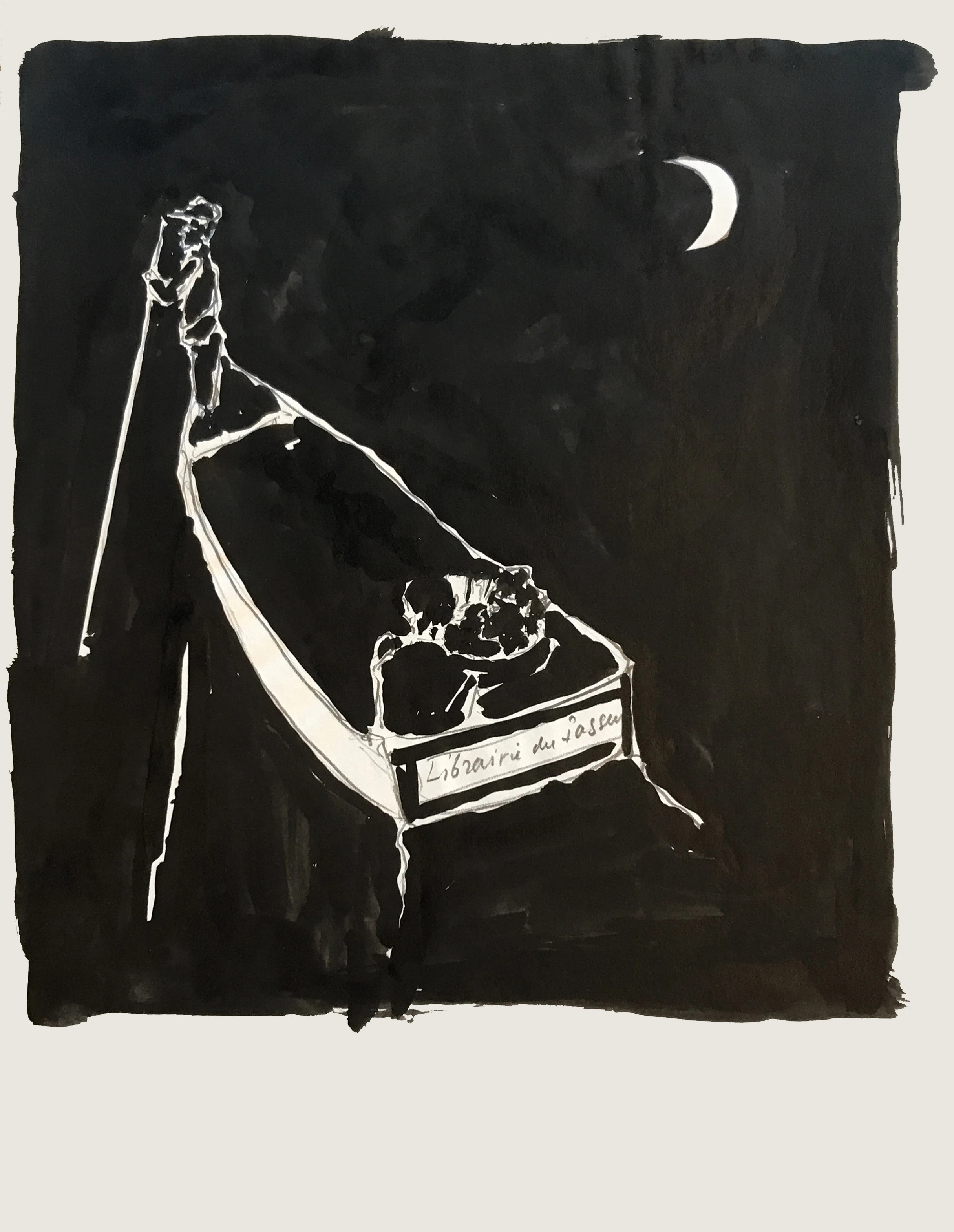
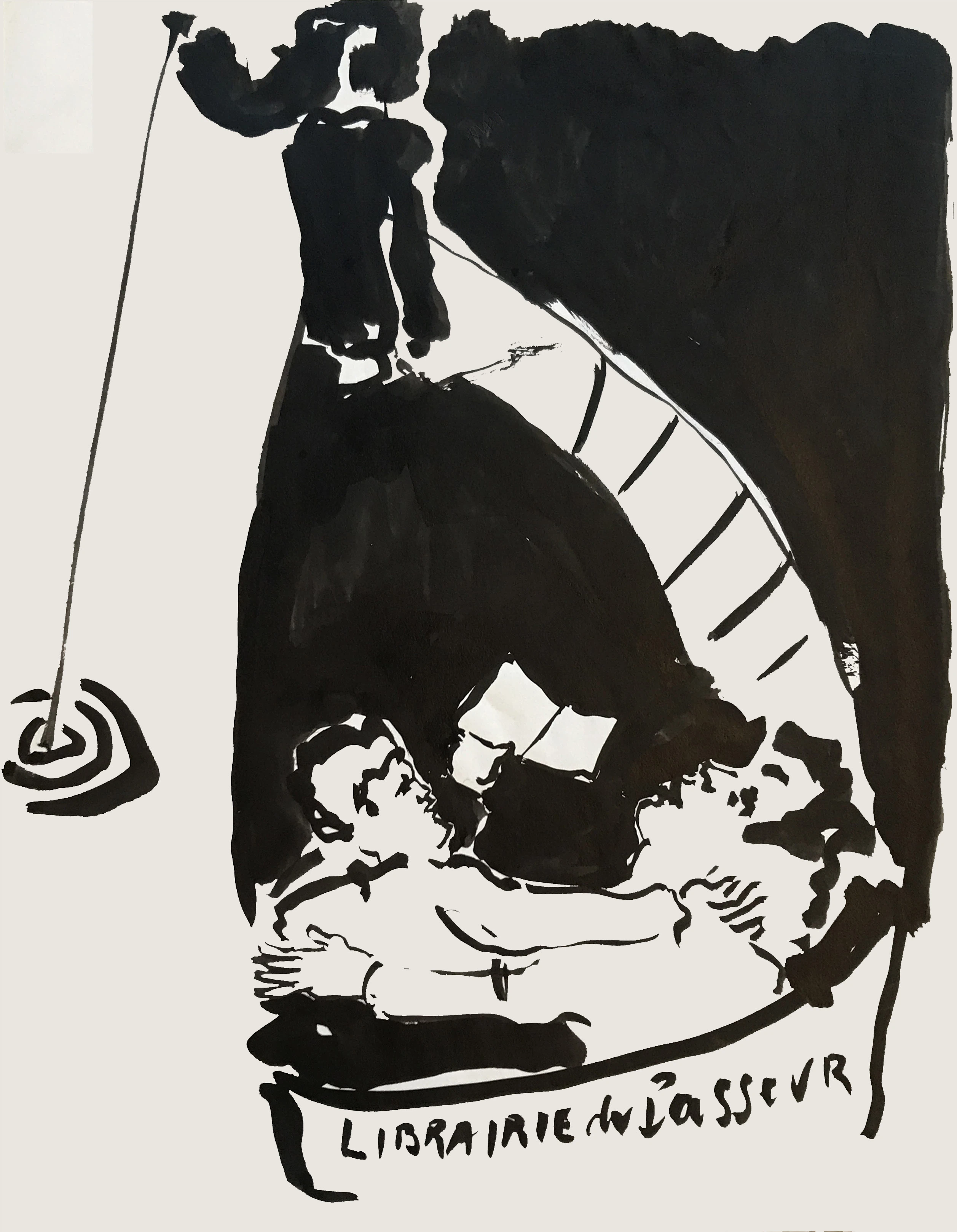
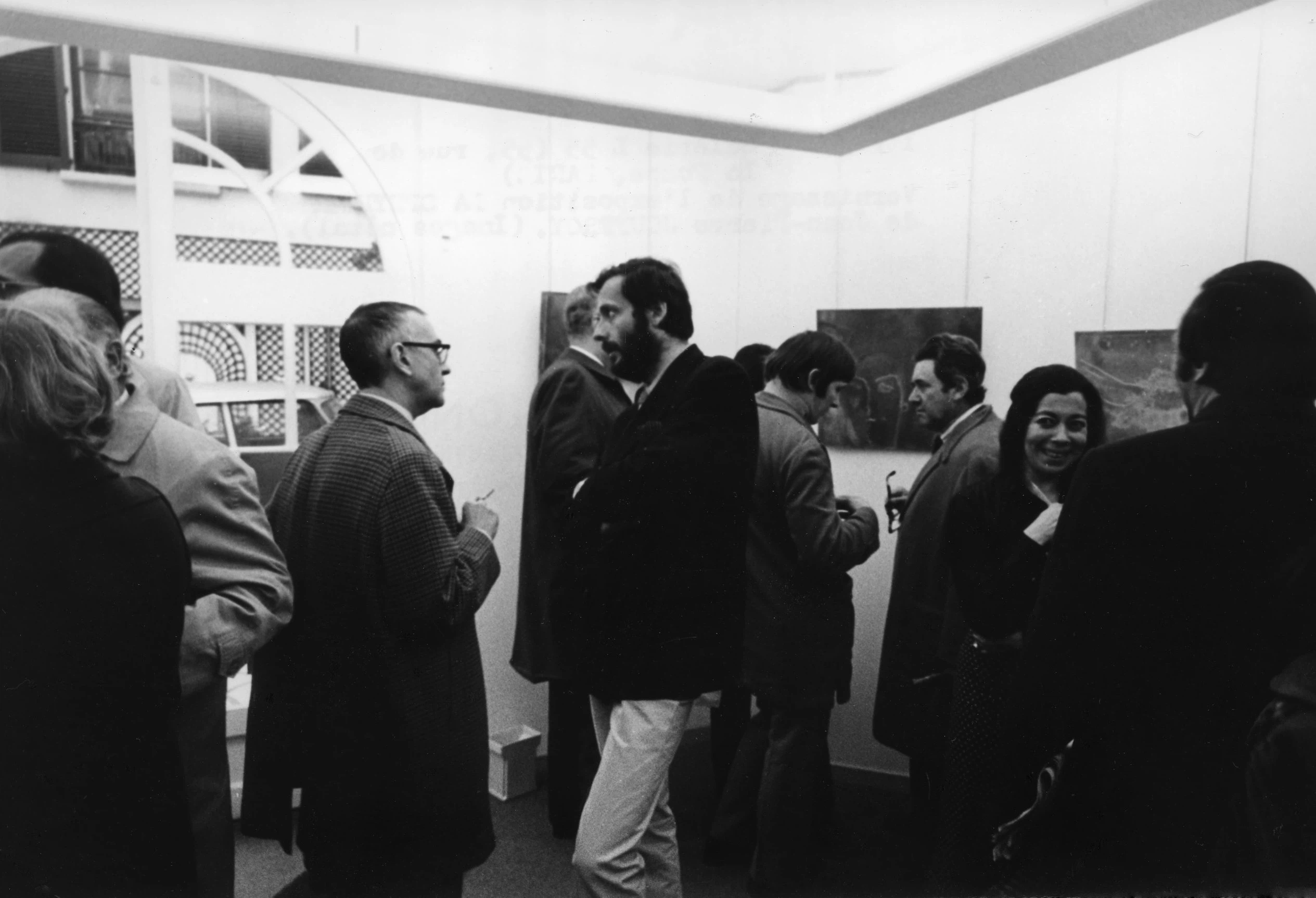
On 22 November 1954, he had his first exhibition at the Galerie du Passeur in Paris, the success of which exceeded all expectations.

This year, 1954, also marked the beginning of his political activism: with the Aurès uprising, he understood, ahead of his peers, the absurdity of France’s colonial status was in Algeria.

He expressed this opinion in one of his essays at Sciences Po ; it earned him a Fail in his oral exams and he left without a degree.

He became fully dedicated to painting.

Young painter that he was, he was deeply affected by the death of Nicolas de Staël 17 March 1955.

In June 1955, he landed his first contract with Maxime Blum, a lawyer and collector.

On 12 December 1955, he met Patricia Lambert. They married two months later and lived together ever since, founding a family of four children.

From 1955 to 1958, he painted and exhibited in a number of Parisian galleries.

In 1956, he signed a contract with André Weil and came into contact with the American collector Nathan Cummings, who would go on to buy several hundred works from him over a ten-year period.

On 1 May 1958, he was drafted into the army for two years. His opposition to the Algerian war grew all the stronger during his time in the military. He met communist activists who, like himself, were opposed to this colonial conflict. Upon completion of his military service, he painted several canvases related to the Algerian War of Independence.
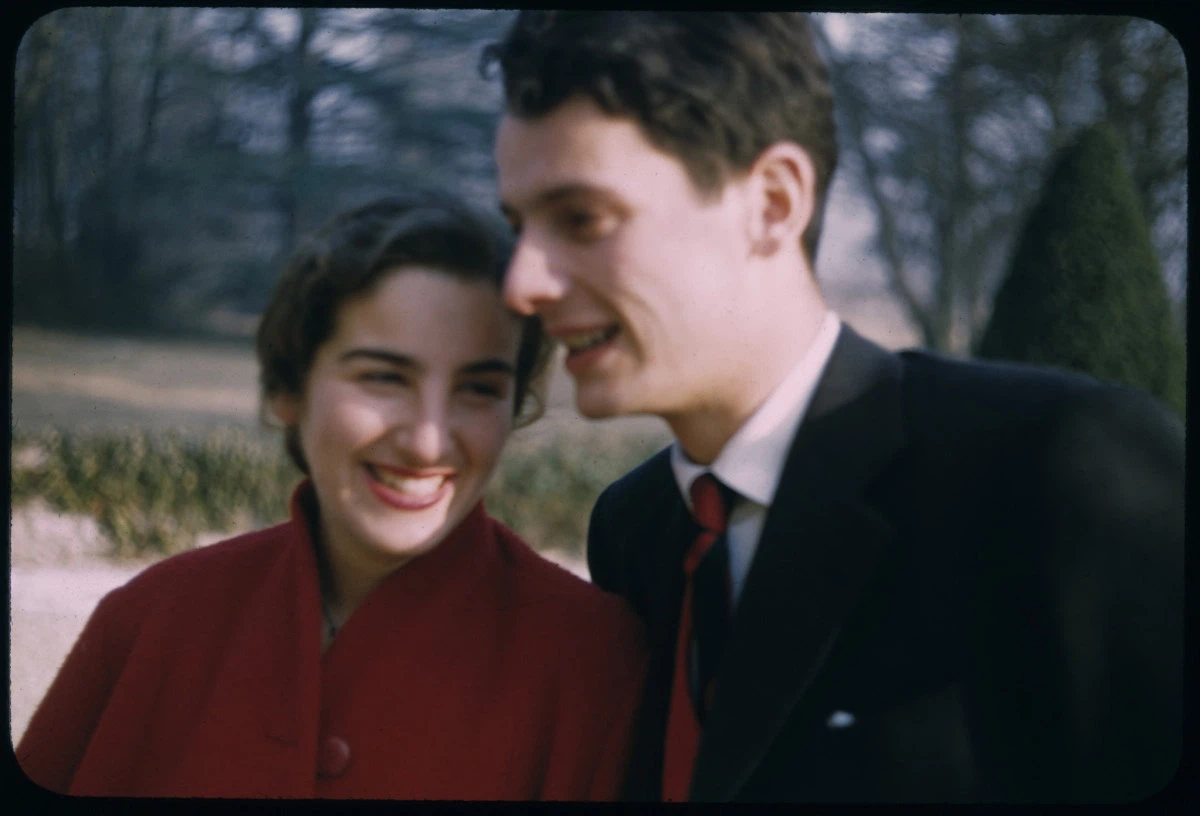
February 25, 1956: Wedding of Patricia and Jean-Pierre Jouffroy
in Saint-Nom-la-Bretèche. © Armand Panigel.
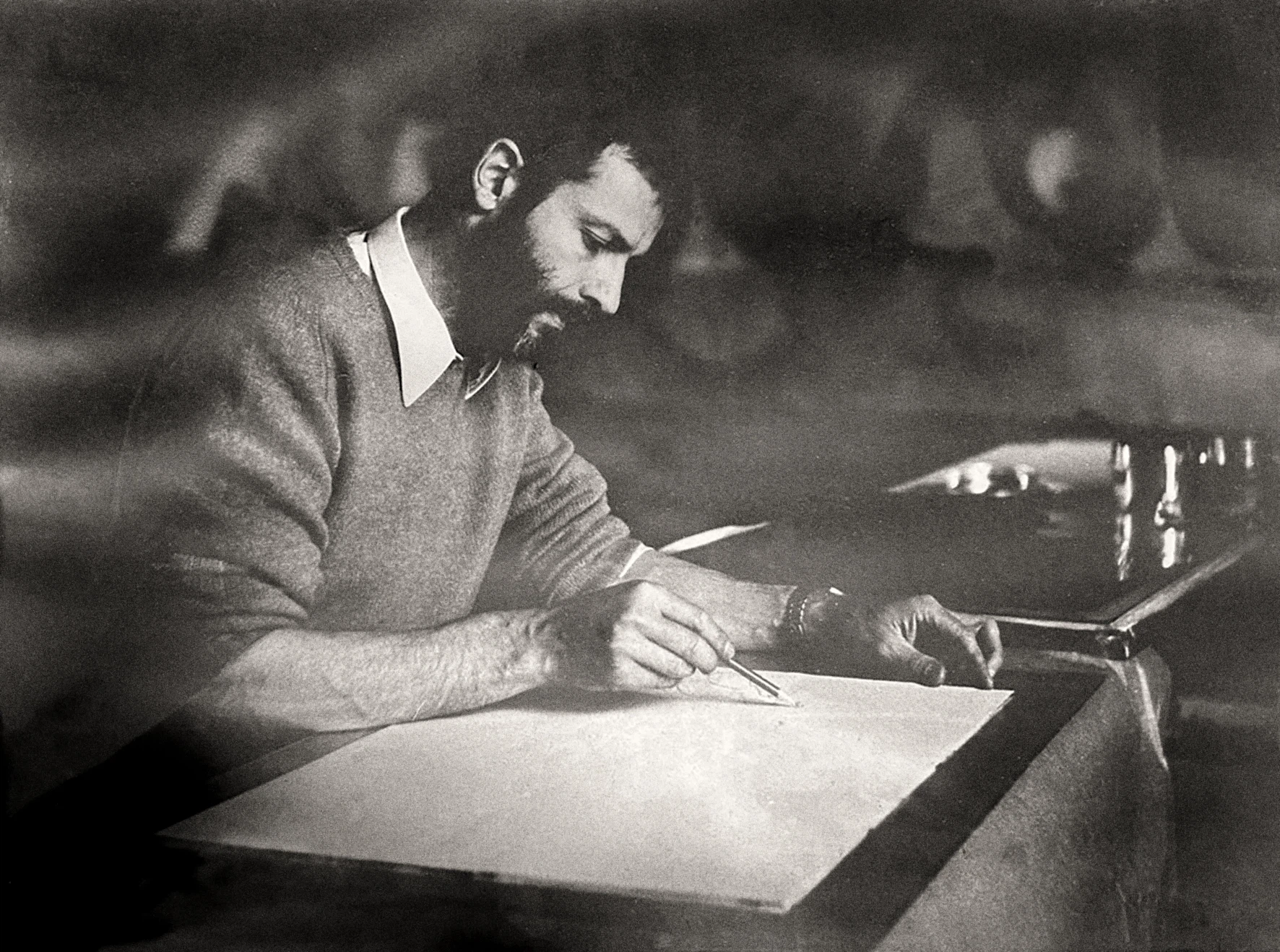
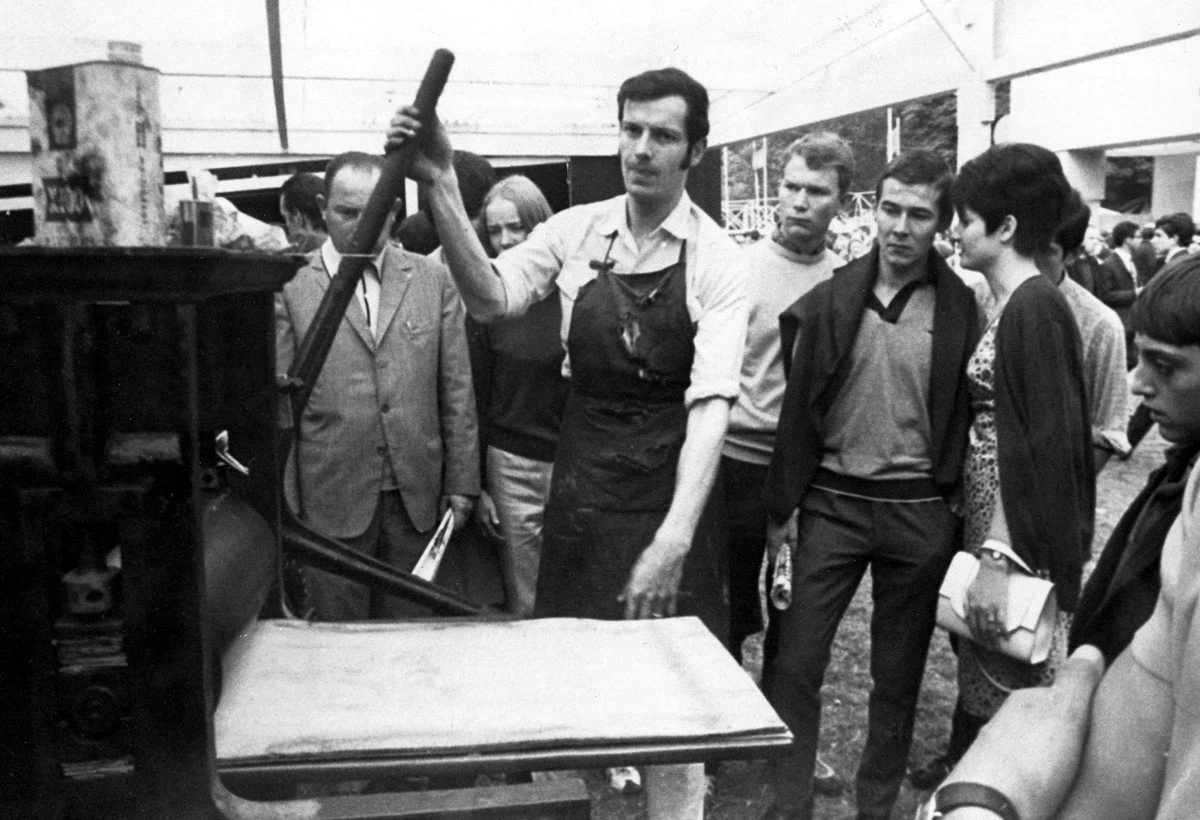
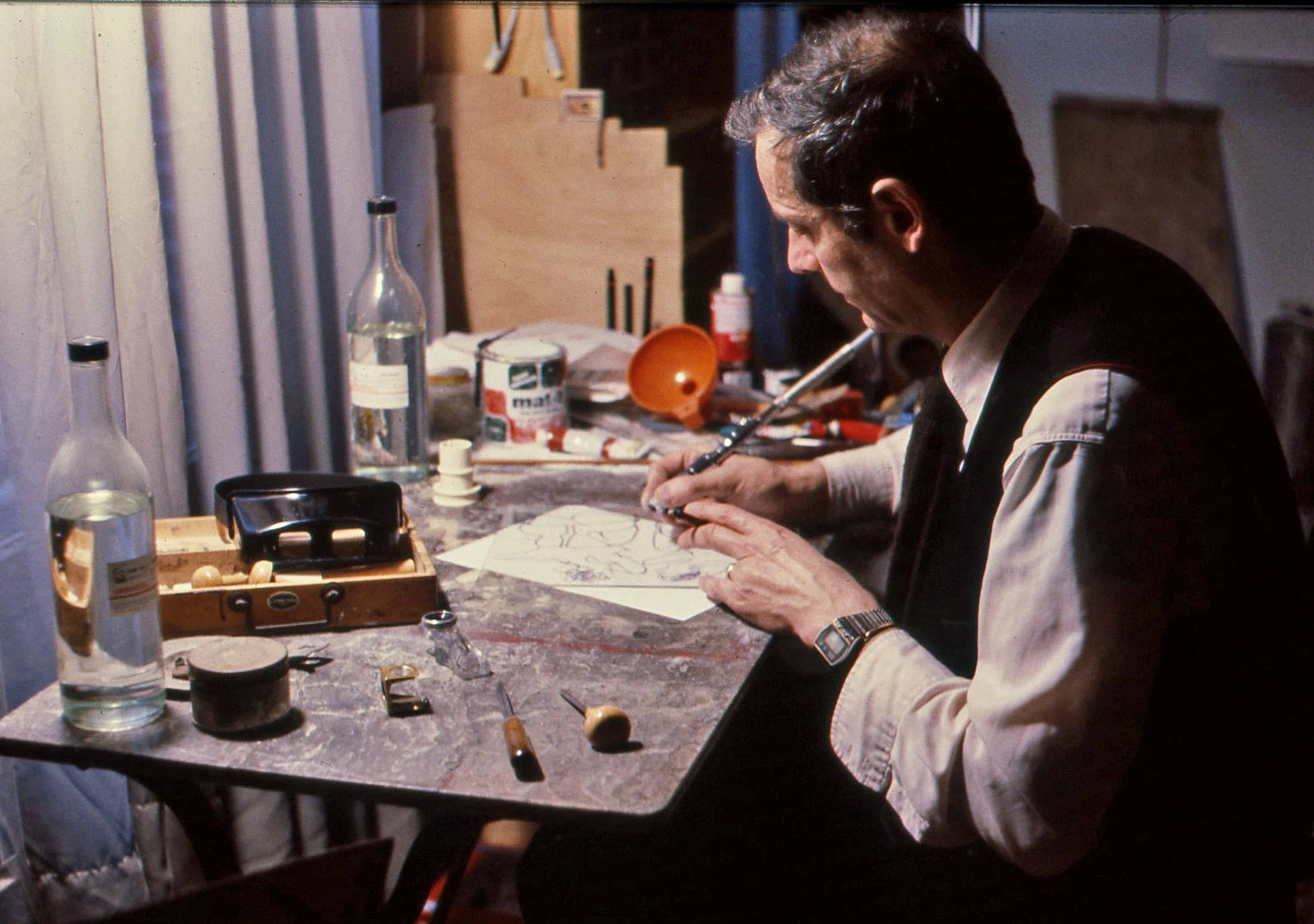
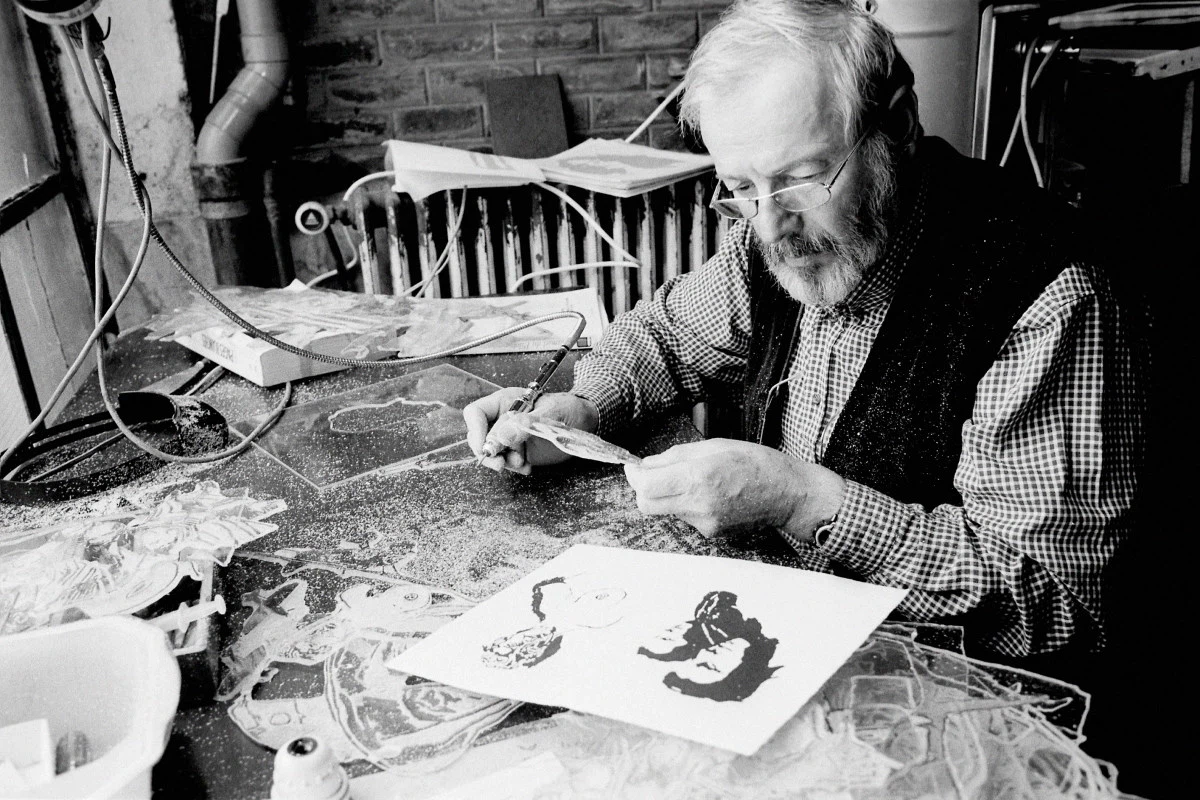
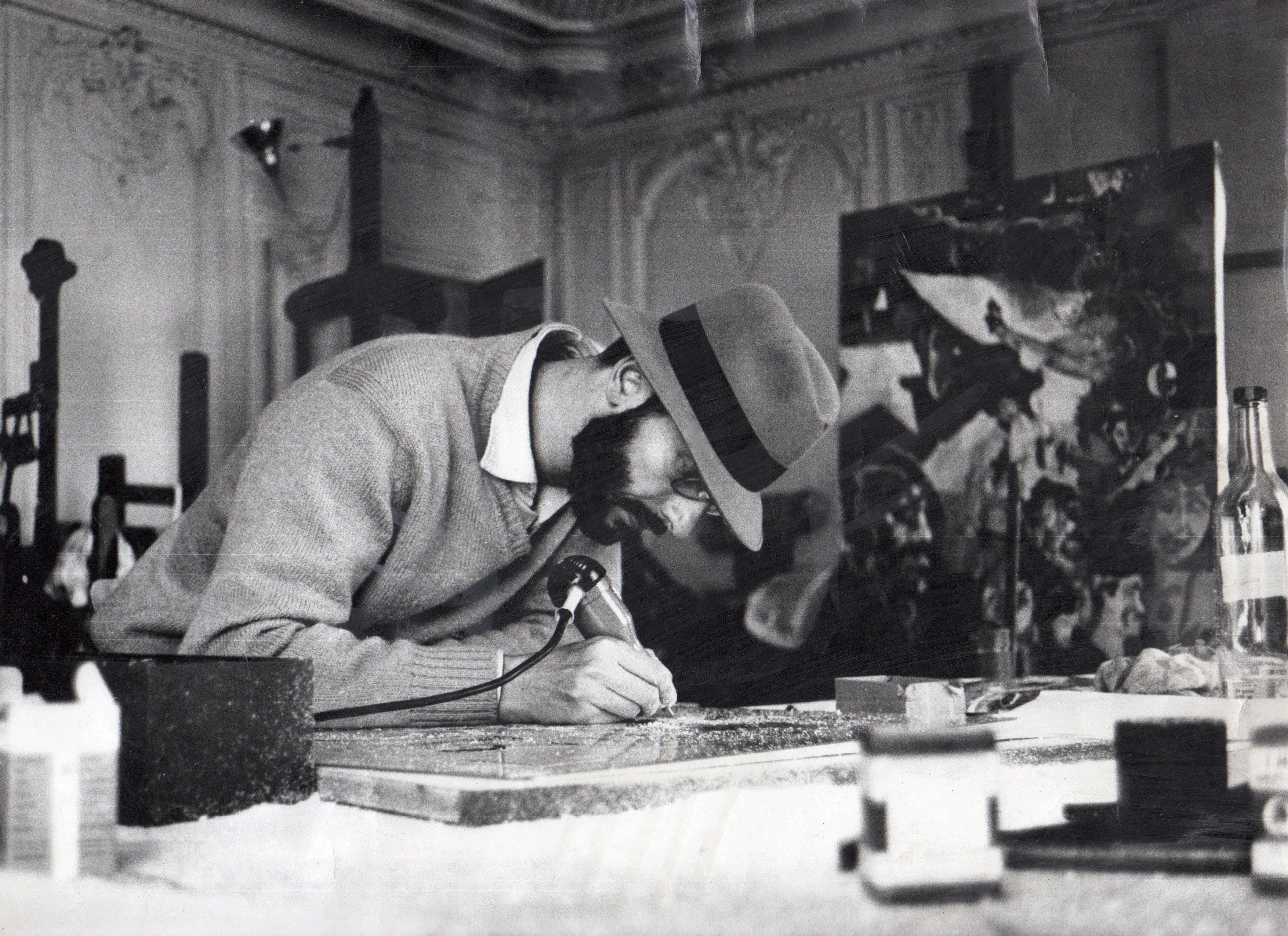
1965: Engraving on plexiglass in his workshop
on bd Malesherbes, Paris (75). R. R.

Jean-Pierre Jouffroy was very hard-working. Inspired by his predecessors, he based his work on the materials he used and the object, distancing himself from the abstract painters of the 1950s, of whom he said:

‘You can’t imagine the romantic fervour of the abstract painters in the fifties; their belief in fighting for a just cause, in self-sacrifice, in militant joy.’

Il expérimente les matières à sa disposition en peinture, en gravure et en sculpture.

He explored all the materials available to him in painting, engraving and sculpture.
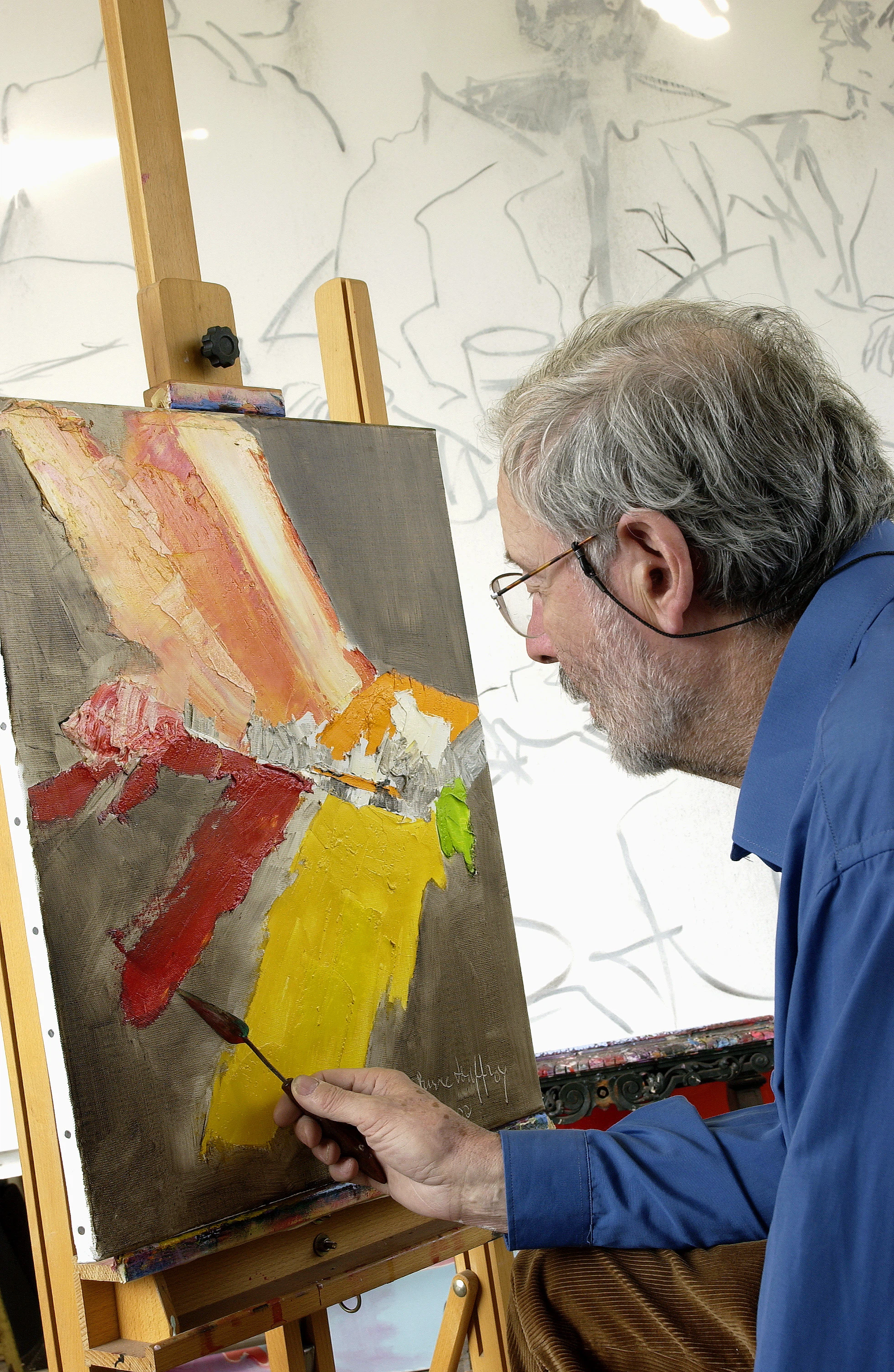
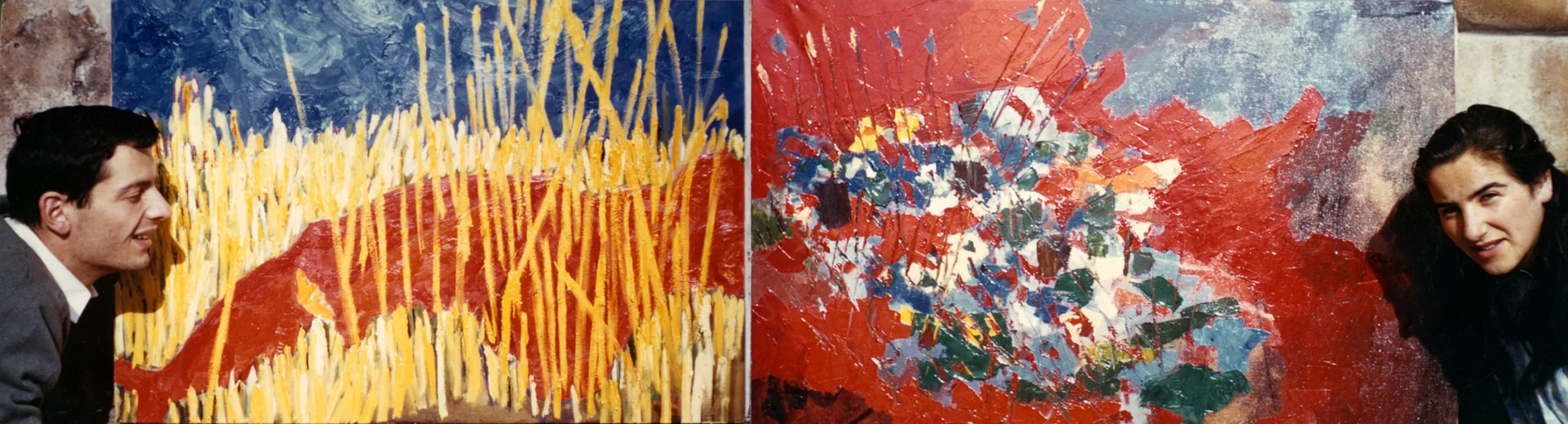
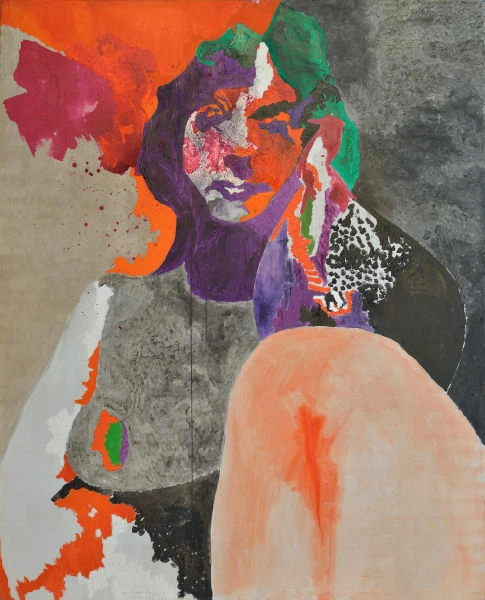
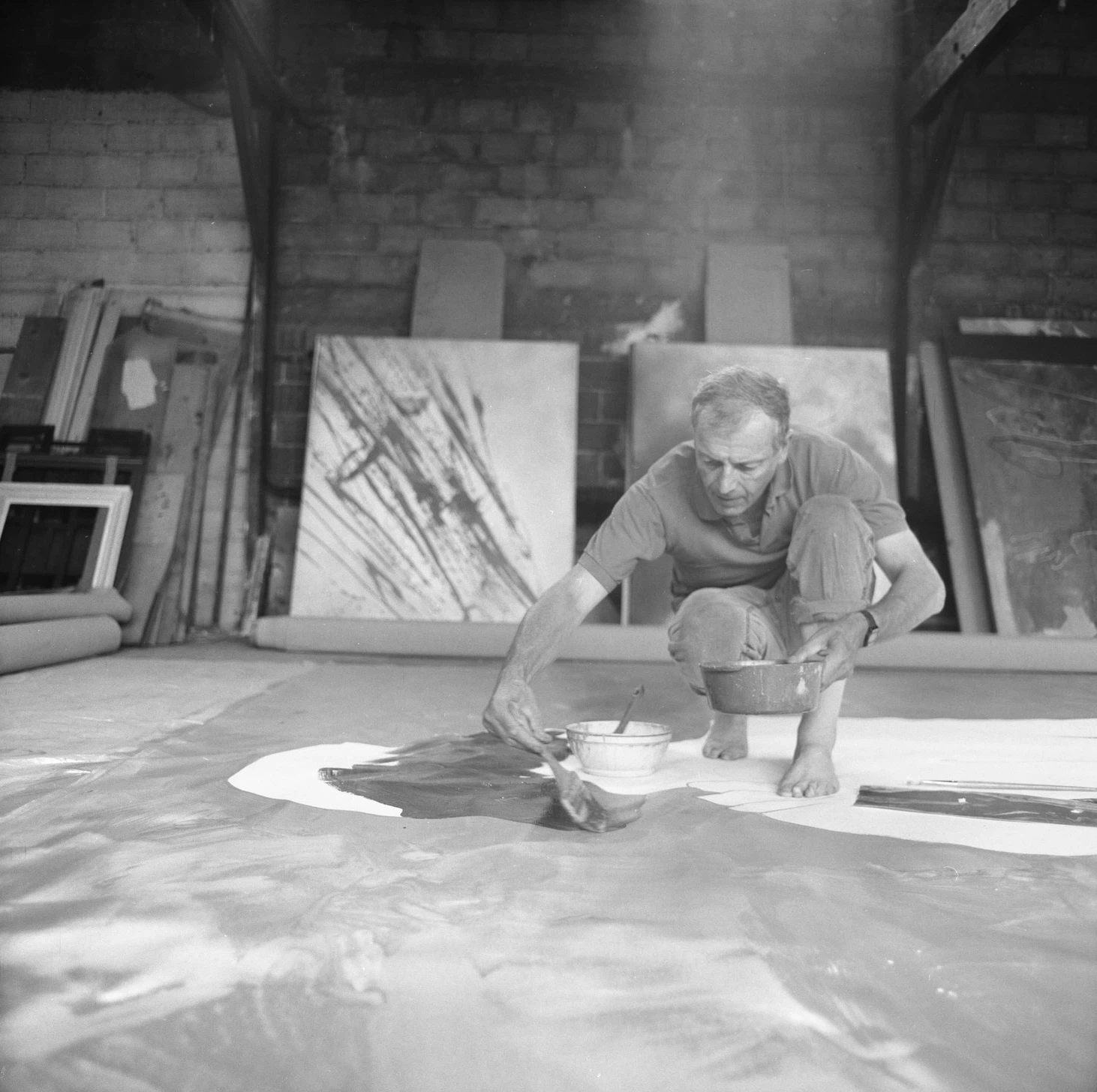
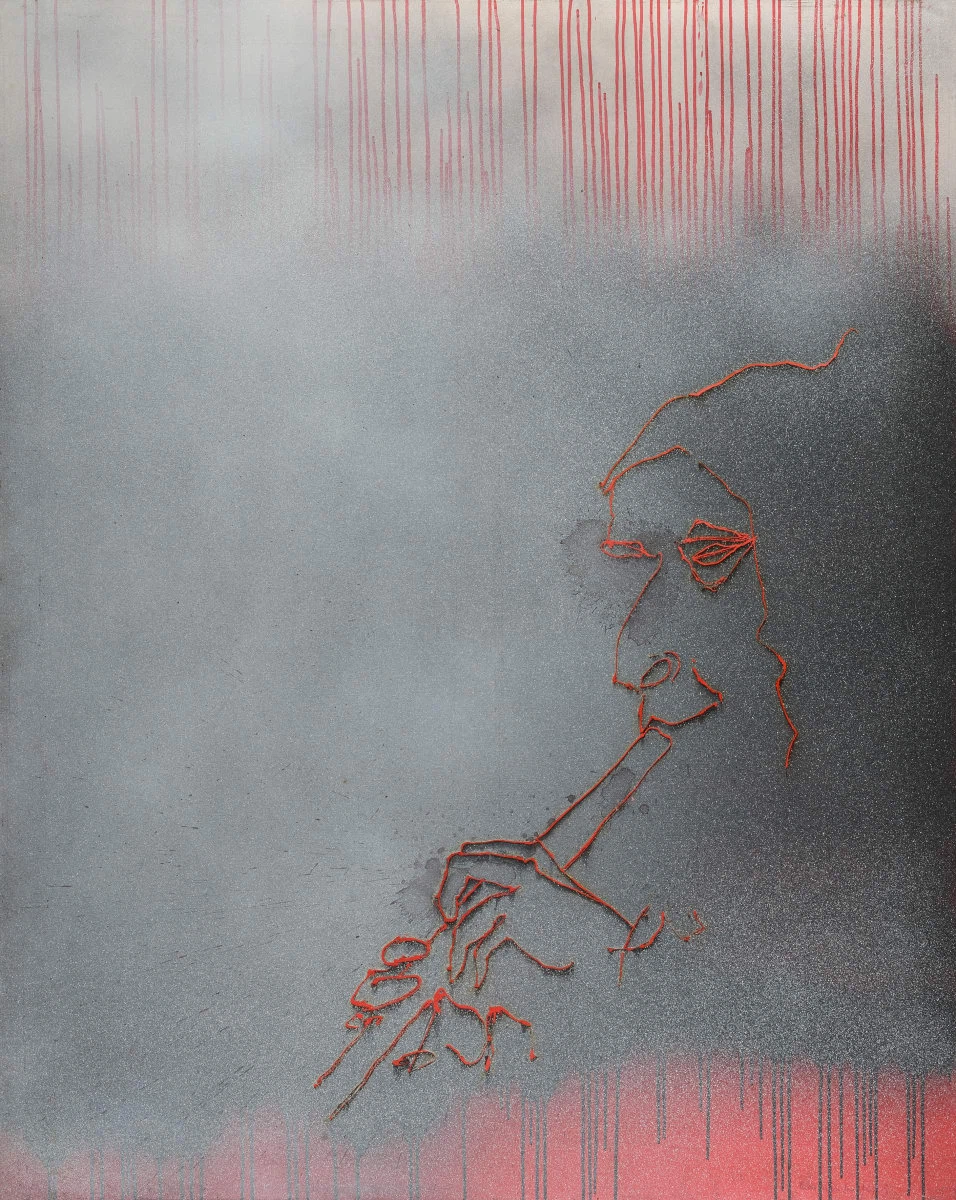
In his painting, he uses both acrylics and oils, , oil resist projection techniques as well as brushwork in the manner of Rubens, and collages. Using these diverse techniques he produced a wide variety of art: landscapes, portraits and self-portraits. For long periods his work centred on themes inspired by painting or music. Women and the body enjoyed pride of place.

Colour forcefully predominates in his paintings, conveyed by rich, vibrant materials.

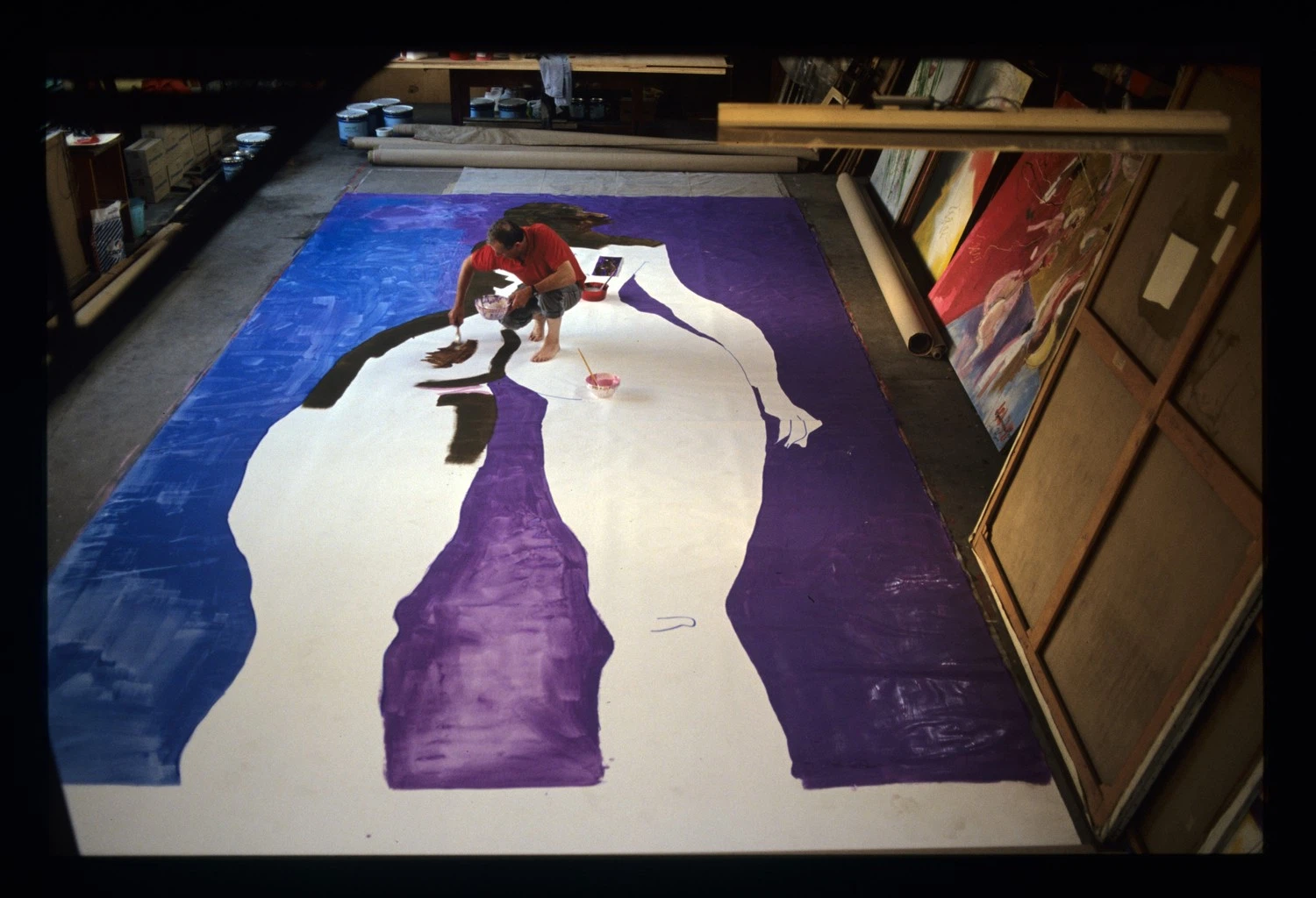
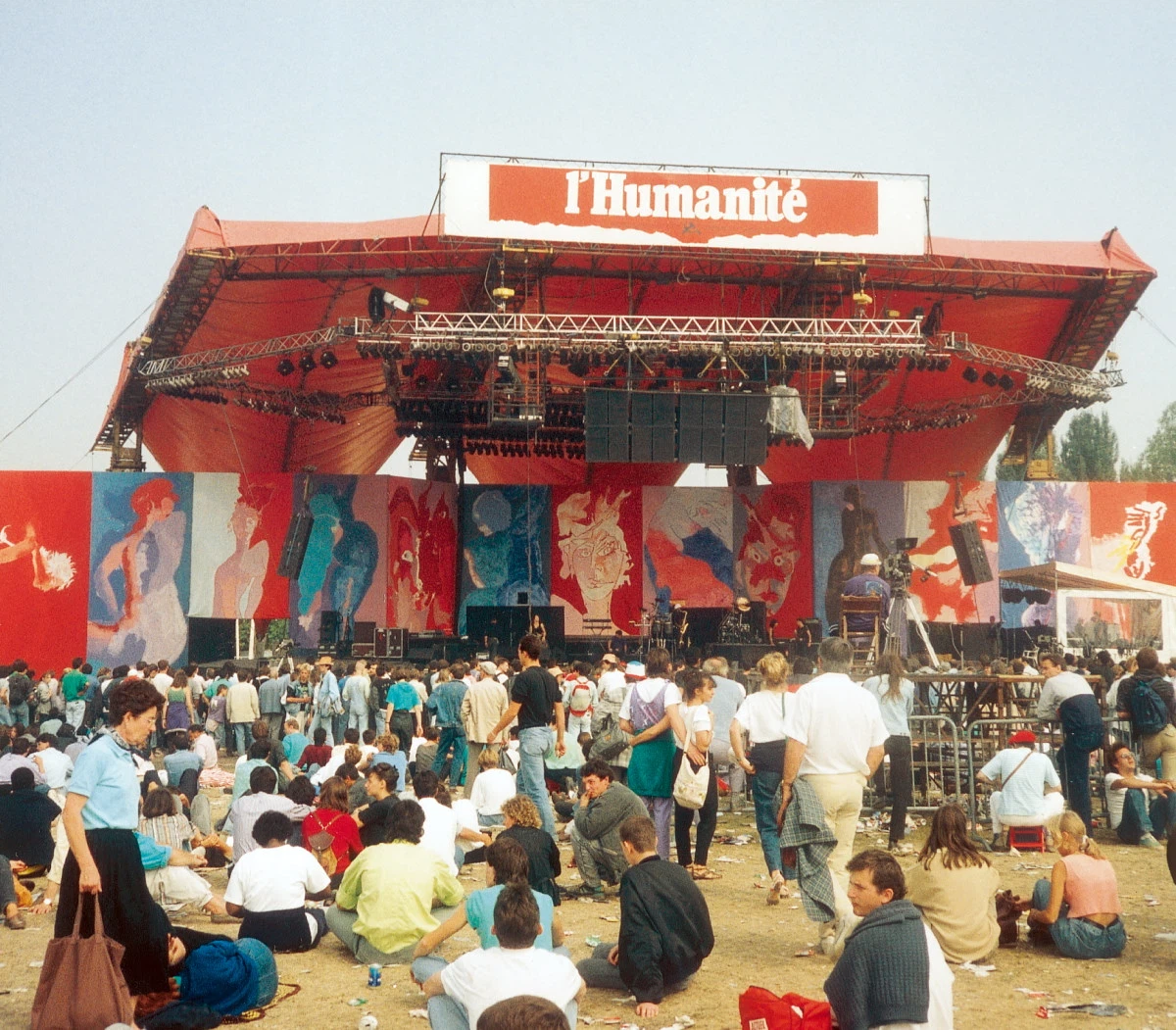
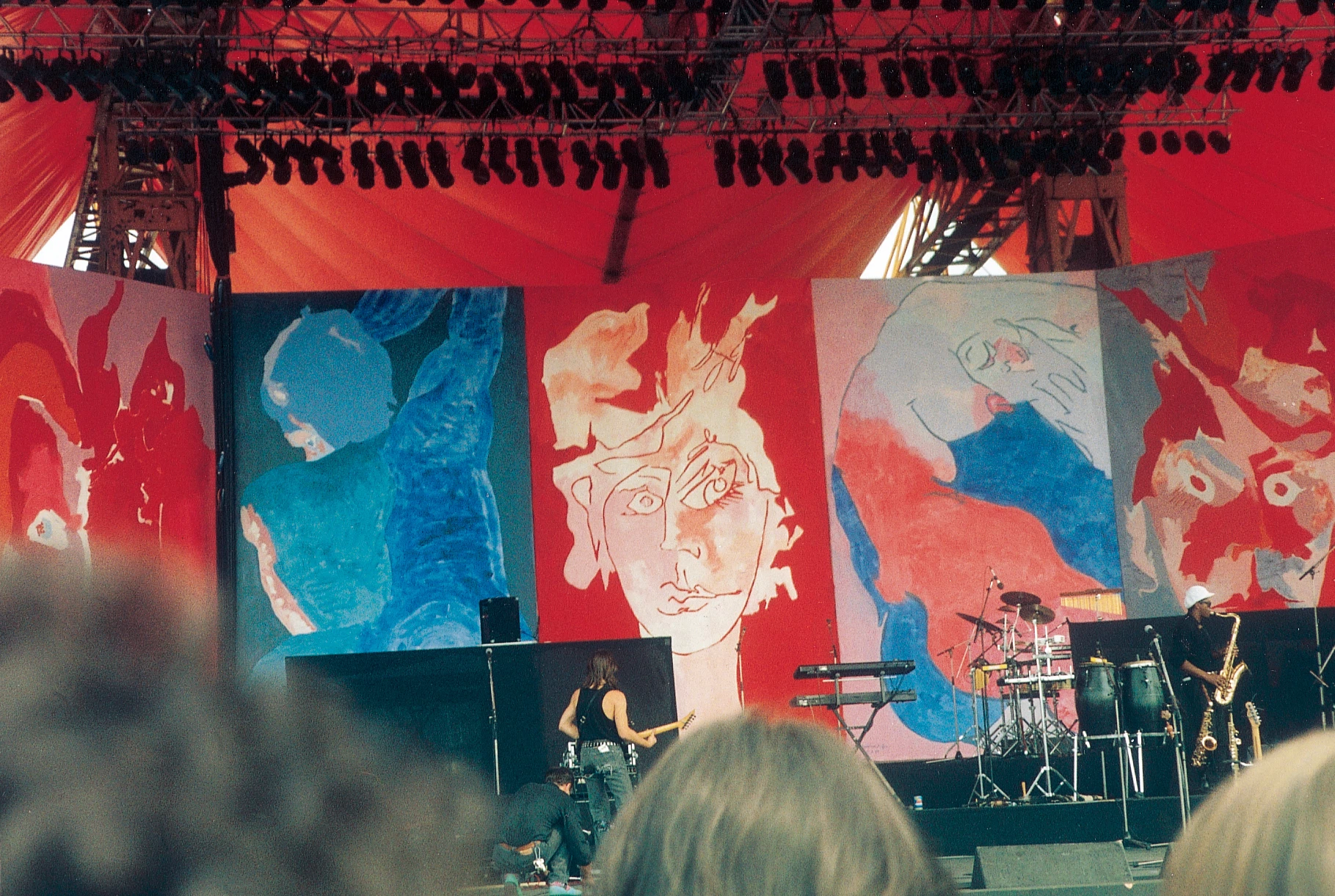
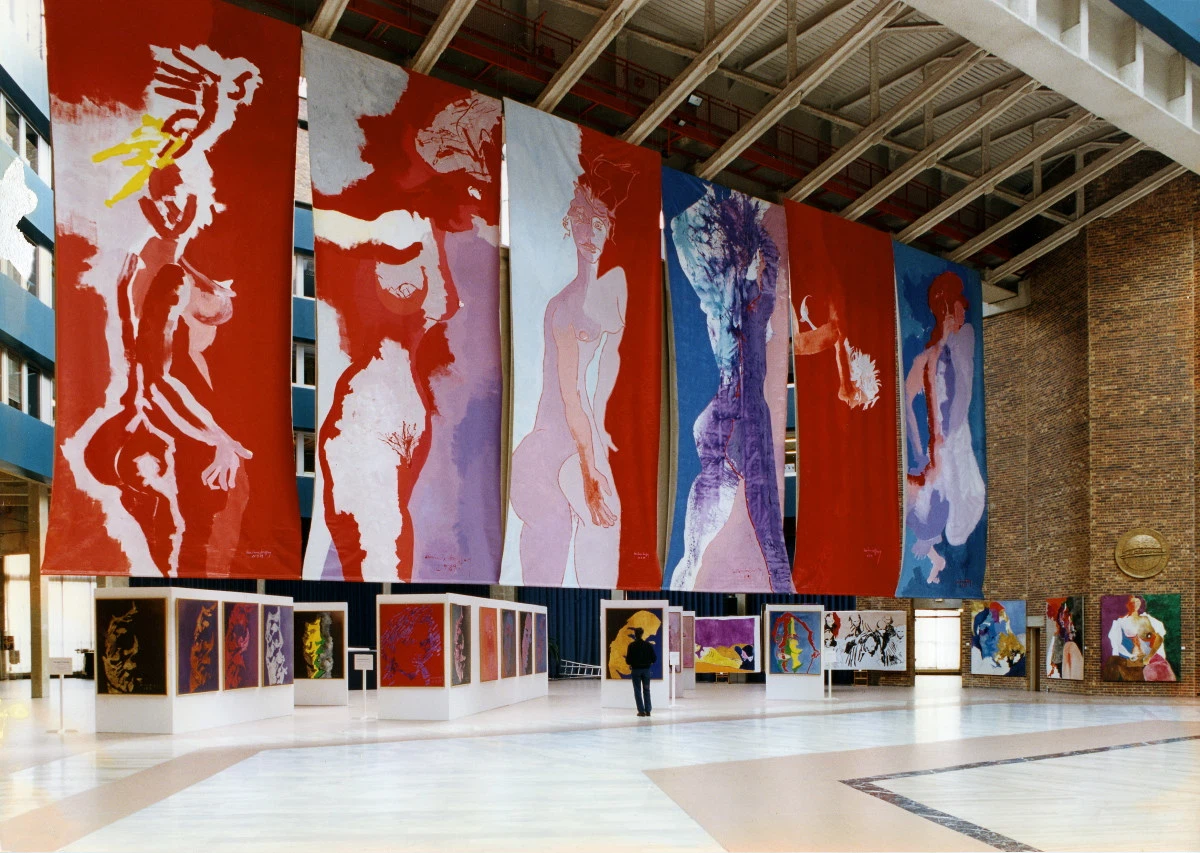
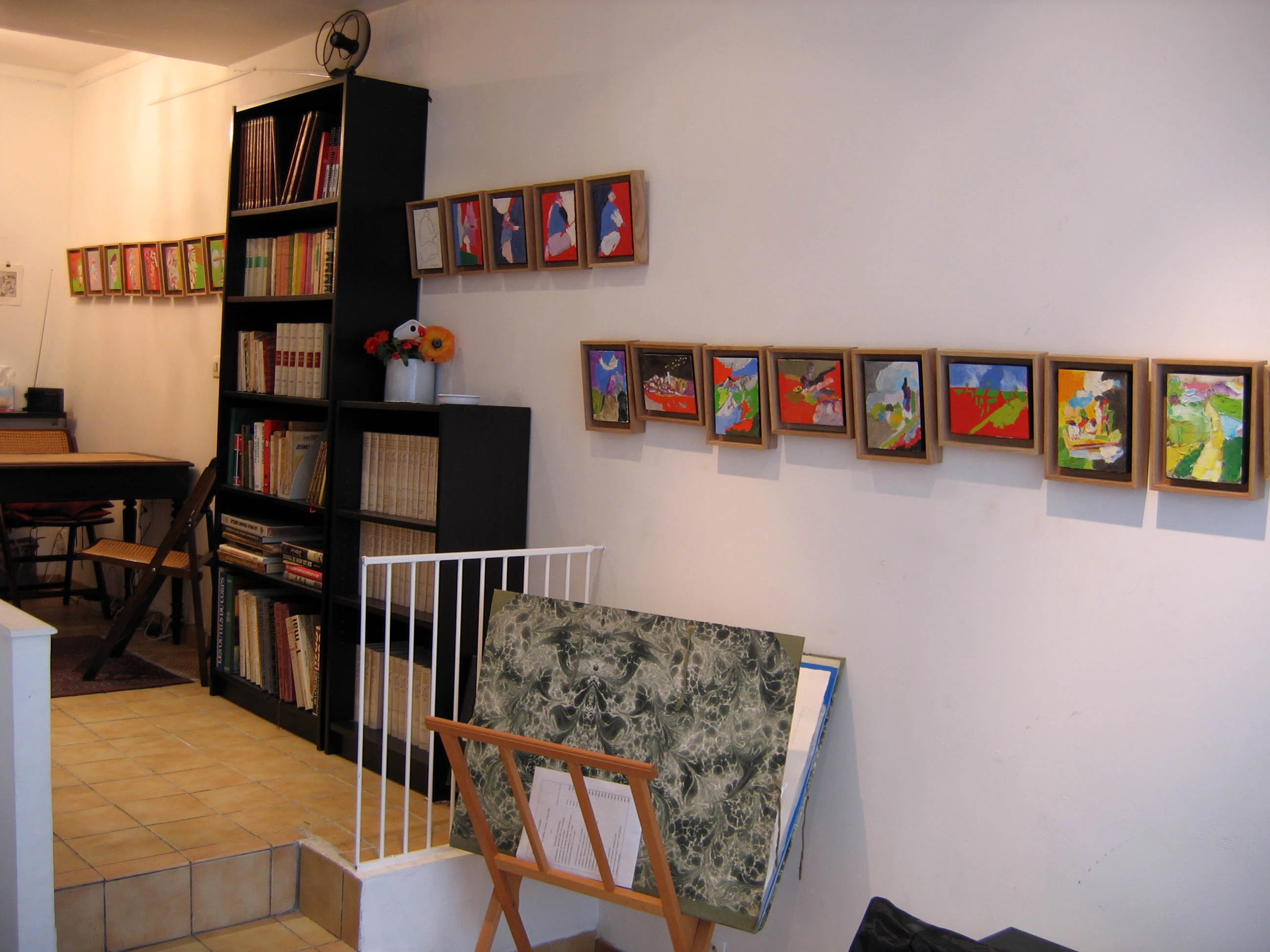
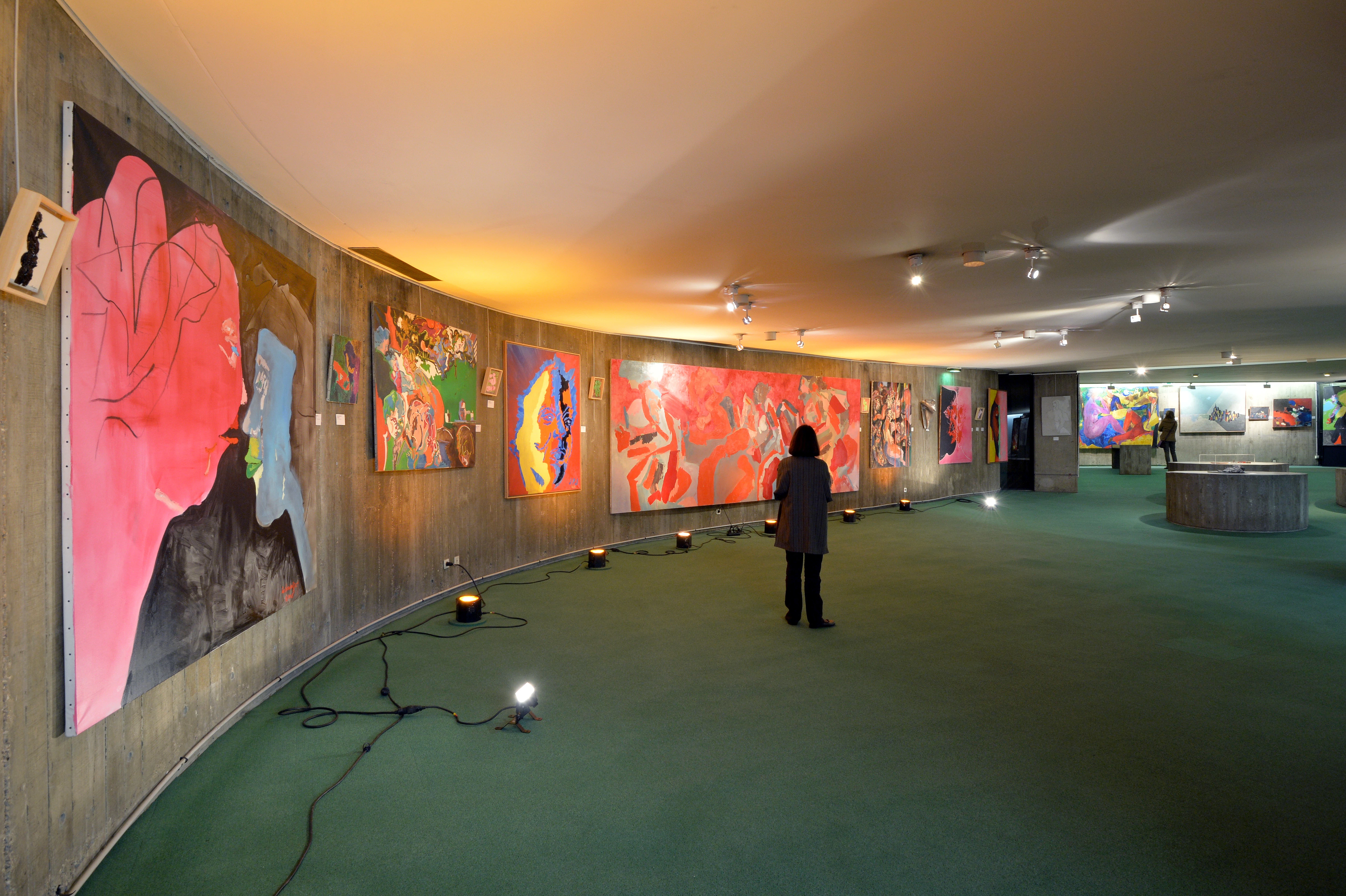
His work comes in all sizes, from the tiny to the colossal: from landscapes tucked into camembert packaging, to monumental female nudes painted on canvases ten metres tall, which served as the mainstage backdrop at the 1989 Fête de l’Humanité festival.

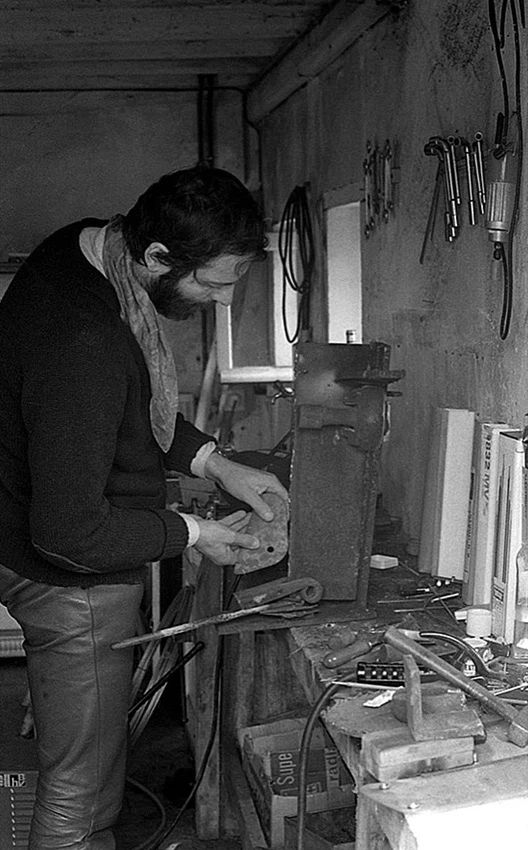
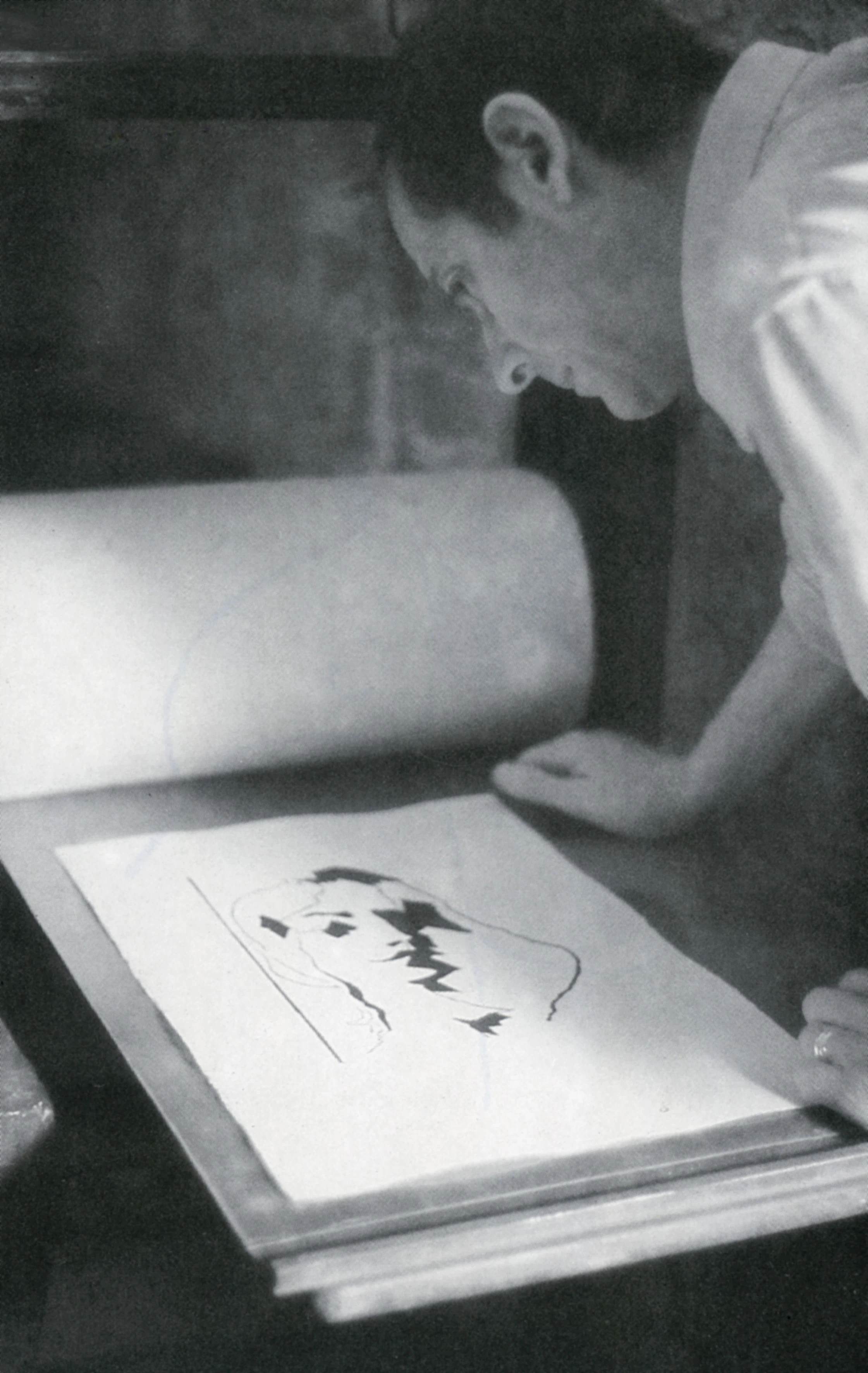
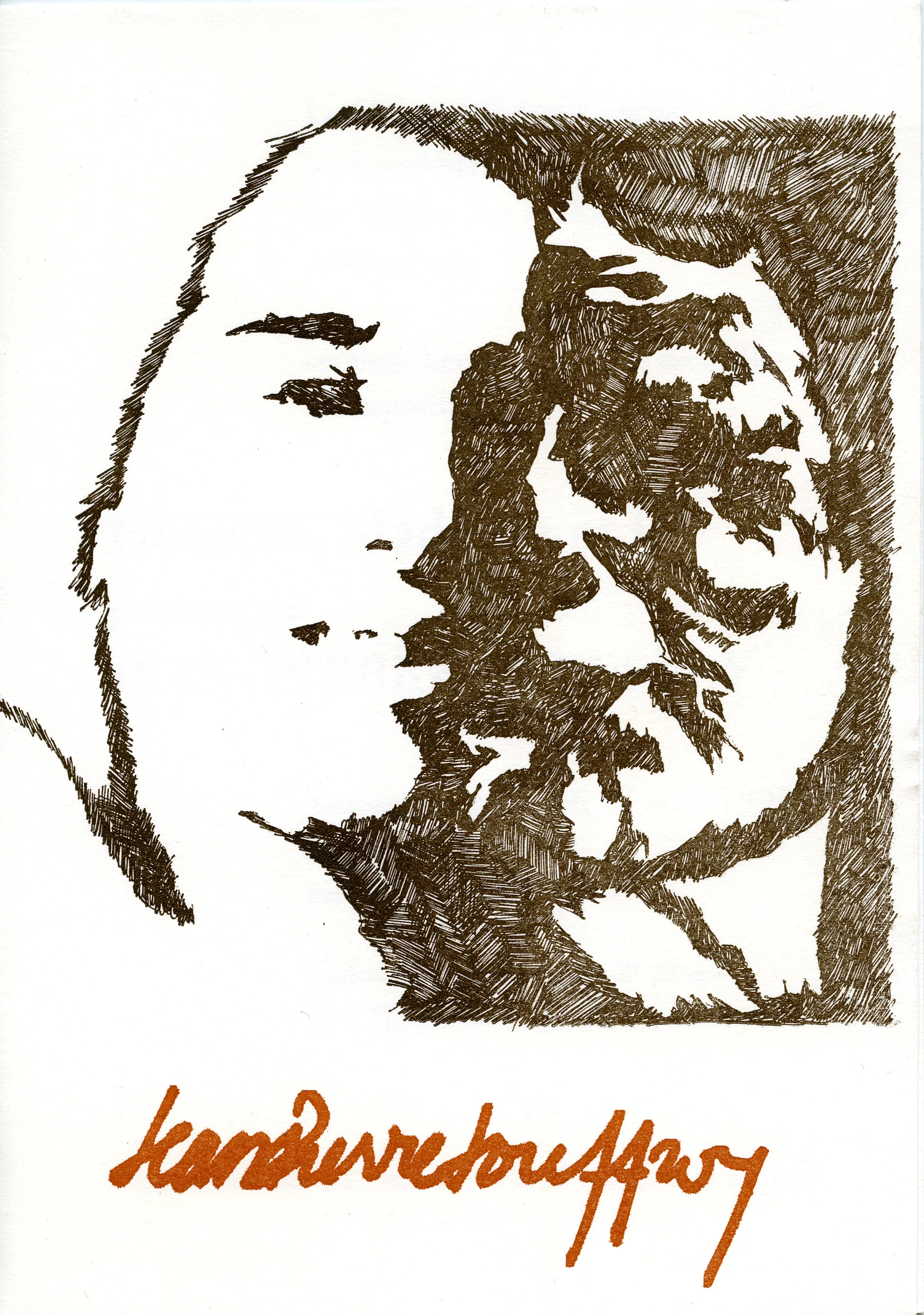
His engraving work was just as varied: he was passionate about intaglio and etching. Not only did he engrave his own copper plates; he also printed his proofs on a hand-operated press that sat in the middle of his workshop. He modernised etching by replacing wood with Plexiglas and by engraving with a dentist’s drill. His exhibitions included engraved sheet metal, silkscreen work and enamelled metal panels.
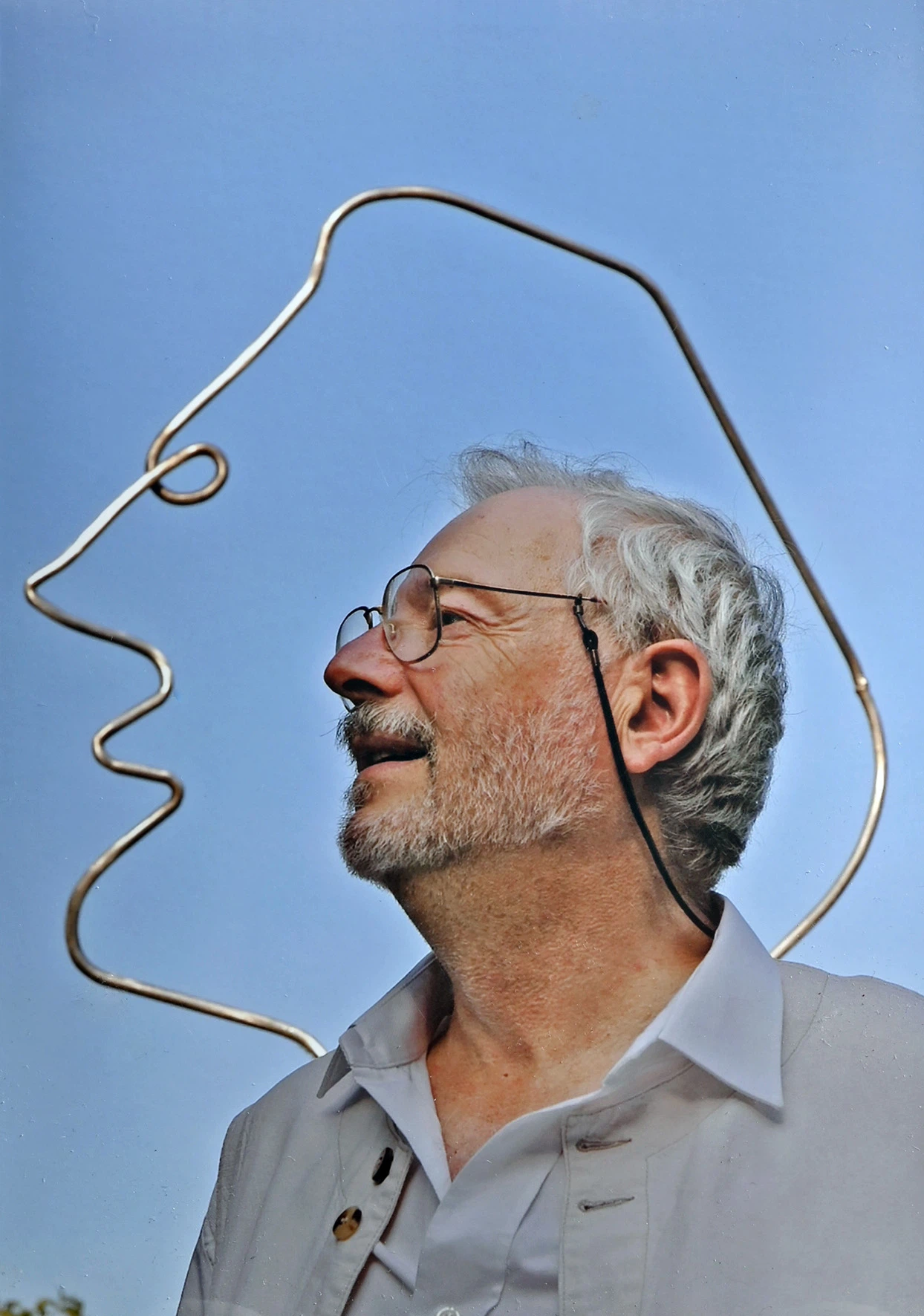
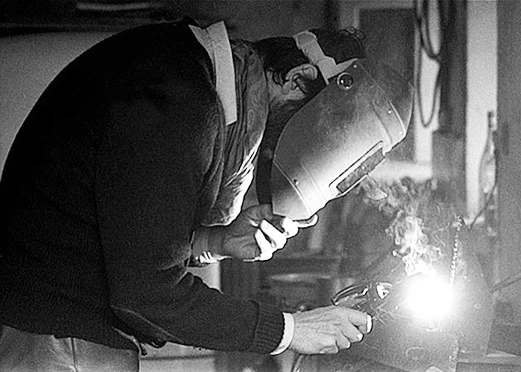
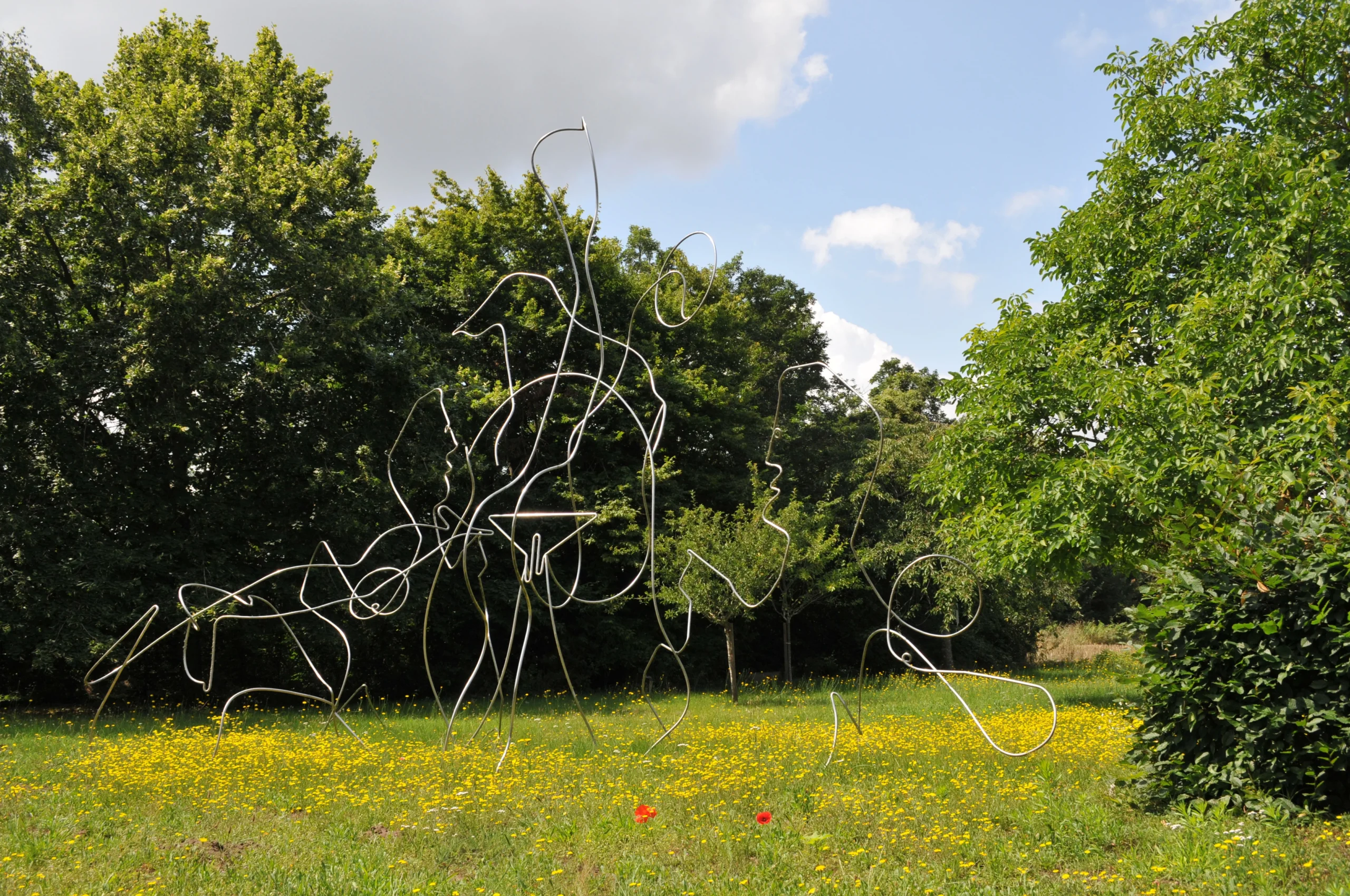
In sculpture, he would sometimes use scrap metal inspired by his friend Albert Féraud, or steel wire to create large linear sculptures: drawings in space through which light and landscape could intertwine. His materials included stone, bronze and steel.

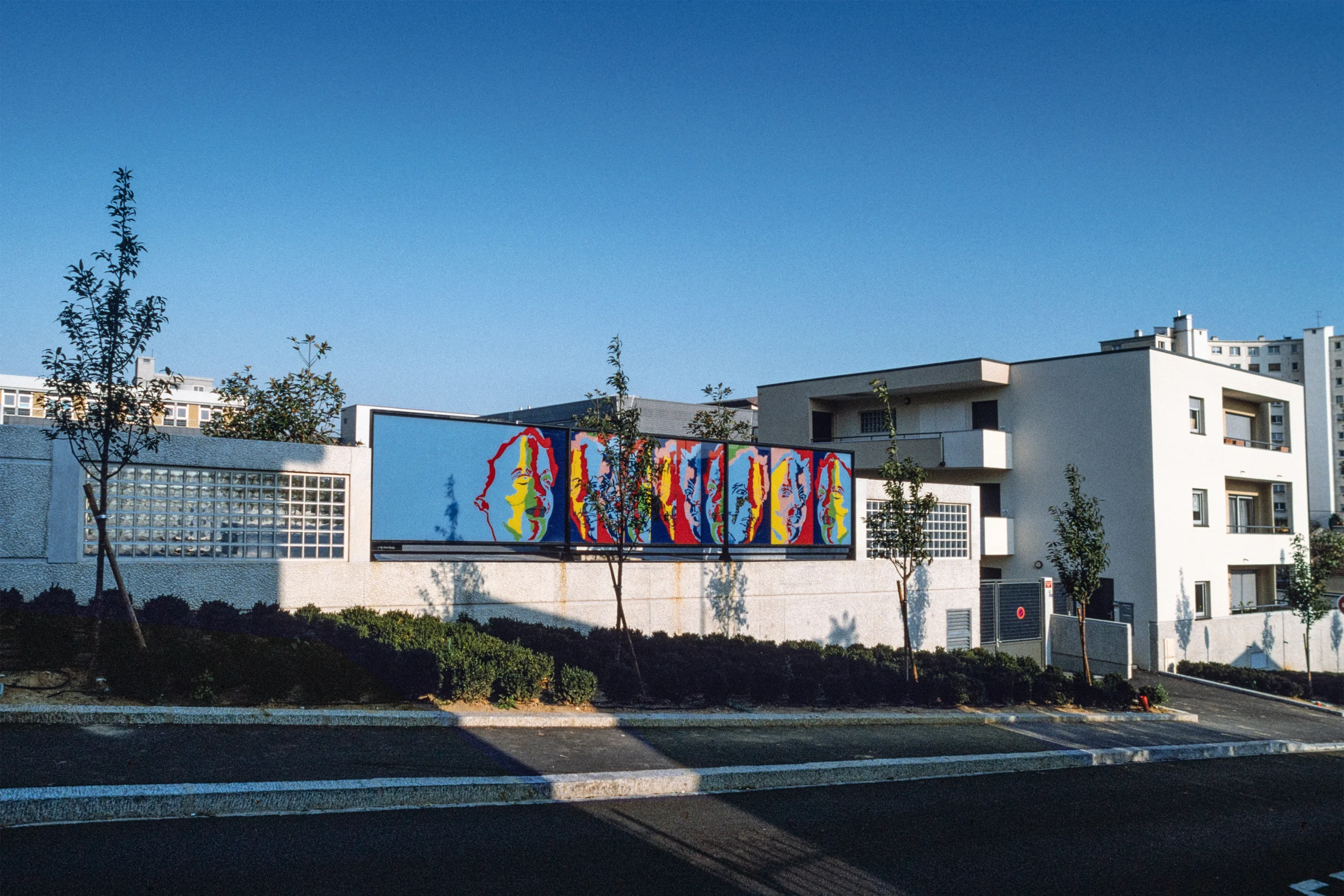
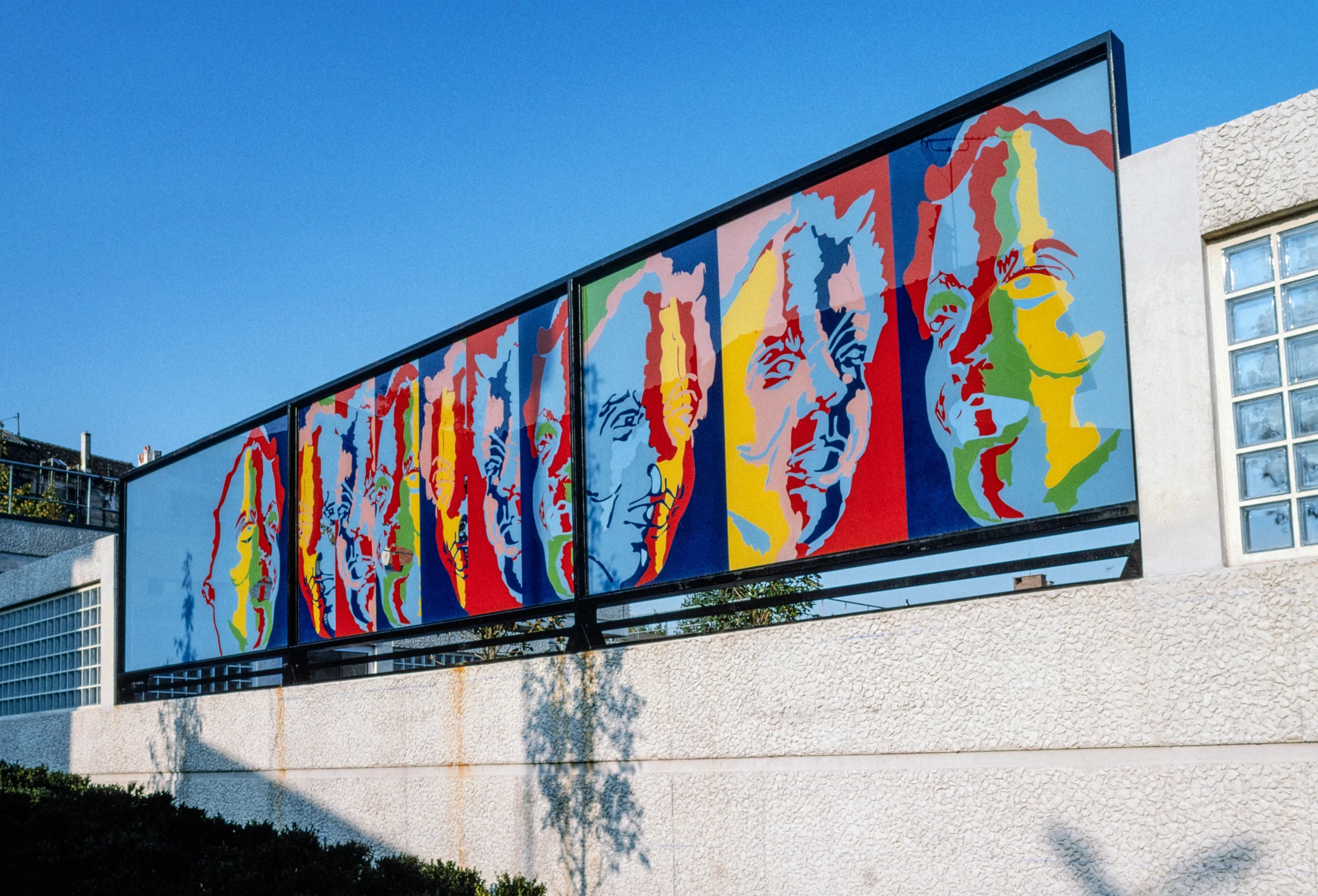
For two public commissions, notably, he used innovative materials: in Montreuil in 1977, an enamelled metal comic strip on the myth of Atalanta; in 1998, for a secondary school in Arcueil, he worked with glass-makers to create large portraits of Dulcie September in enamelled tempered glass.
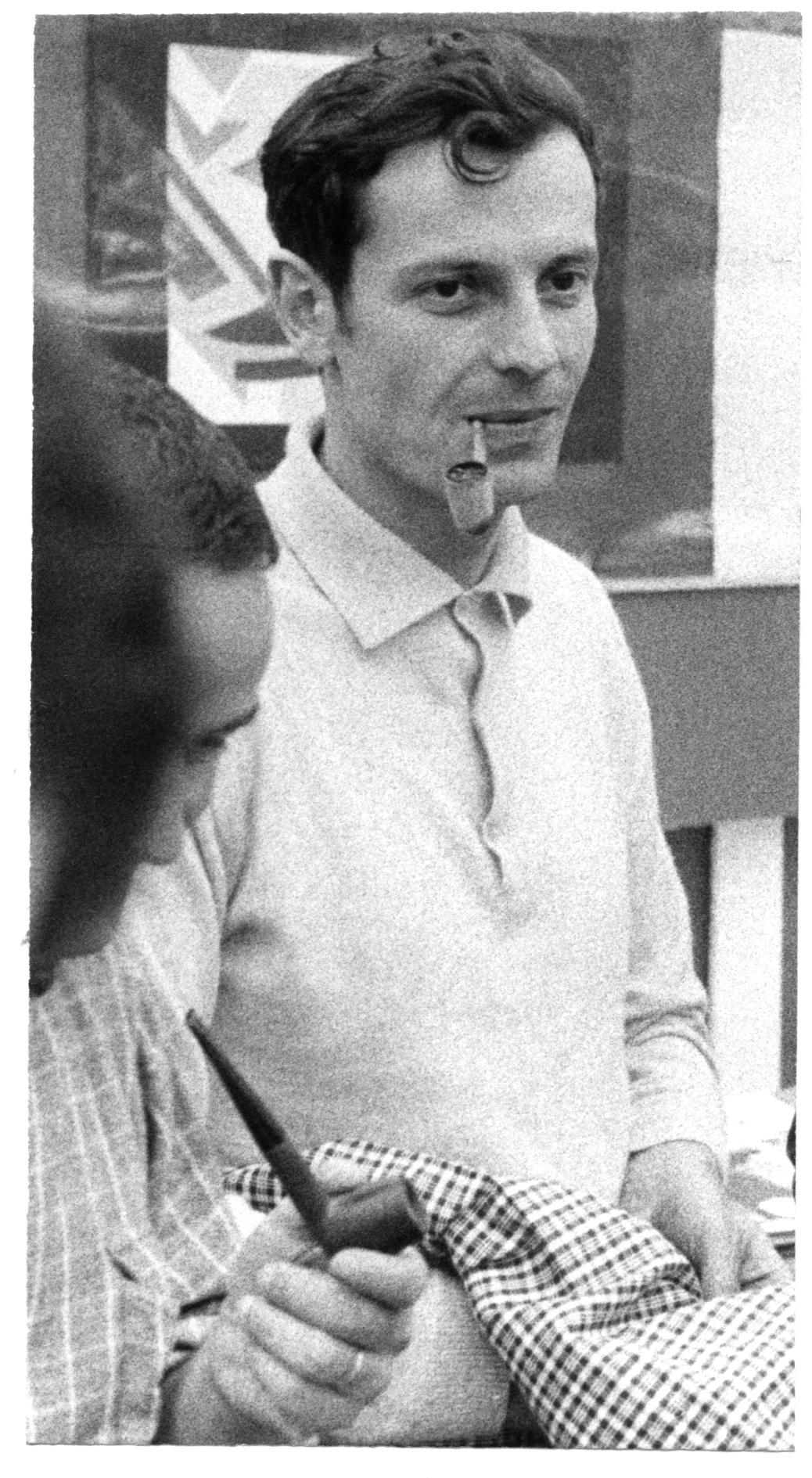
1965: At the Fête de l'Humanité festival, La Courneuve (93).
© Gérald Bloncourt.
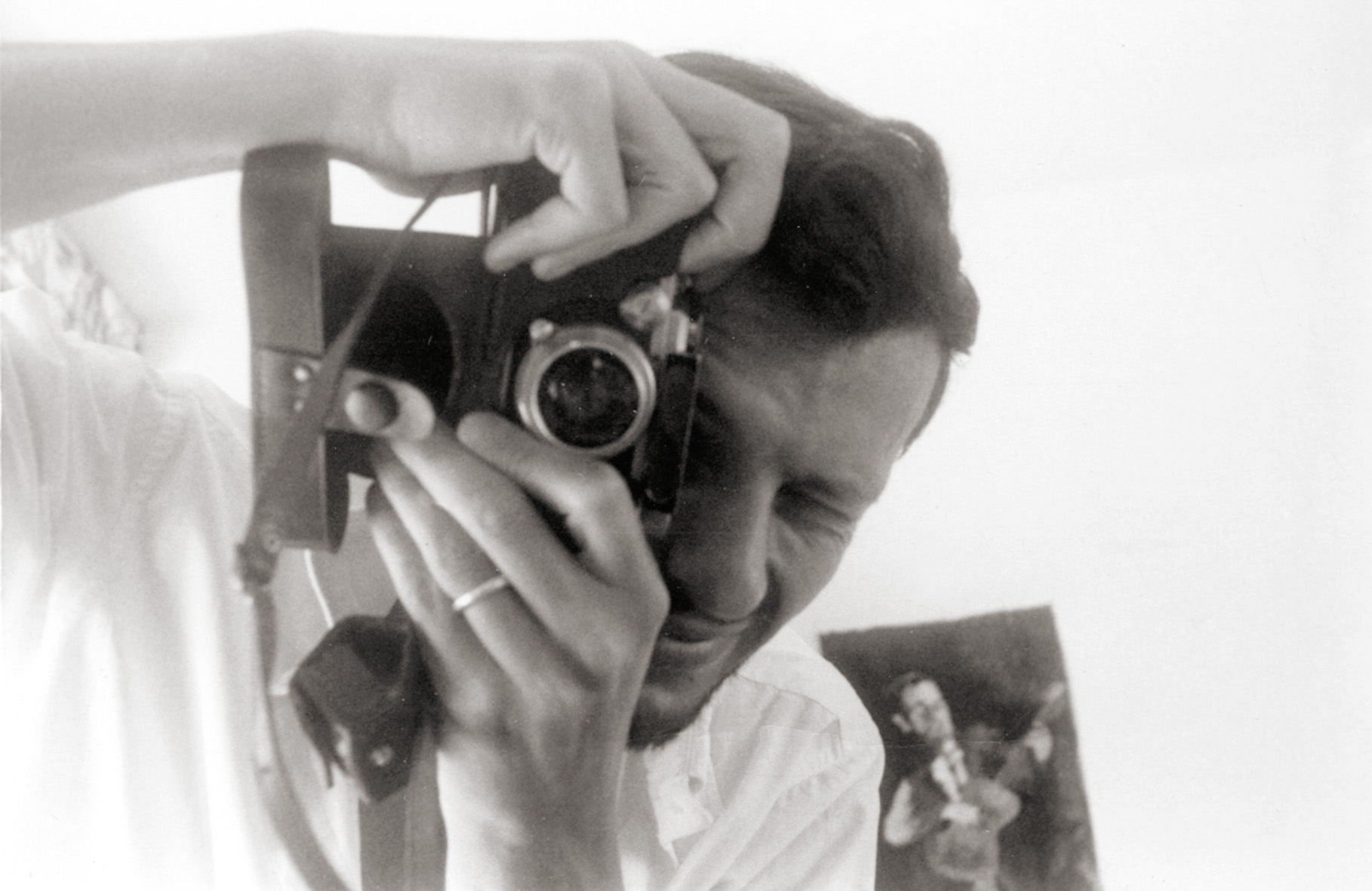
1966: Jean-Pierre Jouffroy as a photographer. R. R.
1974: In his workshop on rue d'Aumale. R. R.
1975: Sculpture in Saint-Benoît-sur-Loire.
© Gérald Bloncourt.
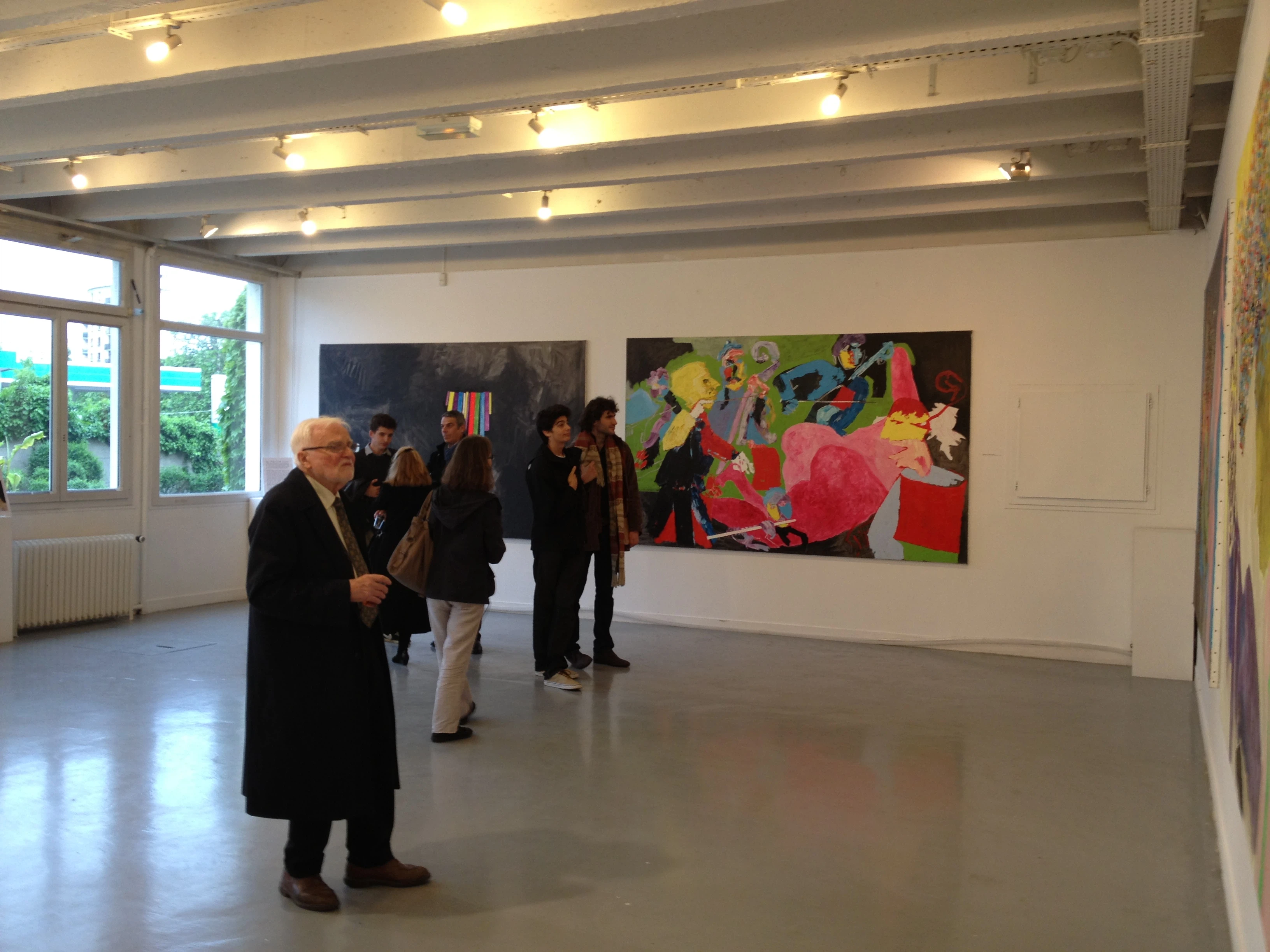
Throughout his highly varied creative life, he defied categorisation into any one system, constantly seeking to renew his artistic inspiration. During a session filmed in his workshop by Raoul Sangla in 2011, in front of the six 3 x 2 m canvases on the theme of Manet’s Olympia, he said: ‘I’m an old painter, and when you finish a series such as this one, the problem is working out what to do next.’ One of the artist’s constant concerns was to avoid repetition. The abundance of his work bears witness to this. Throughout his sixty-five years of creation, a kind of unity, a unique feel, runs through his output, making Jean-Pierre Jouffroy’s style and art instantly recognisable, from his earliest work to his last canvas. ‘Leibniz said that music is the algebra of God. I’ve always sought something more tangible than algebra. Painting is the geometry of humankind.’
A great connoisseur of art history, he always explained and defended the paintings of others, be they his contemporaries or bygone artists. He published books on the art of Jérôme Bosch, Pablo Picasso, Peter Bruegel, Nicolas de Staël, Xavier Longobardi, Vincent van Gogh and Roger Trystram, as well as numerous articles in defence of painting and artistic freedom. In 2010, a compilation of his written work was published by Editions Delga in the book Trajectoires de la Peinture. (see Publications).
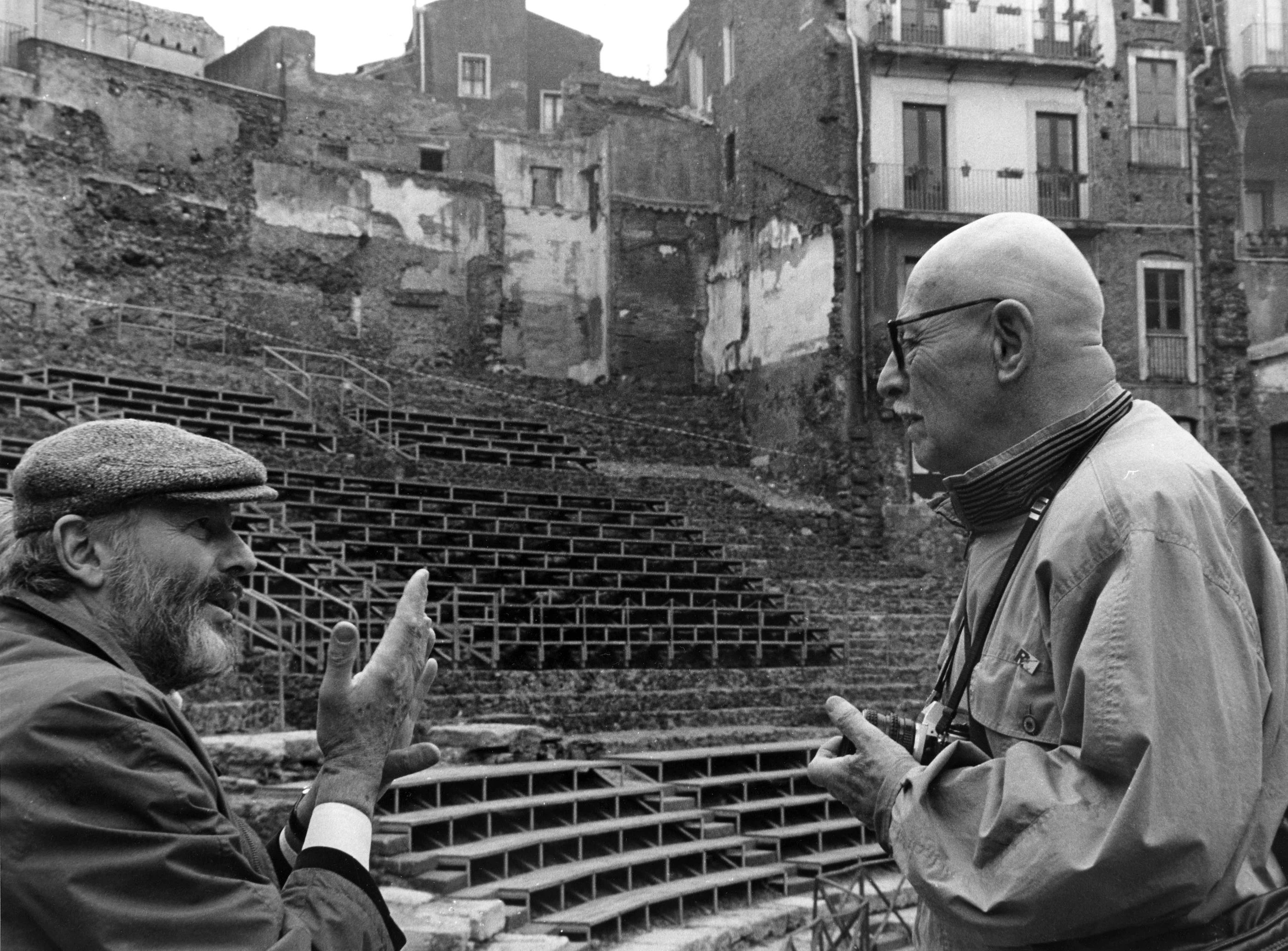
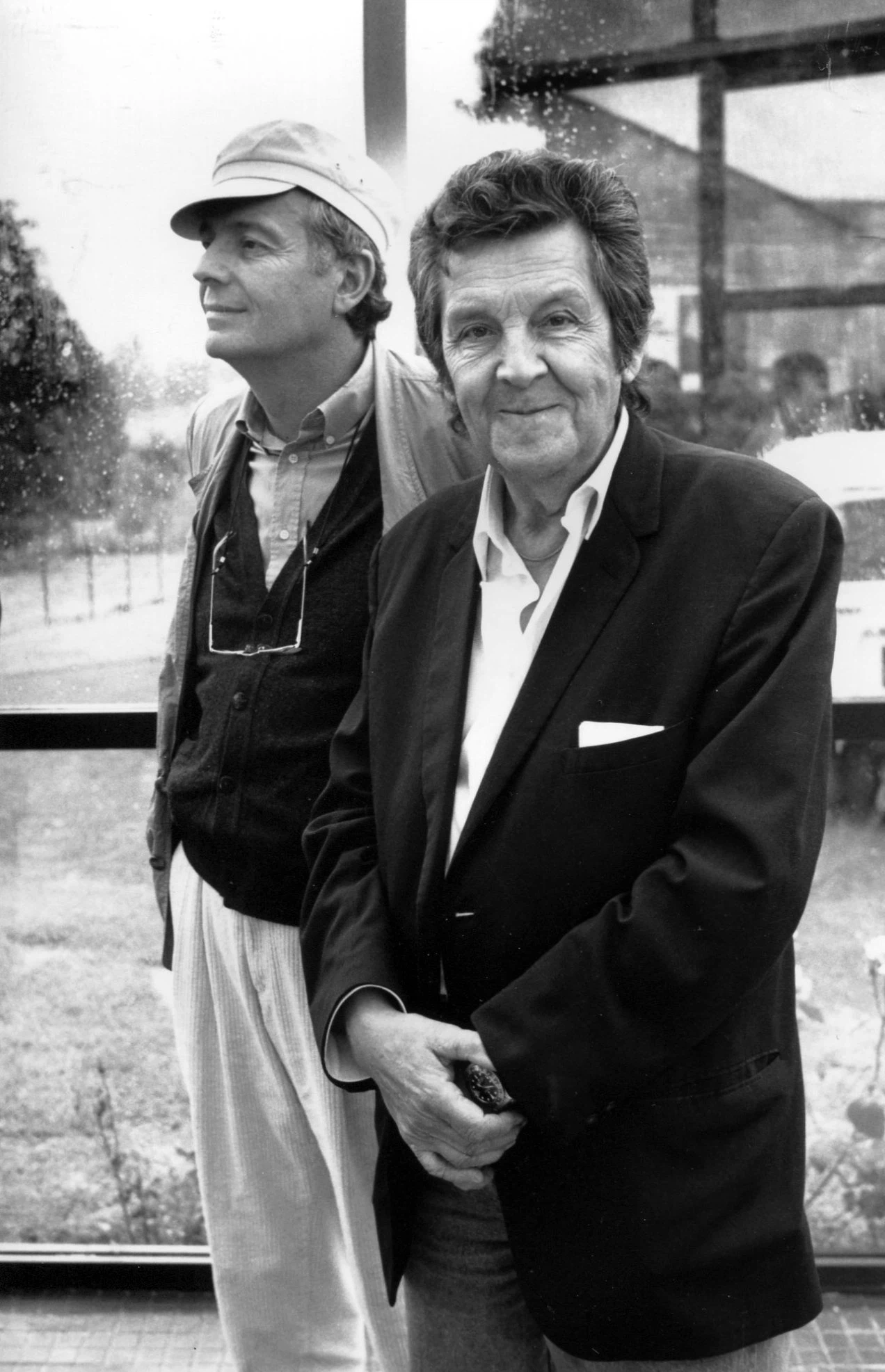
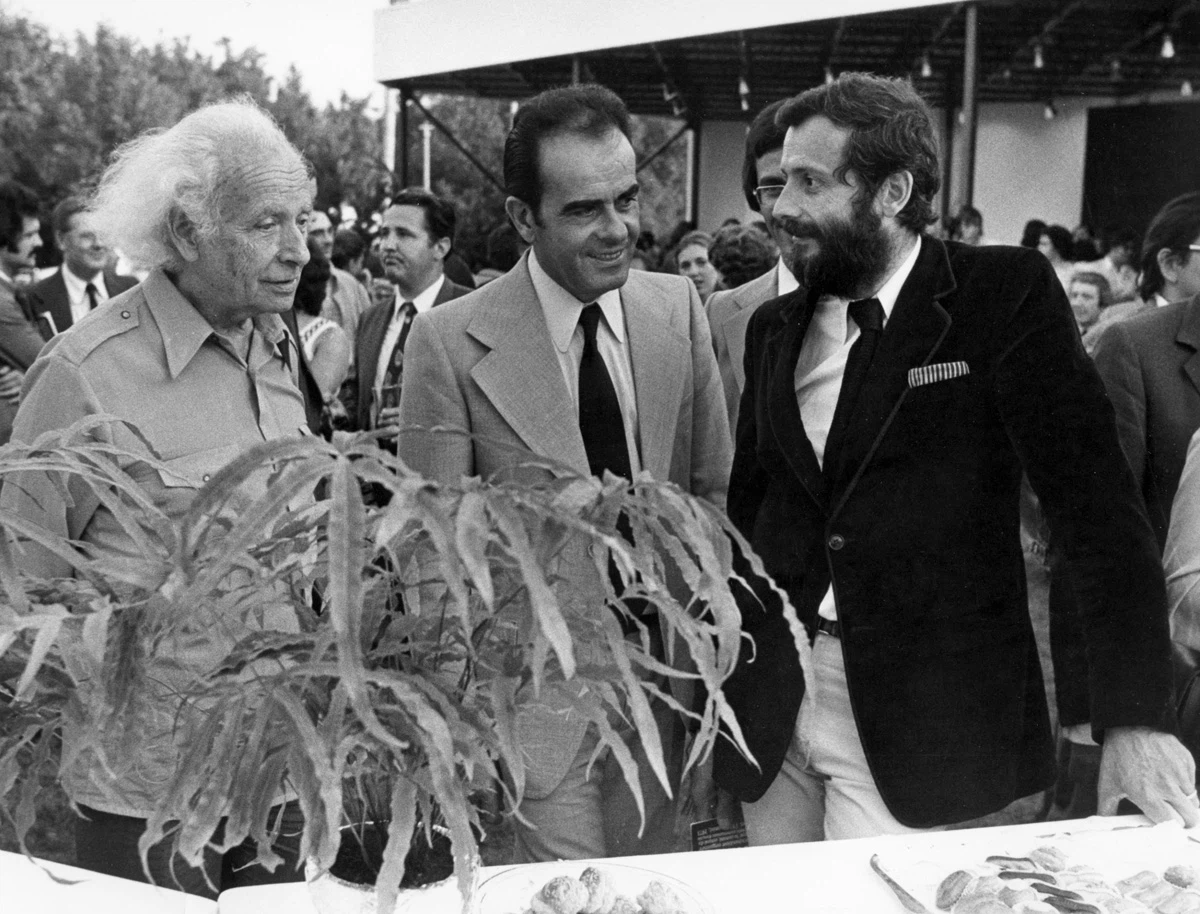
1984: With Willy Ronis in the ruins of
the amphitheater of Catania (Sicily). R. R.
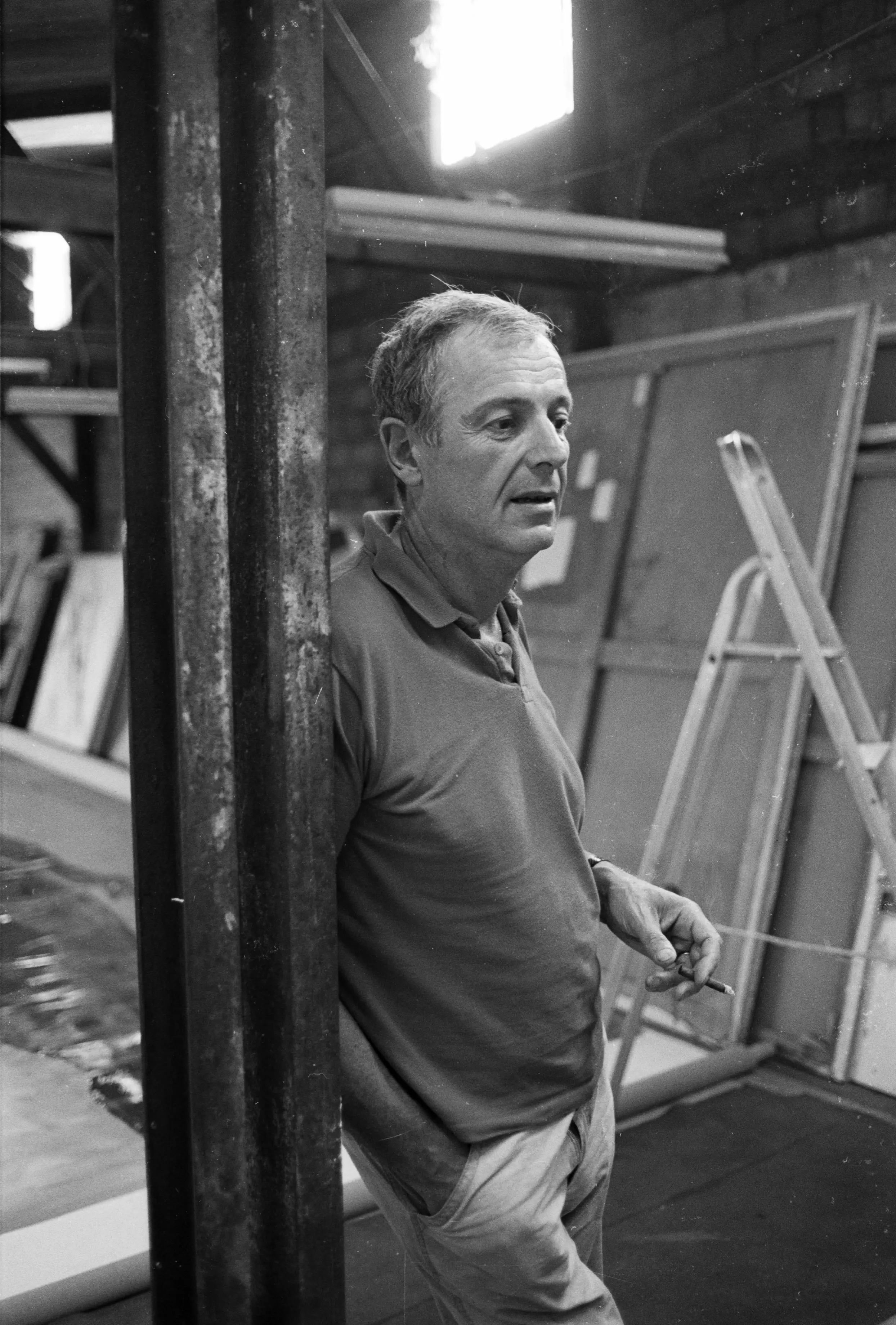
1989: In the workshop of La Varenne Saint-Hilaire (94).
© Pierre Trovel.
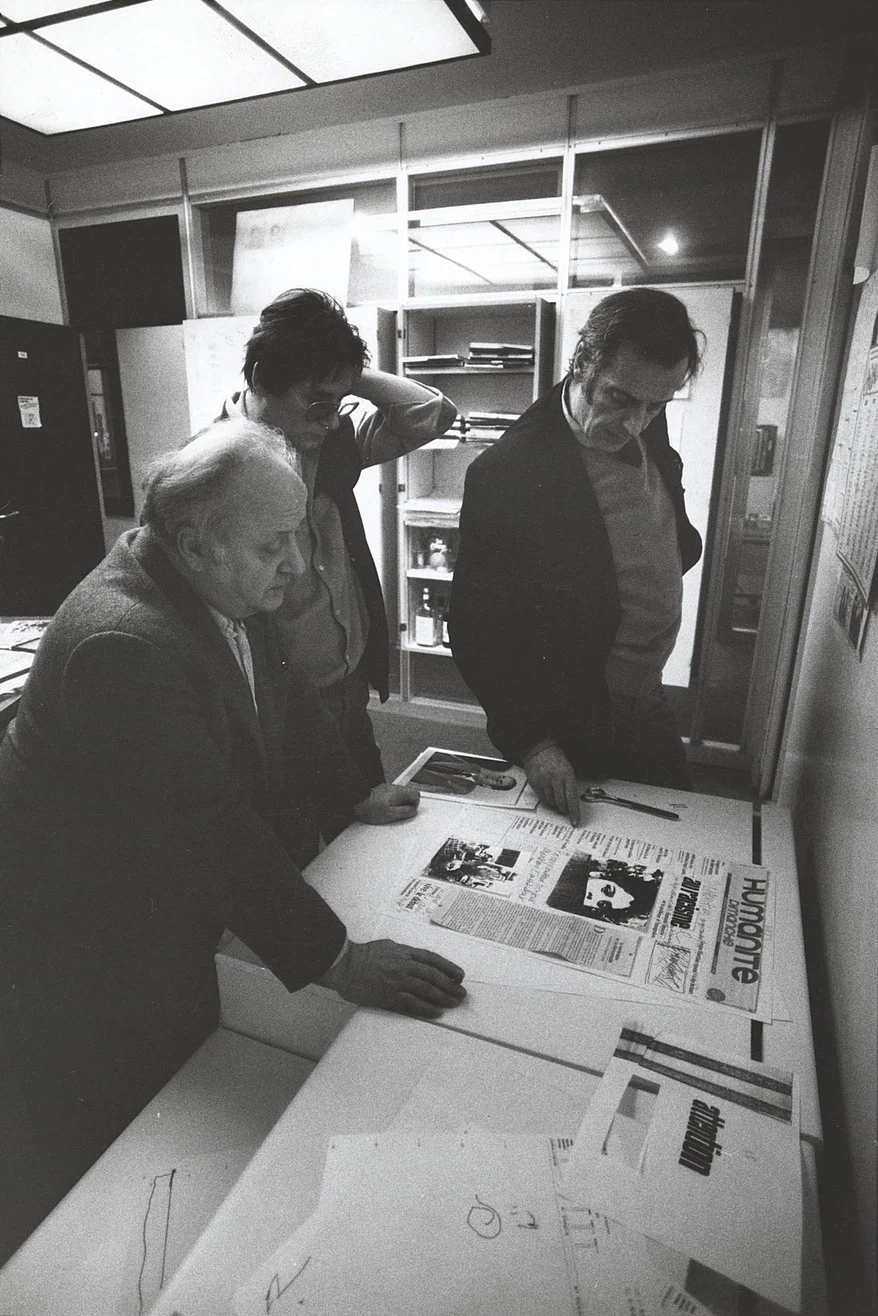
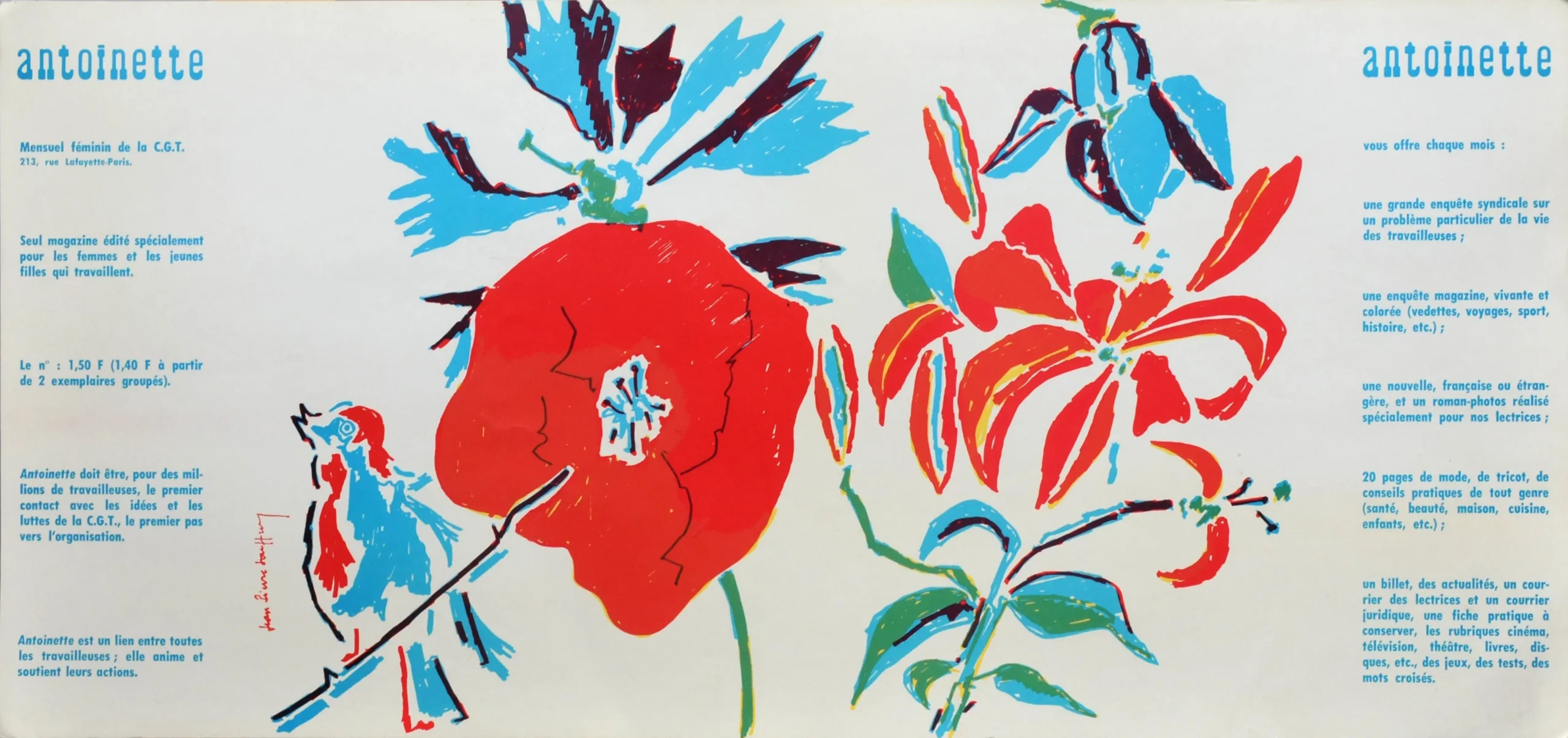
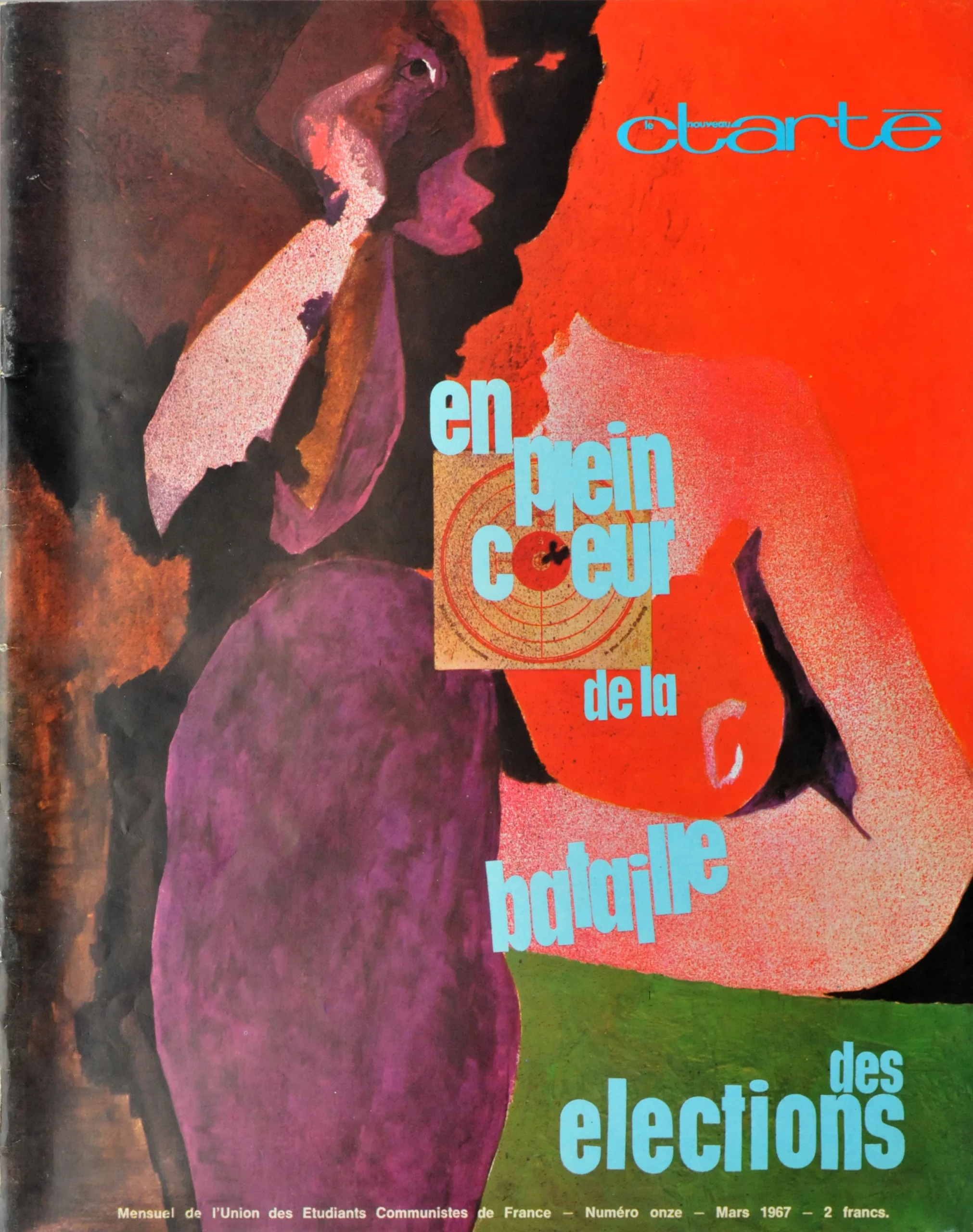
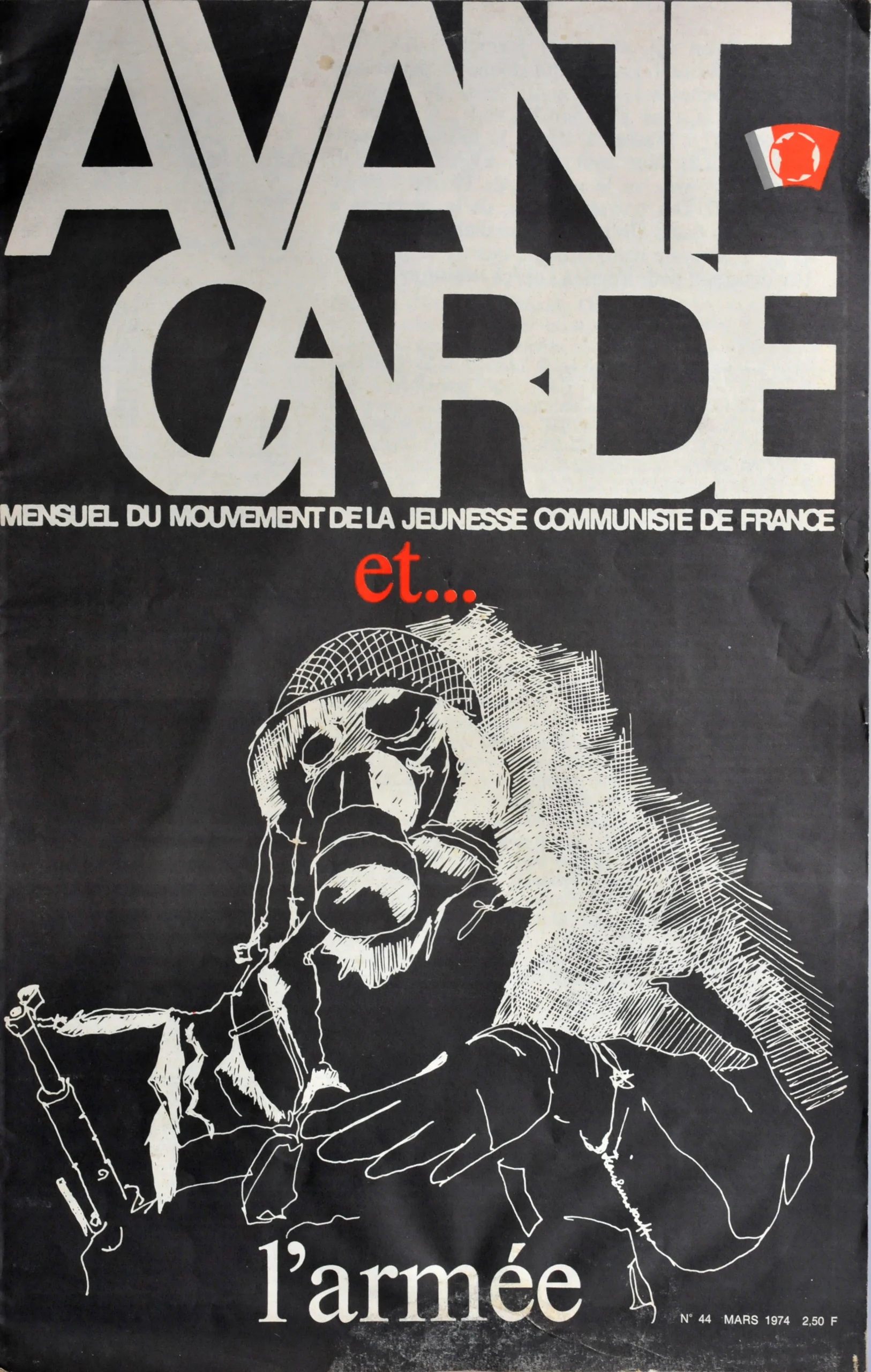
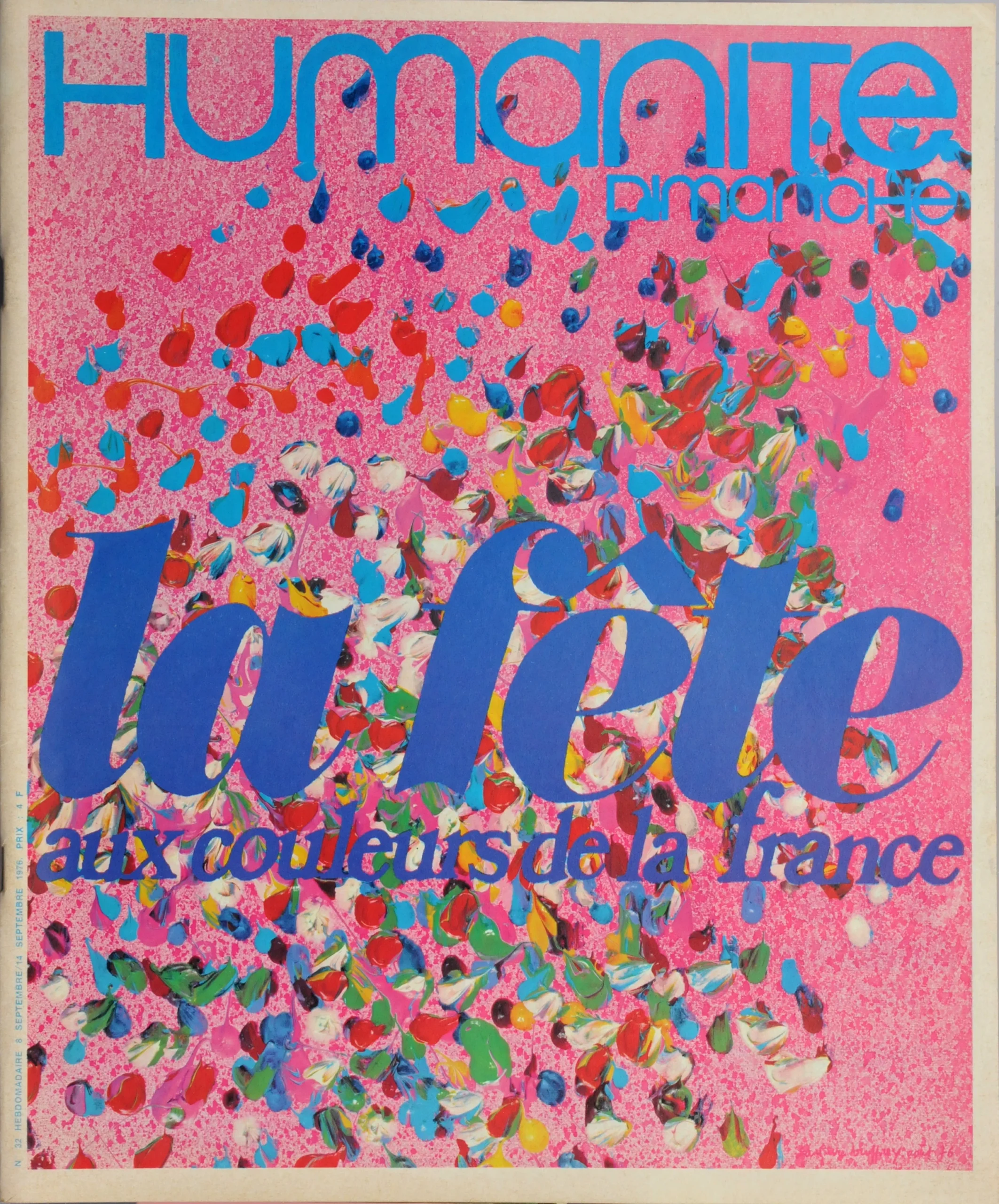
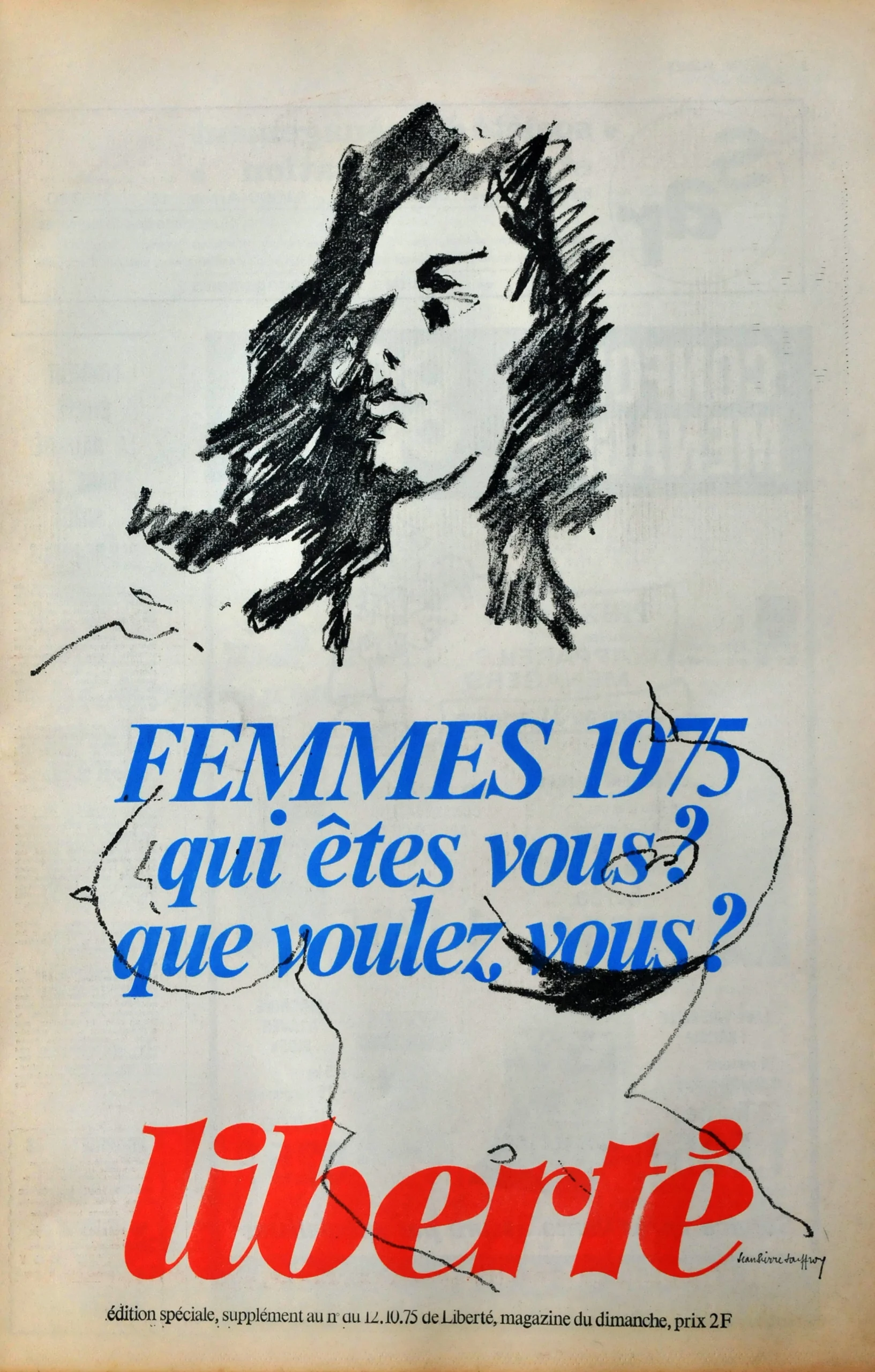
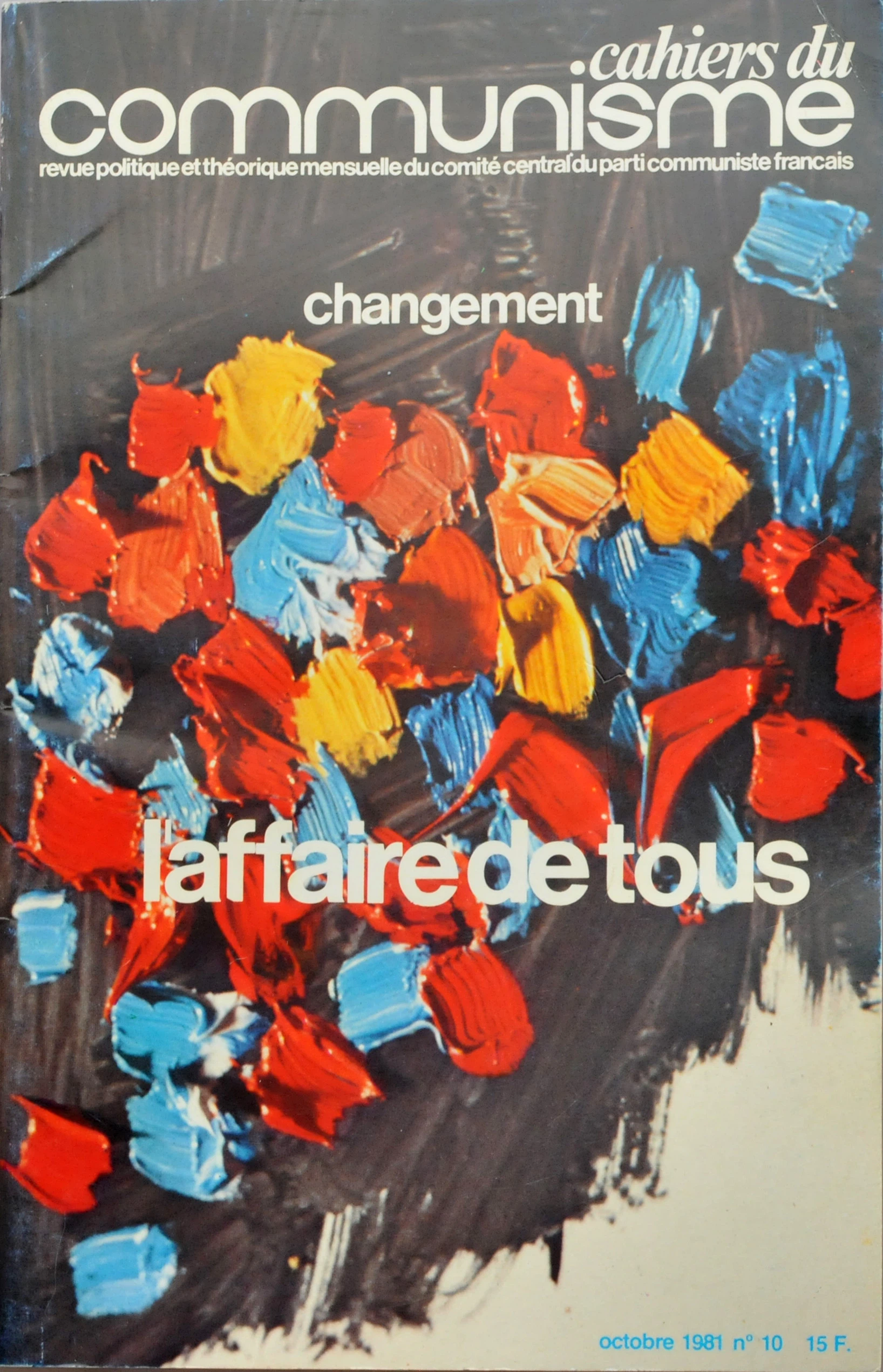
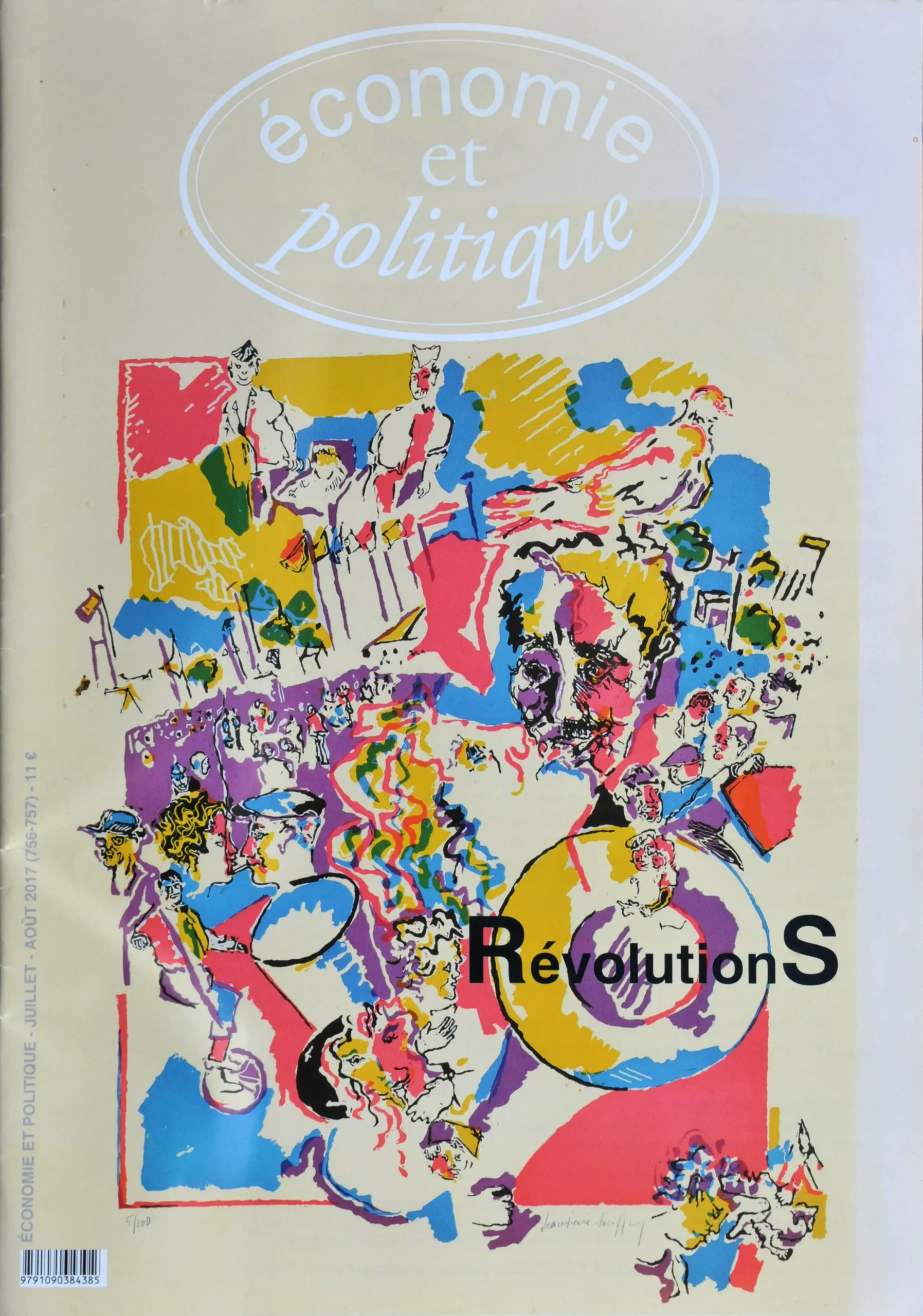
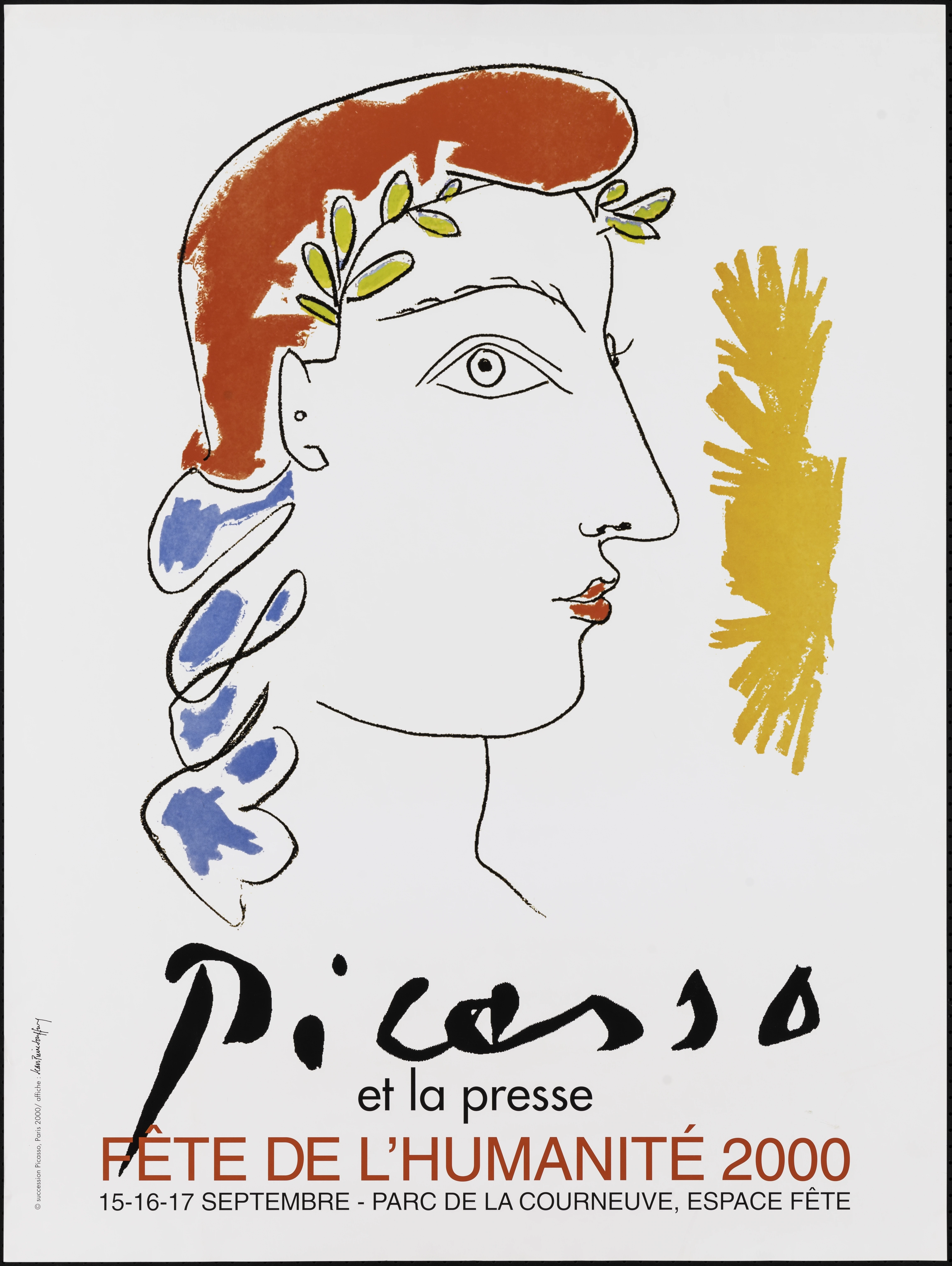
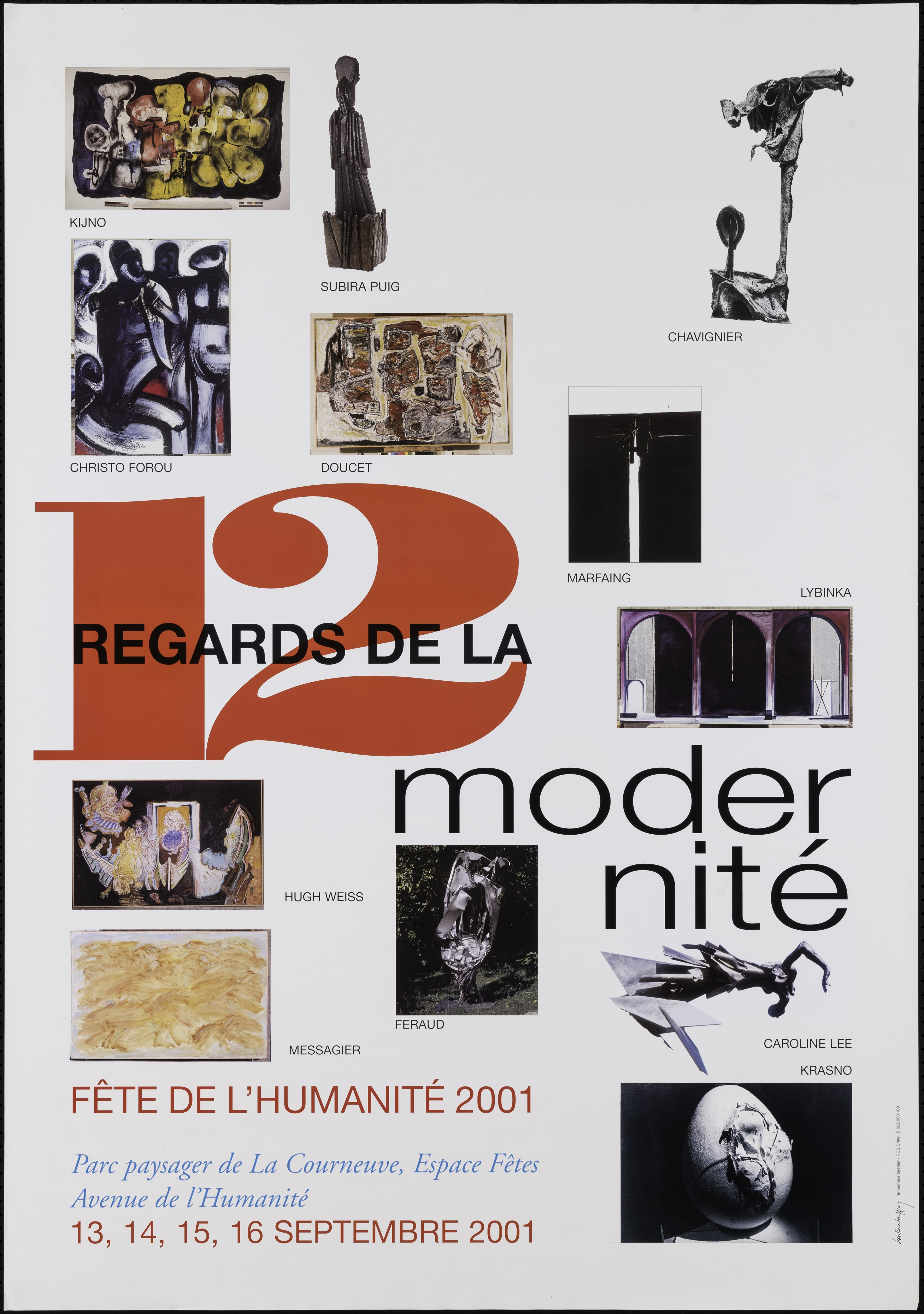
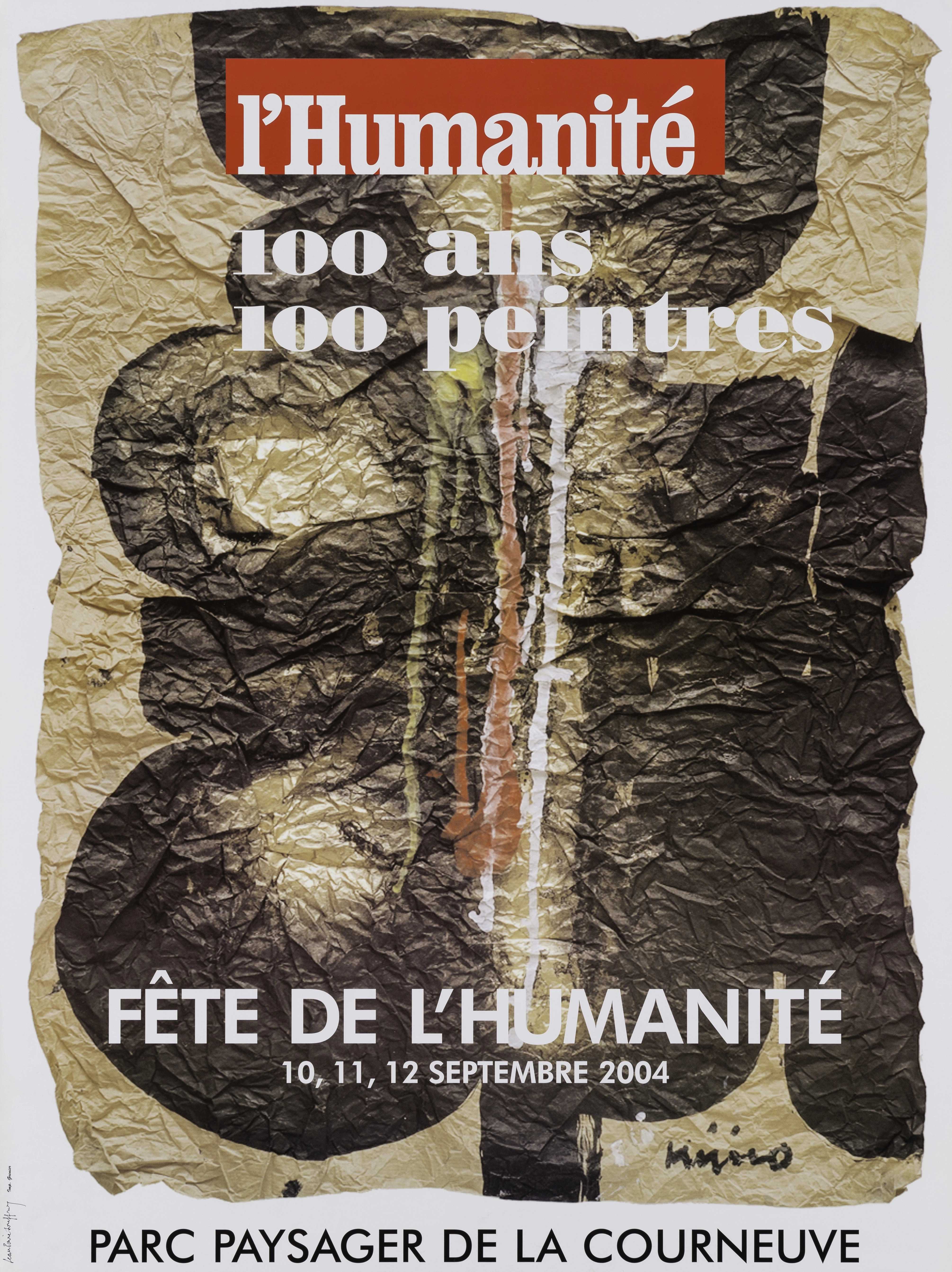
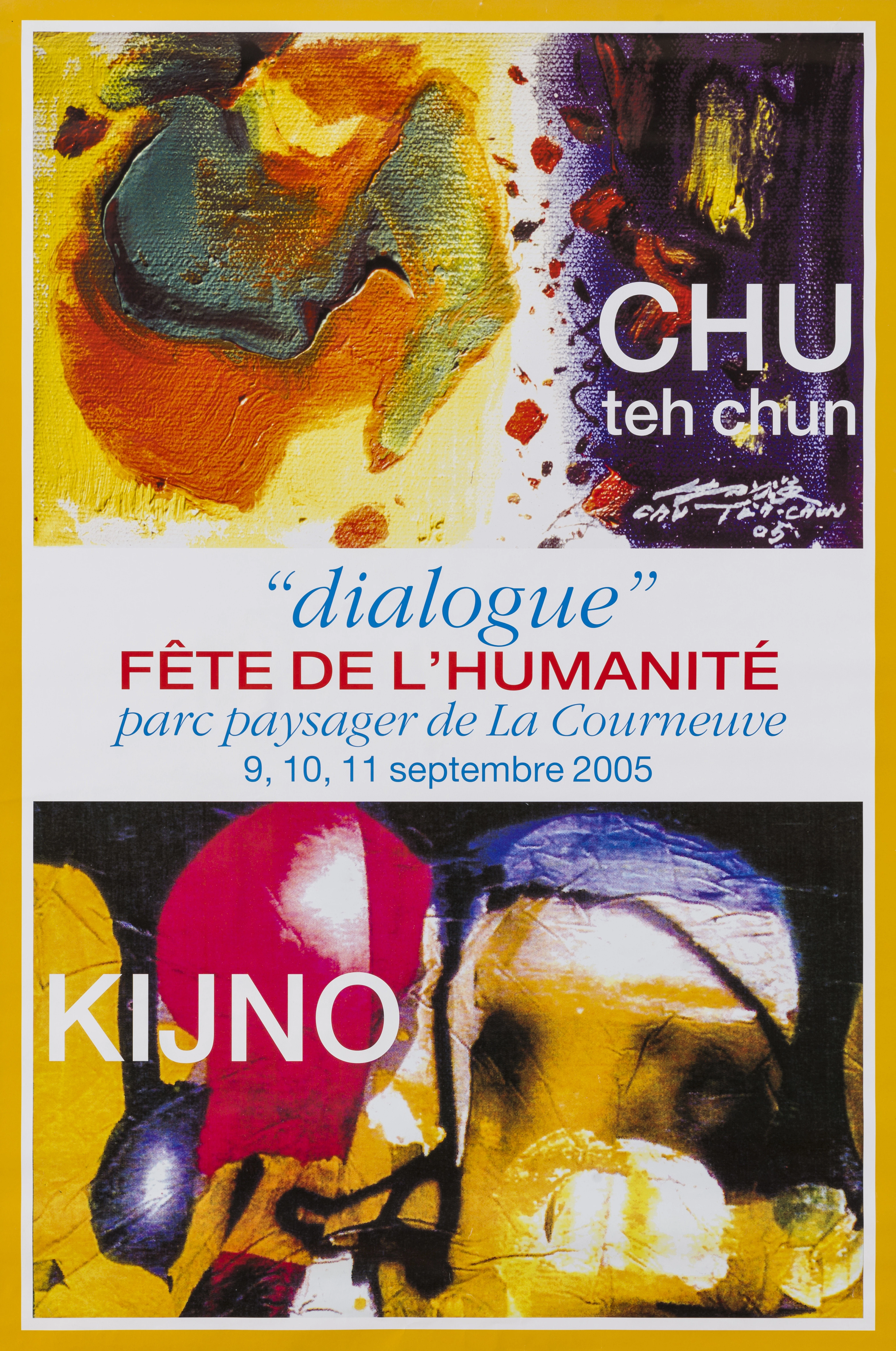
As a graphic designer , he created twenty-two different media layout designs: literary reviews, film reviews, weeklies, political reviews (Antoinette, Clarté, Avant-Garde, l’Humanité-dimanche, Liberté, les Cahiers du communisme…), social and economic publications.
His many artistic activities went hand in hand with his strong political convictions. He joined the French Communist Party (PCF) in July 1962. He defended artistic creation that was free from political constraints. He taught in schools run by the PCF and the Confédération Générale du Travail (or CGT, a union confederation).
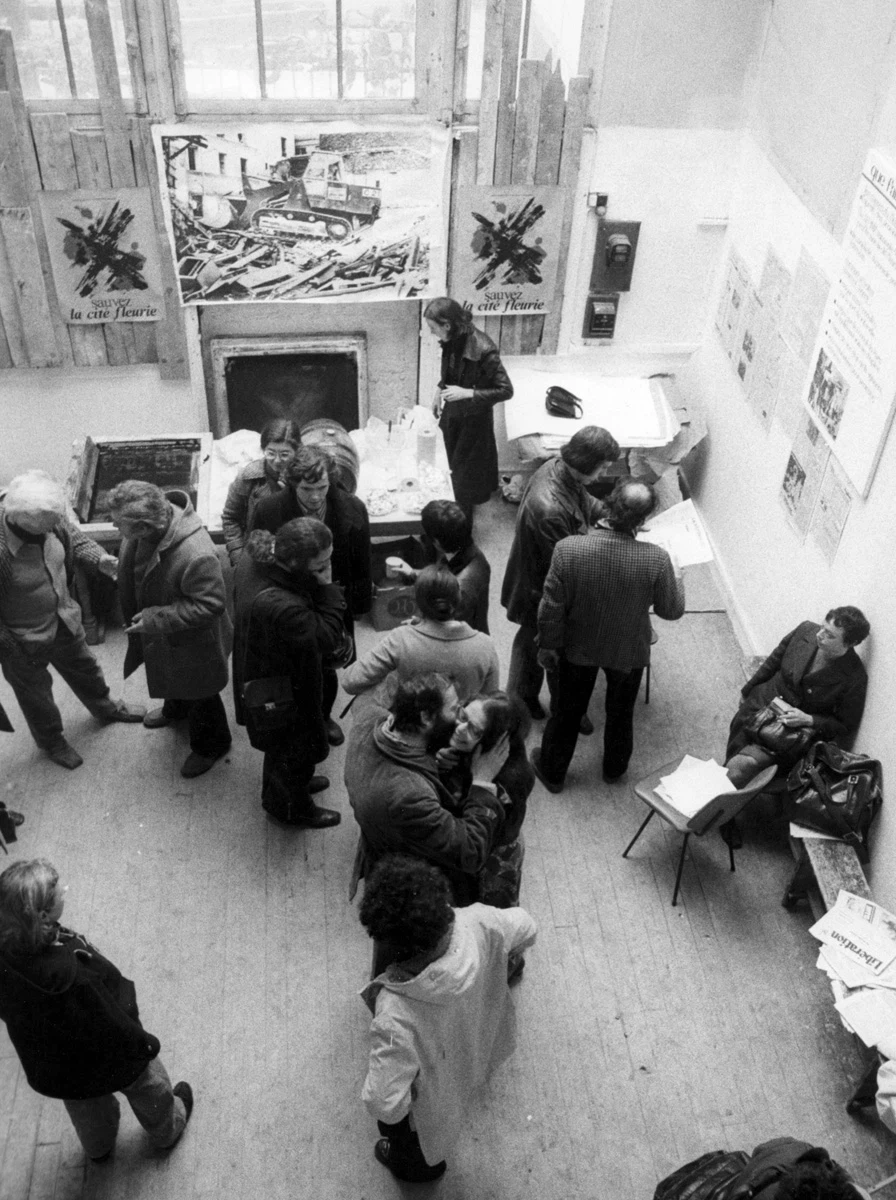
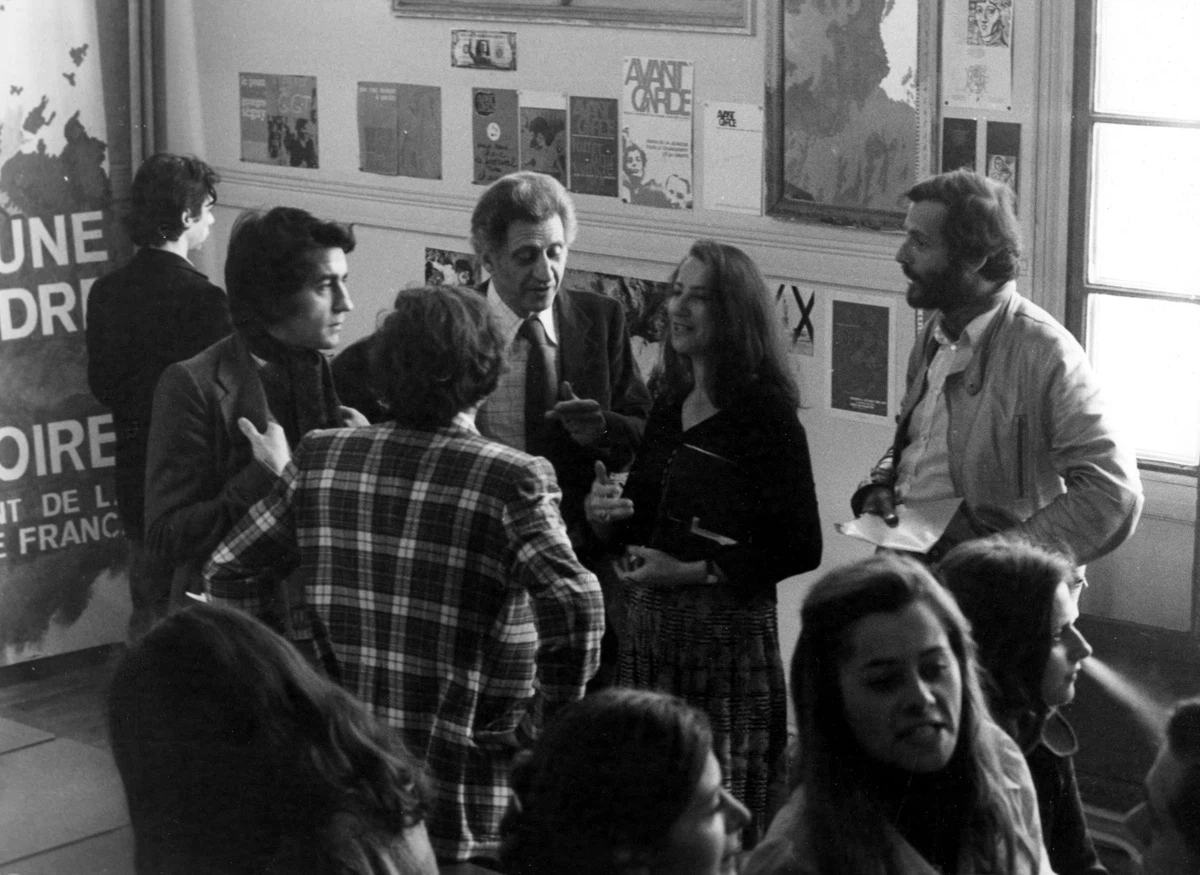
As General Secretary of the Union des Arts Plastiques from 1969 to 2000, he was behind the creation, with Ladislas Kijno and Jean Milhau, of social security for painters and sculptors. In the 1970s, he instigated and led the fight against the demolition of the Cité Fleurie artists’ studios on Boulevard Arago in Paris.
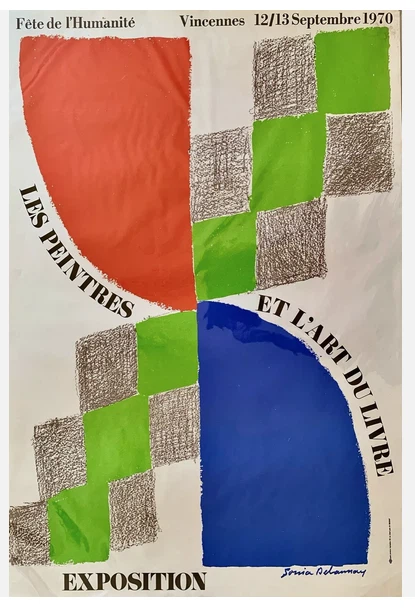
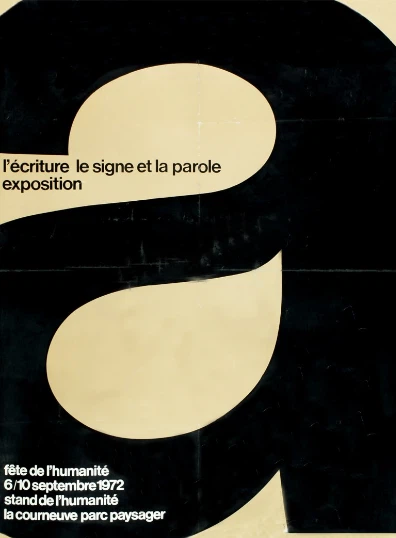
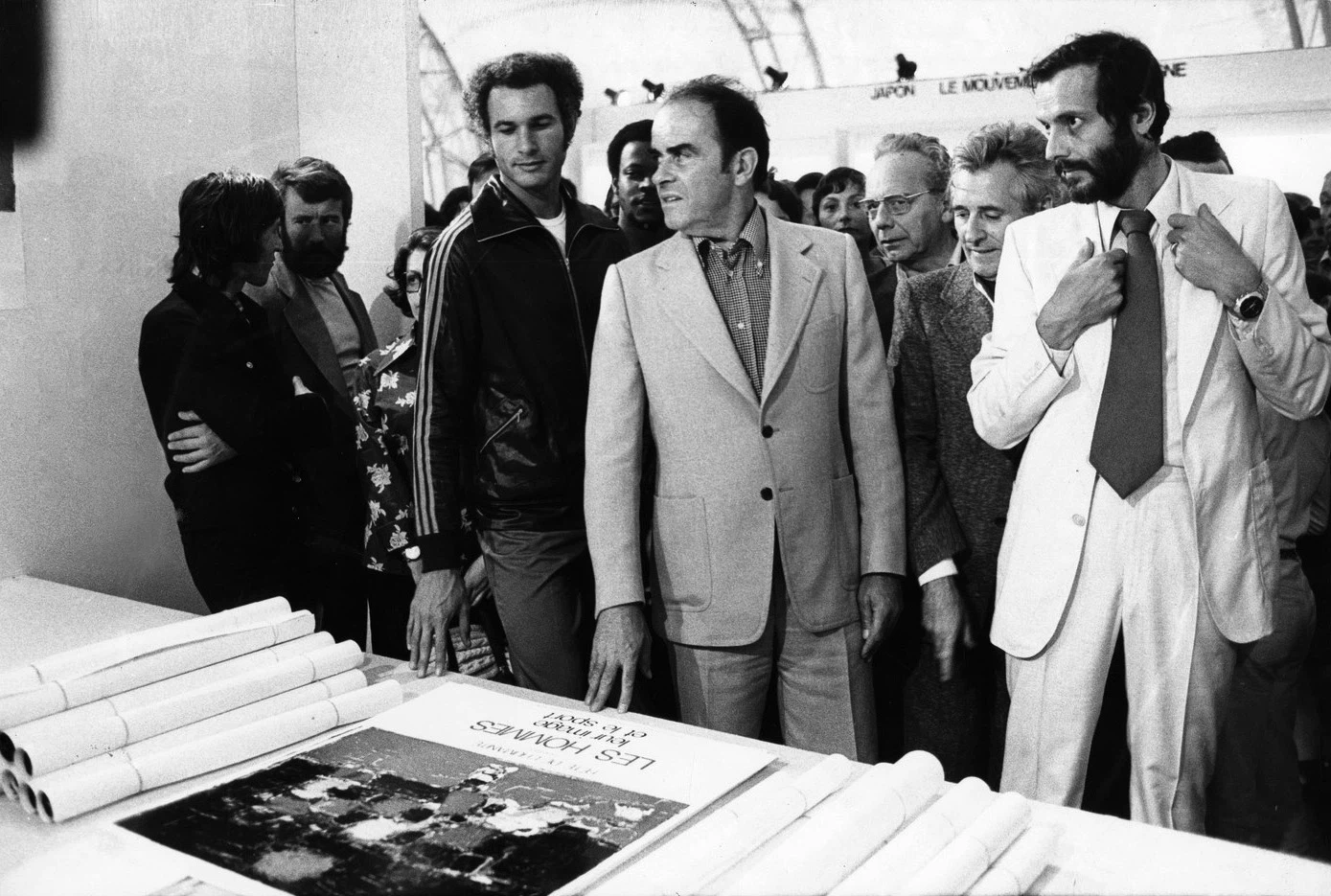
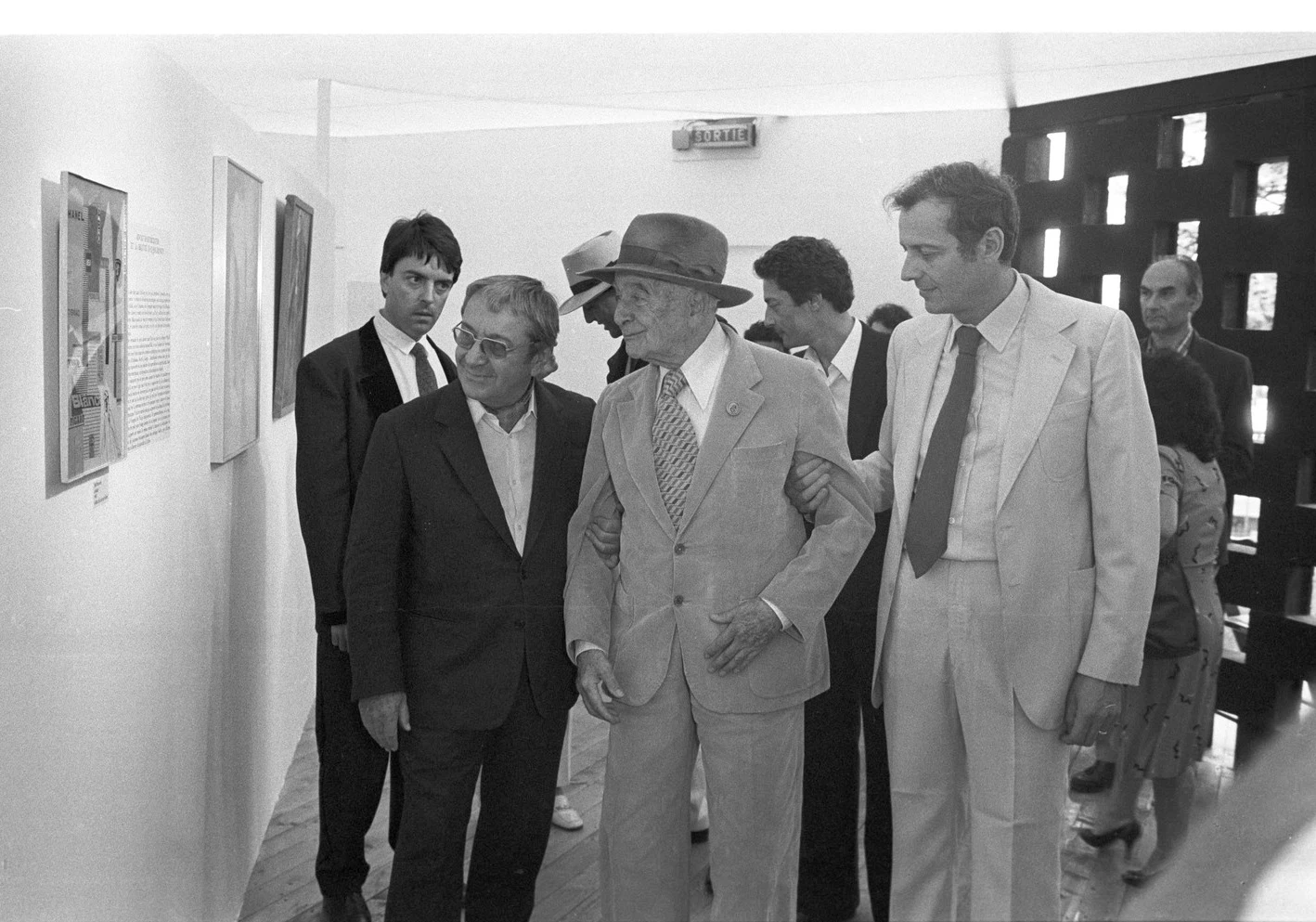
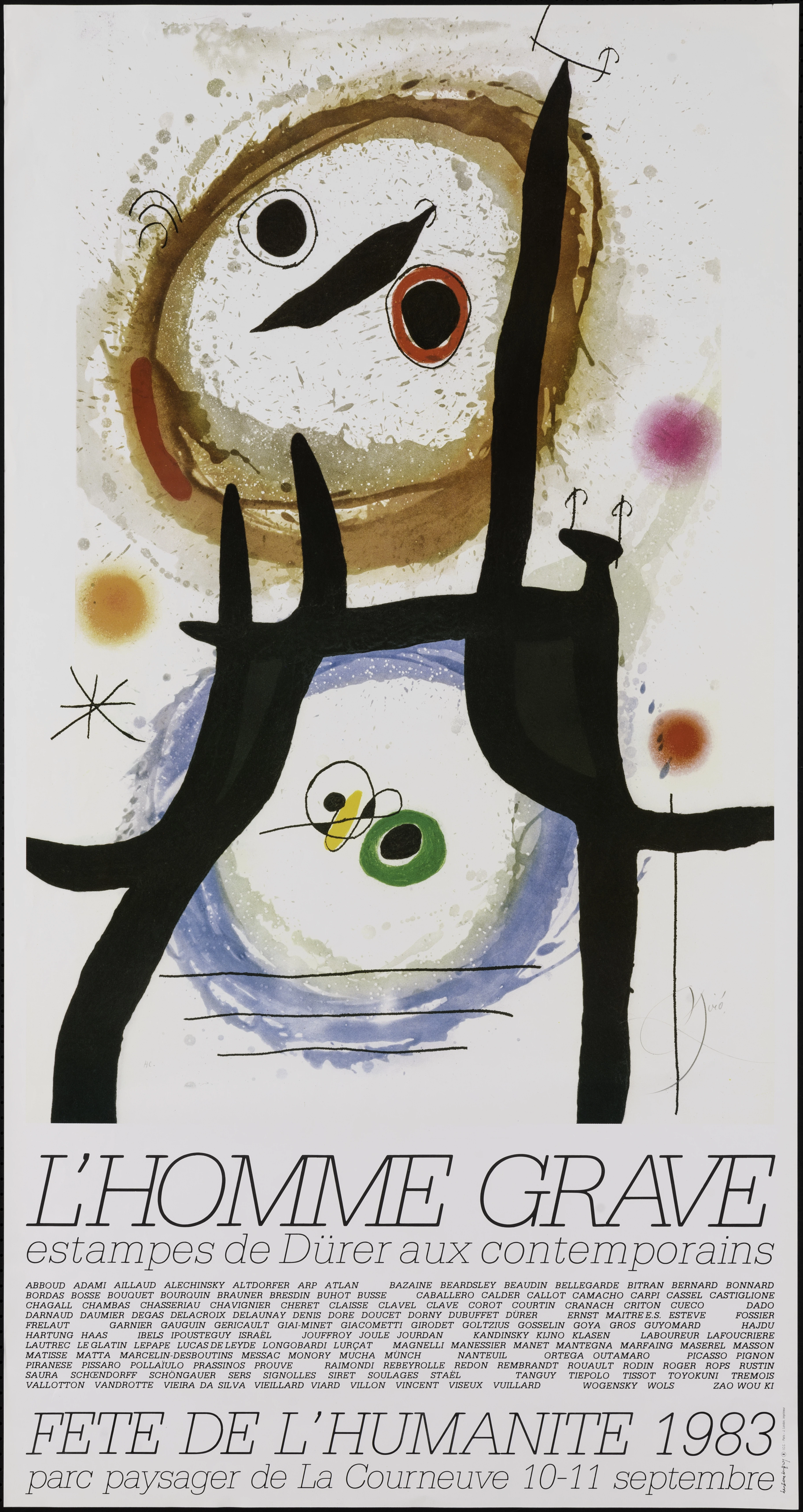
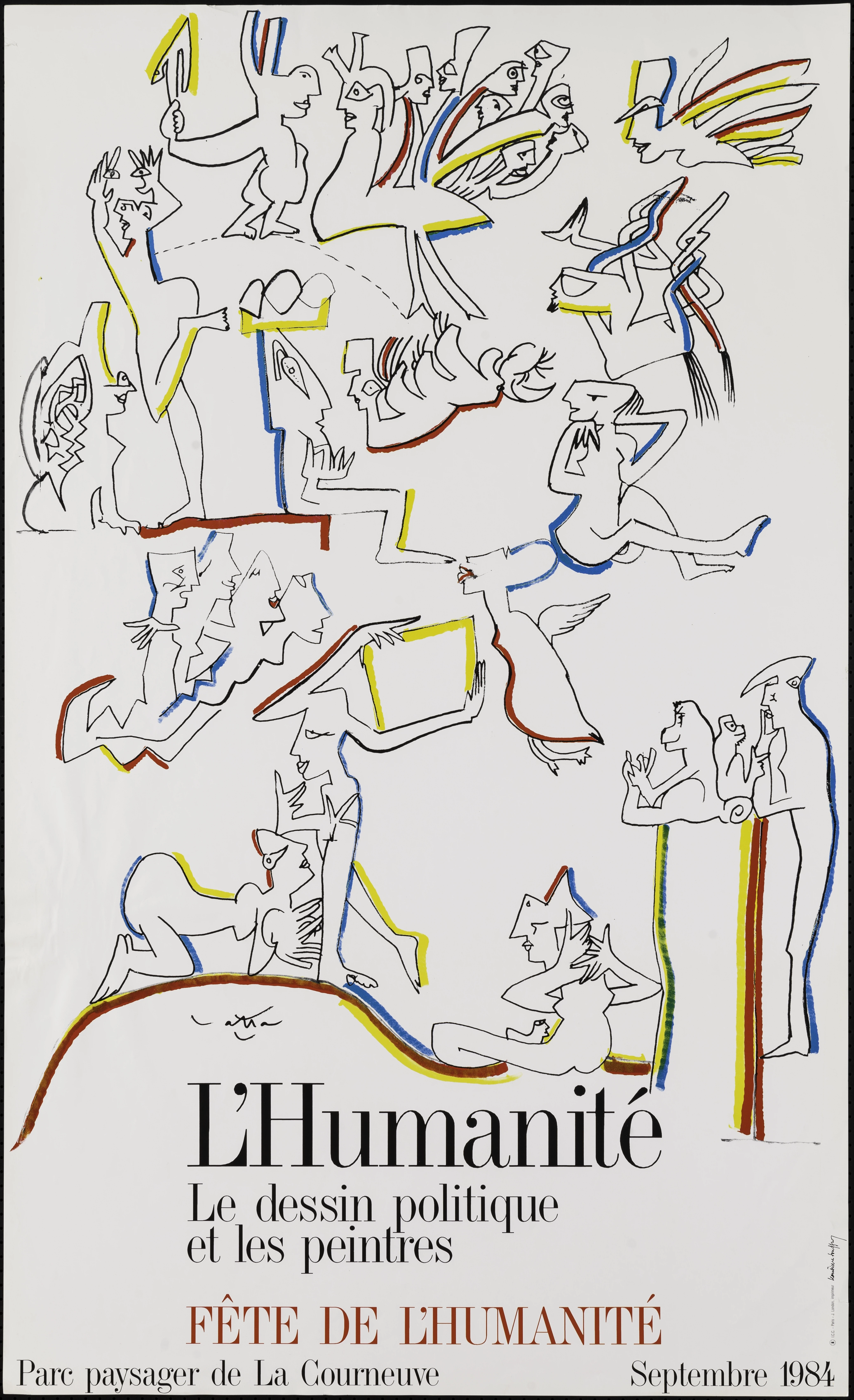
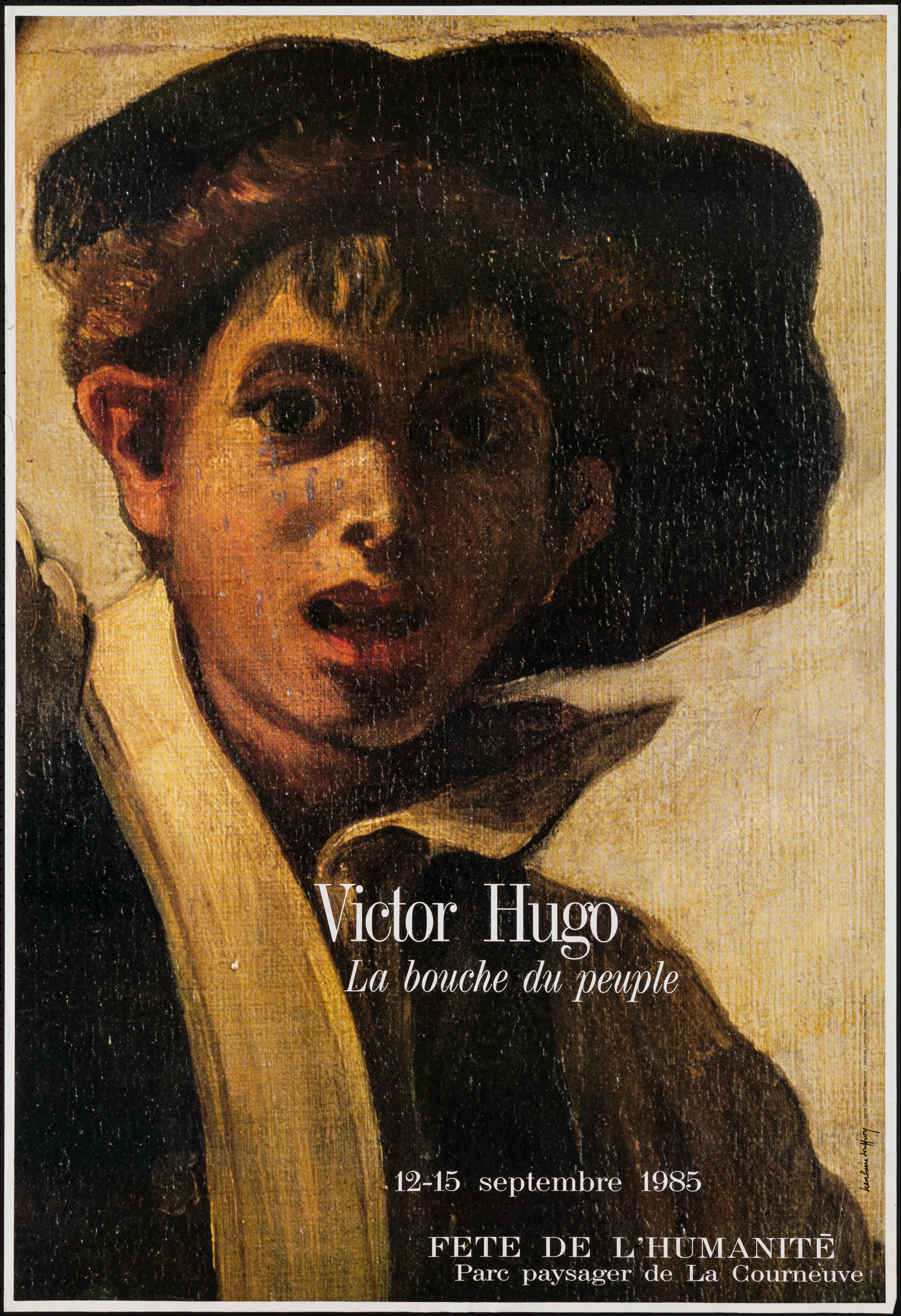
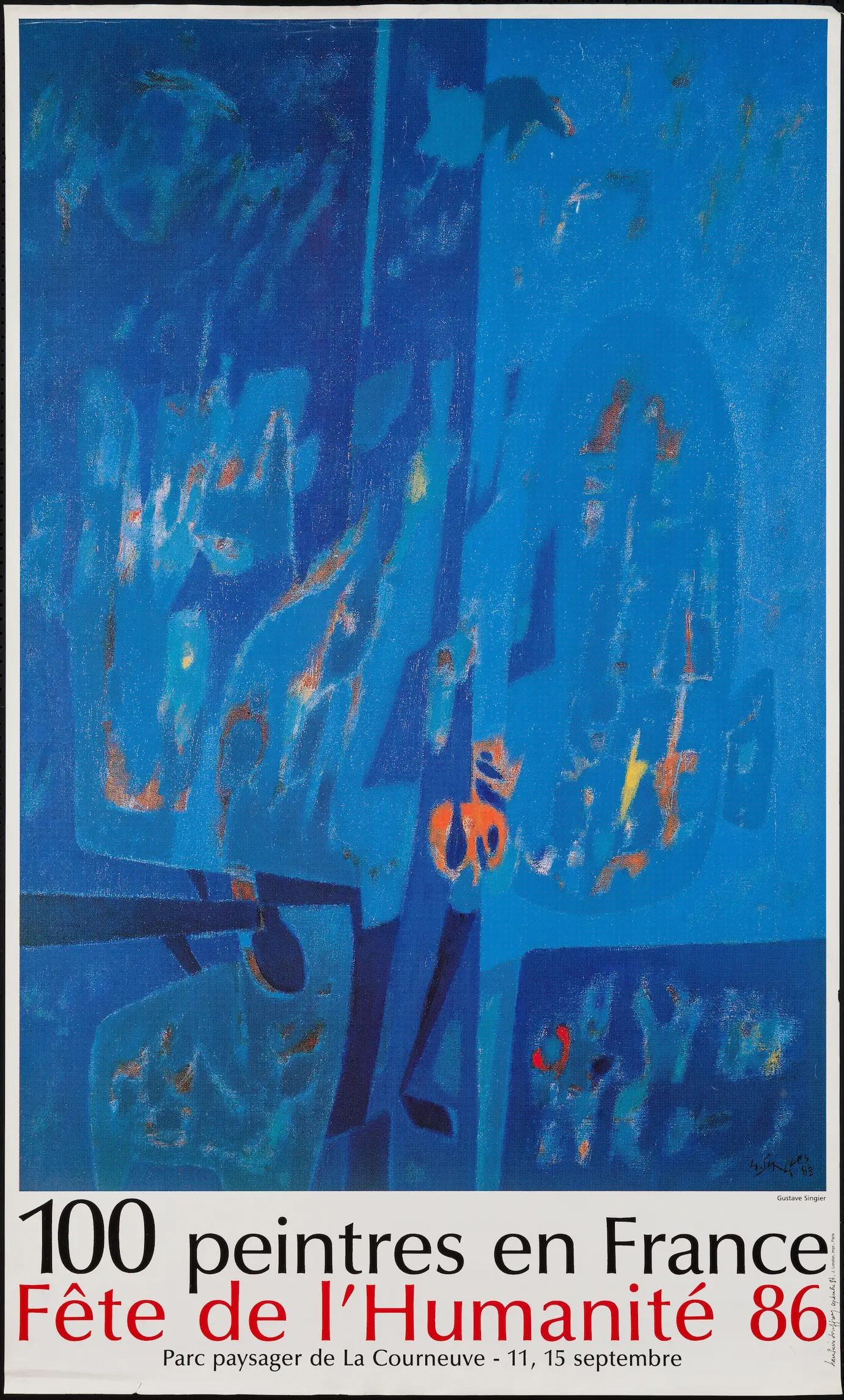
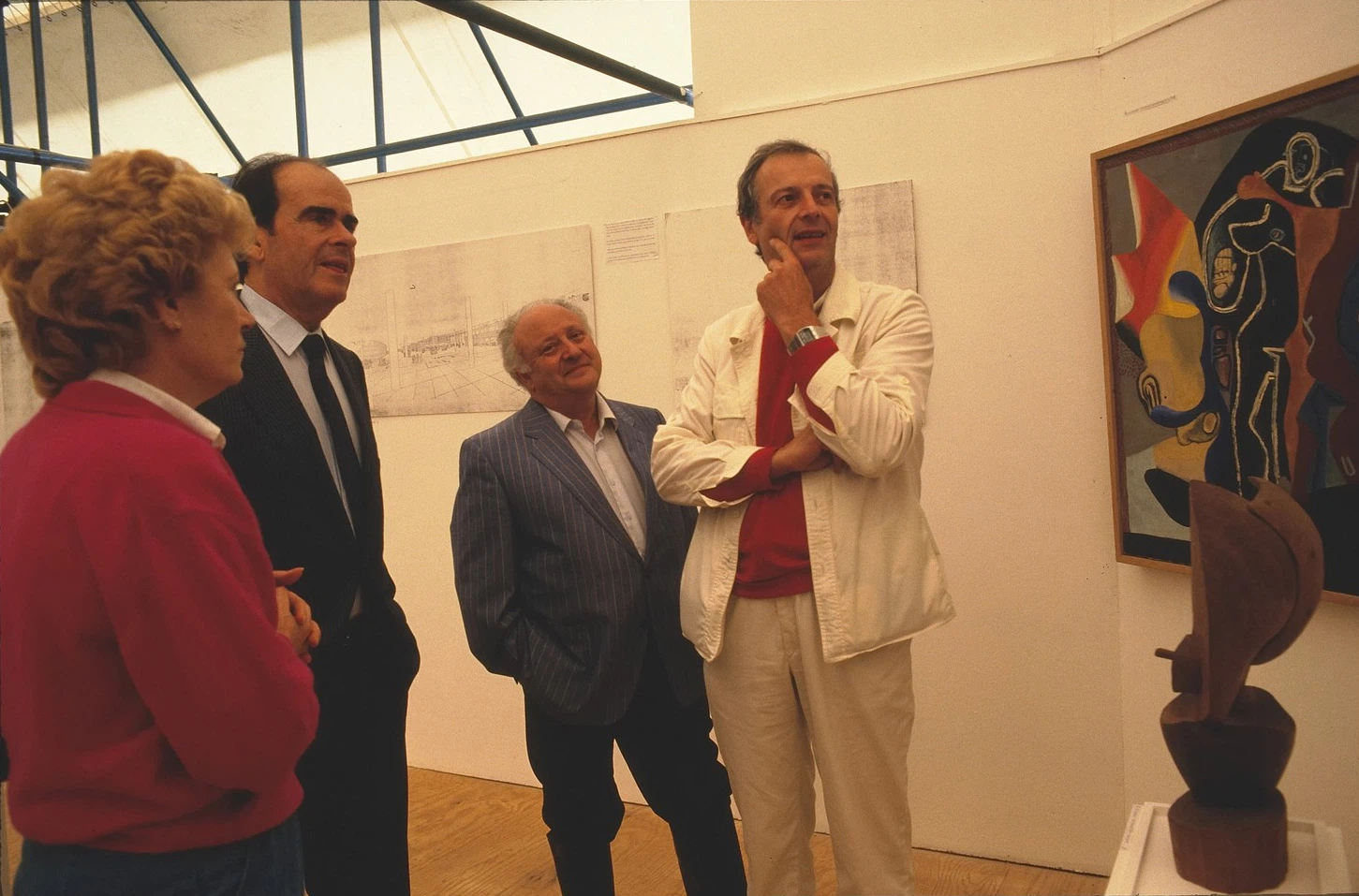
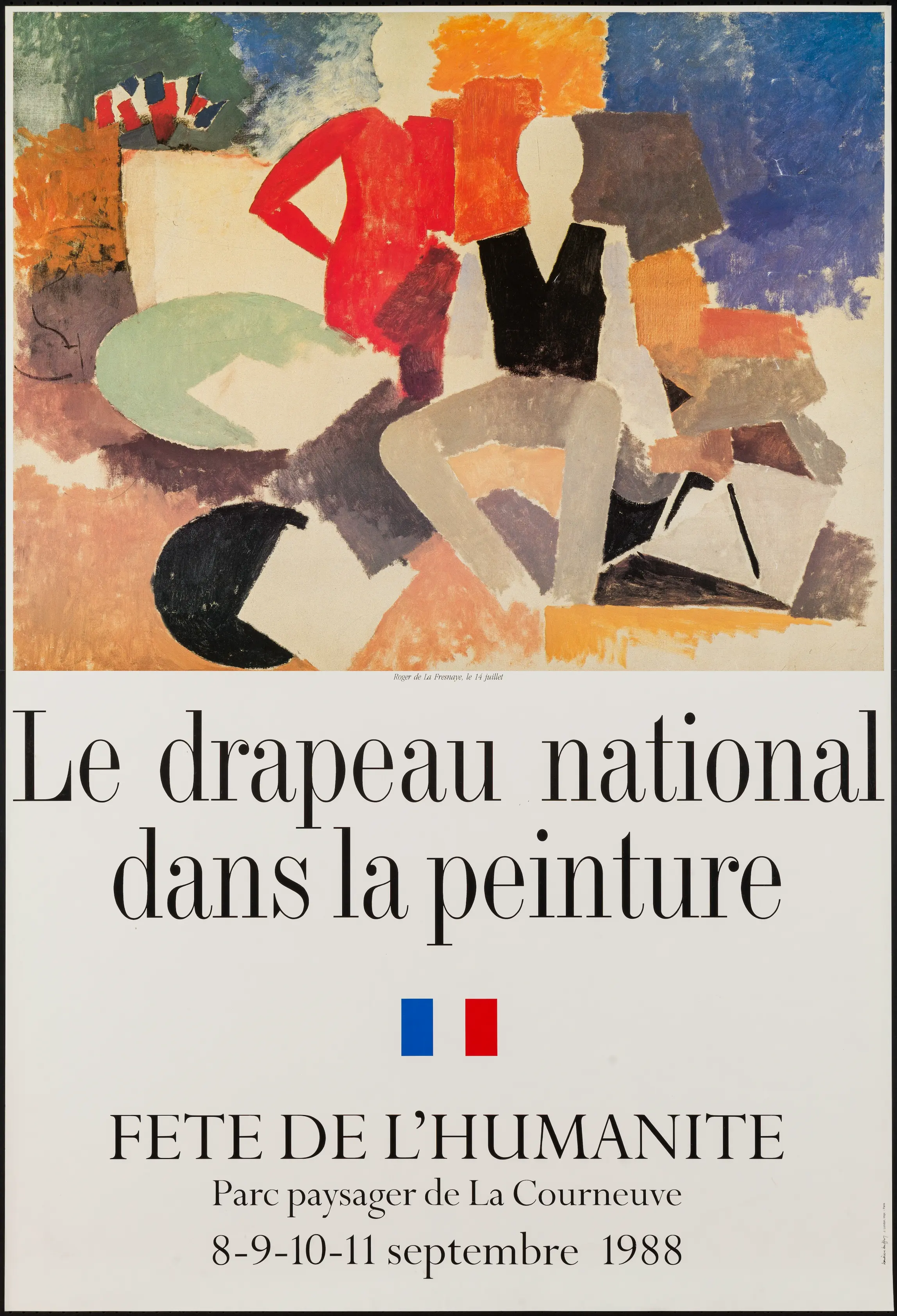
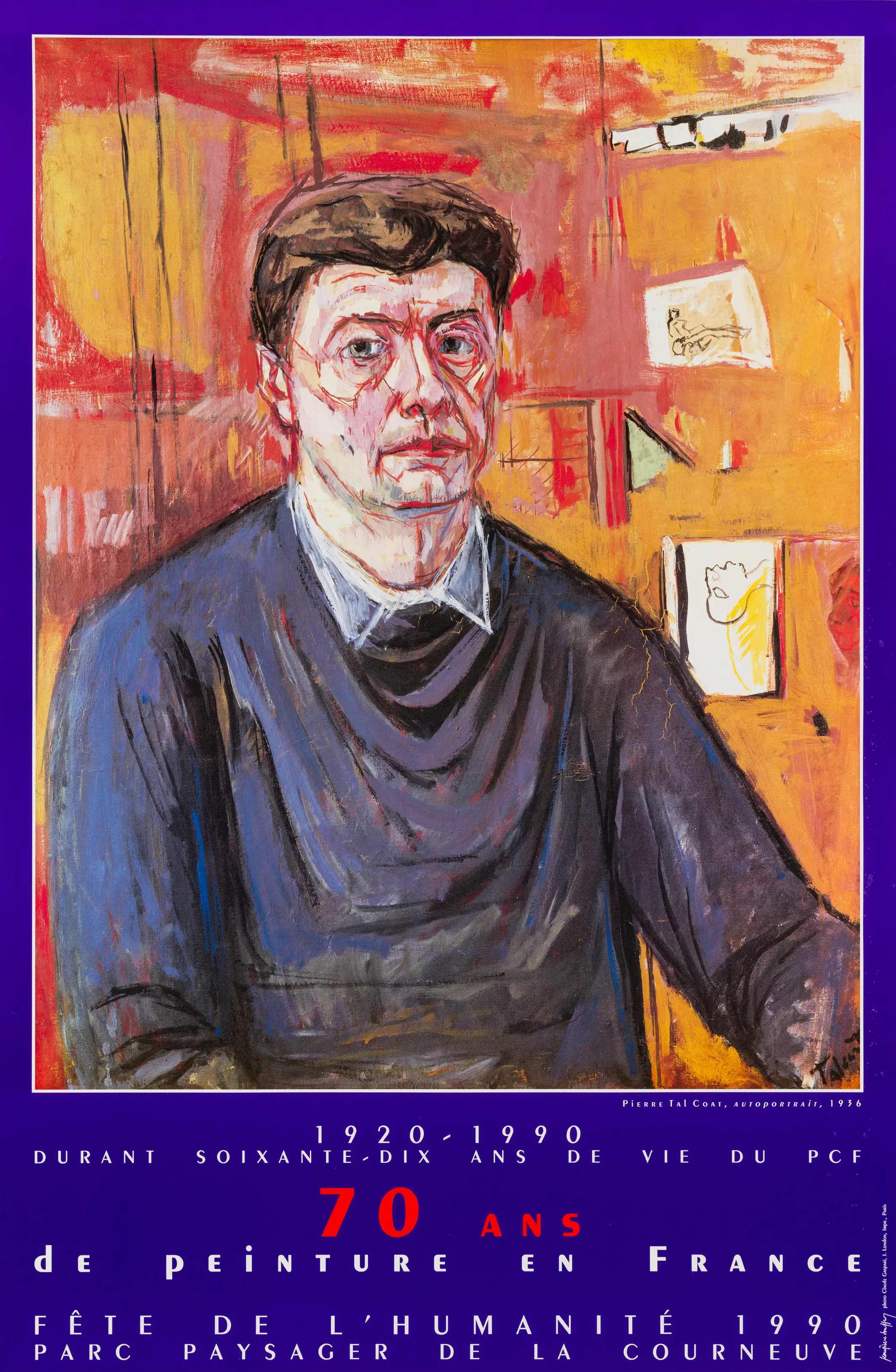
With André Delord, he organised major exhibitions at the Fête de l’Humanité festival from 1966 to 1992 and again from 2001 to 2005. He ran a number of other exhibitions as well, including the Roberto Matta exhibition in Saint-Denis in 1967, which led to a lasting friendship between the two artists.
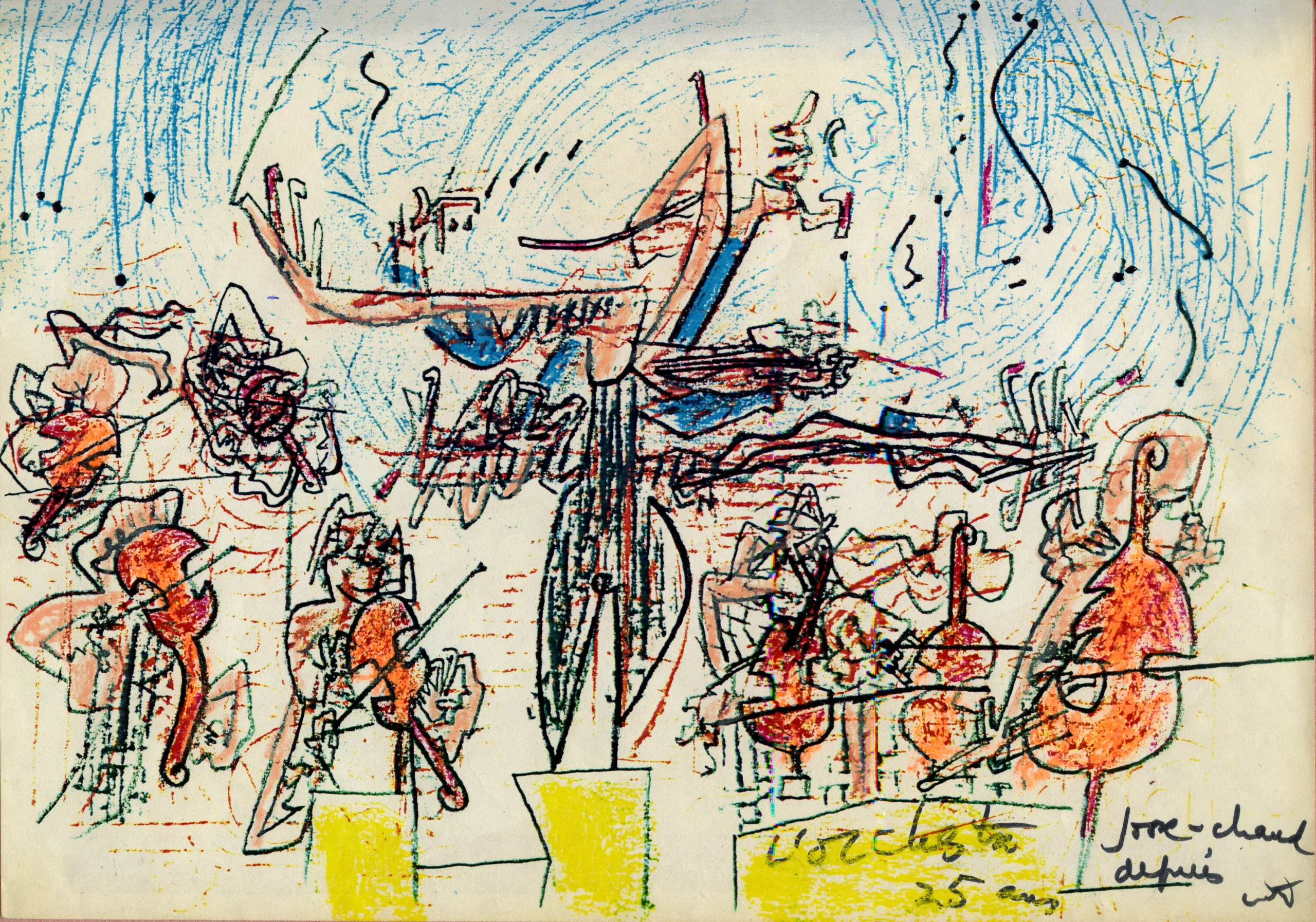
1989: drawing of one of the monumental canvases intended
for the backdrop of the Fête de l’Humanité festival. © Pierre Trovel.
2003 à Arcueil. © Alberto Martinez.
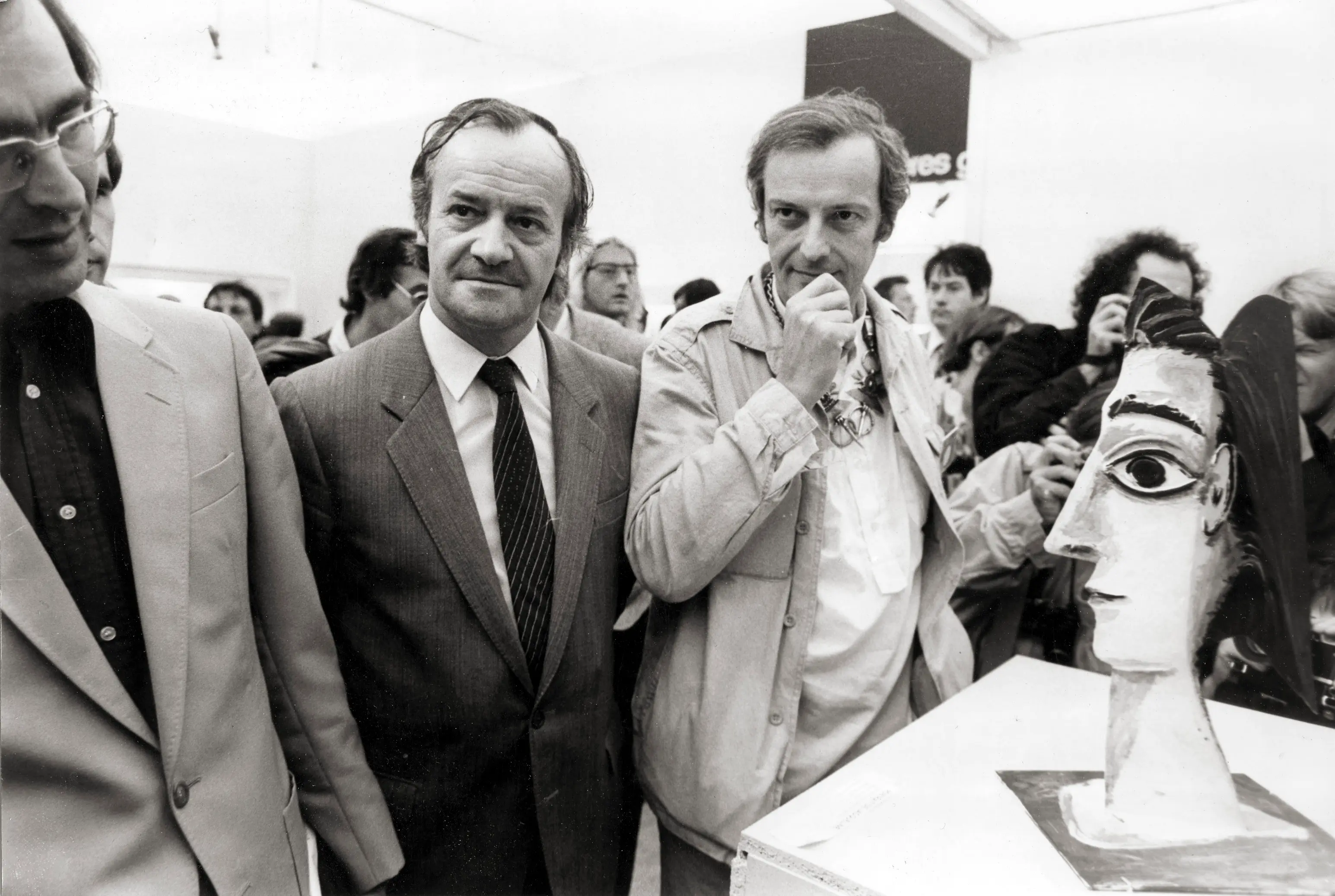
For the Picasso exhibition at the Fête de l’Humanité festival in September 1973, held five months after the artist’s death (on 8 April), Jean-Pierre Jouffroy began the catalogue preface with this sentence: ‘The reason why painters are born and develop is not just to give us the subsequent pleasure of characterising them as such; rather, it is because they have something important to contribute. And that something concerns us, both now and far into the future.’
Throughout his career as a painter, sculptor and engraver, Jean-Pierre Jouffroy was convinced of the importance of painting and the need to keep it up, to display it and to explain its role.
2005: In the Arcueil garden with one of the sculptures
of the ‘Groupe de femmes’. © Alberto Martinez.
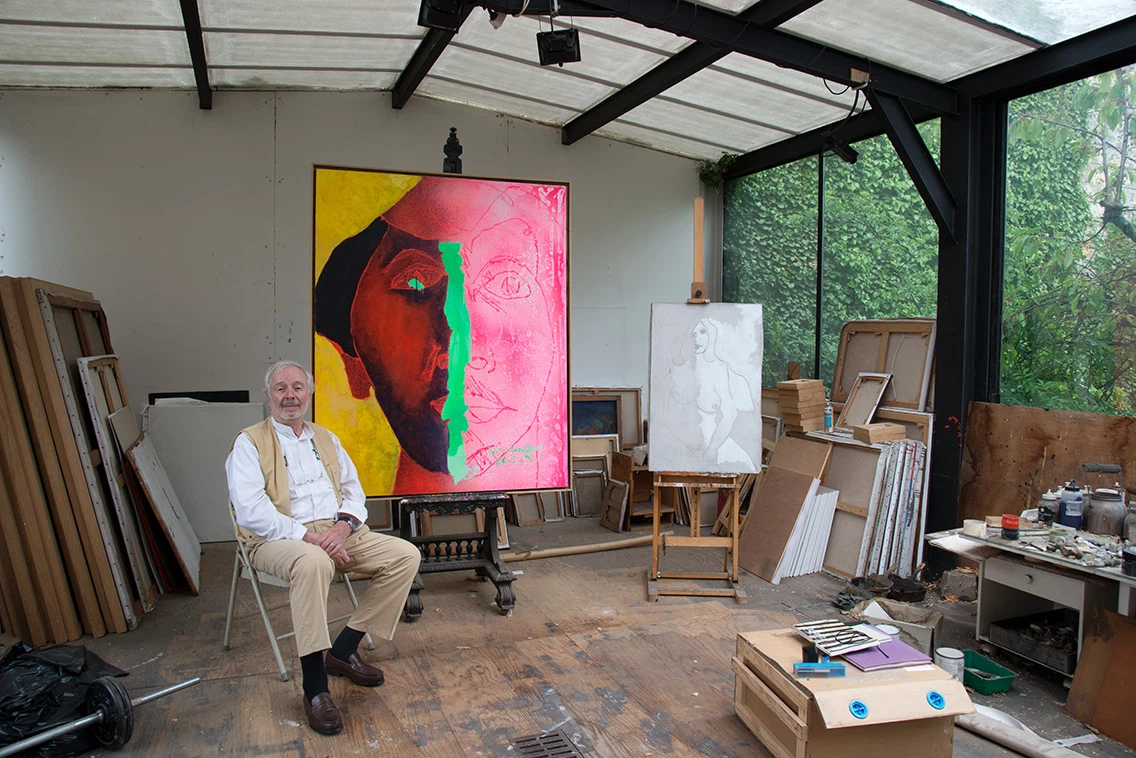
2013: Surrounded by ‘Mme Matisse’ and an old nude. © Alberto Martinez.

EXHIBITIONS

  • 1954: First exhibition, Galerie du Passeur , Paris. Meets Picasso.
  • 1955: First monthly contract (Maxime Blum, collector, lawyer). Meets Braque.
  • 1956: January, Galerie Marcel Bernheim. December: André Weil gallery, Paris (contract).
  • 1957: Awarded the Prix Pacquement by the Société des Amis du Musée d’Art Moderne. Buys the painting for the Museum. ‘Découvrir’, Galerie Charpentier, Paris. Galerie Katia Granoff, Paris. Meets Nathan Cummings, an American collector who buys forty paintings from him and will buy dozens more over the next fifteen years (numerous donations of paintings to American foundations). ‘The Horse in Art’, André Weil Gallery.
  • 1958: Drafted into the French army in May for two years.
  • 1960: Release from military service. Paints a series of 2 m x 2.4 m canvases, featuring the emblematic figure of the Republic and the young women of the Algerian insurrection. ‘Pasiphaë’, Galerie Valentin Abdy (contract), Paris. Meets Émile Djan (two-year contract).
  • 1967: Begins the series ‘Les Amériques interloquées découvrent Christophe Colomb et refusent d’y croire’ (Ridgefield, Connecticut, USA). Meets Jacques Lacan (through Françoise Dolto) and attends his seminars.
  • 1968: In February, runs the ‘Intellectuals for Vietnam Day’ exhibition at Porte de Versailles, Paris. Inaugurates the Maison des Arts et des Loisirs in Sochaux with the exhibition ‘La Naissance de Vénus’.
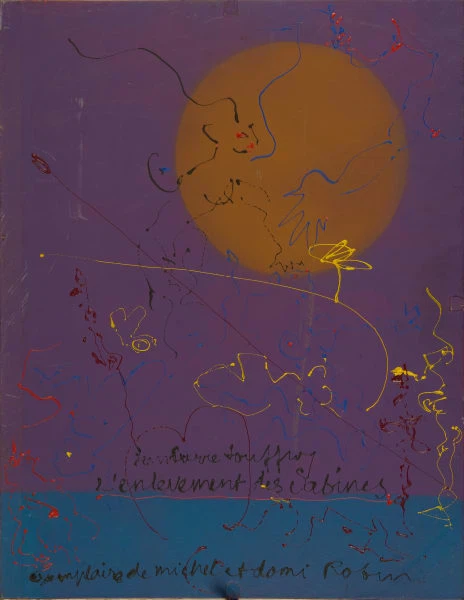
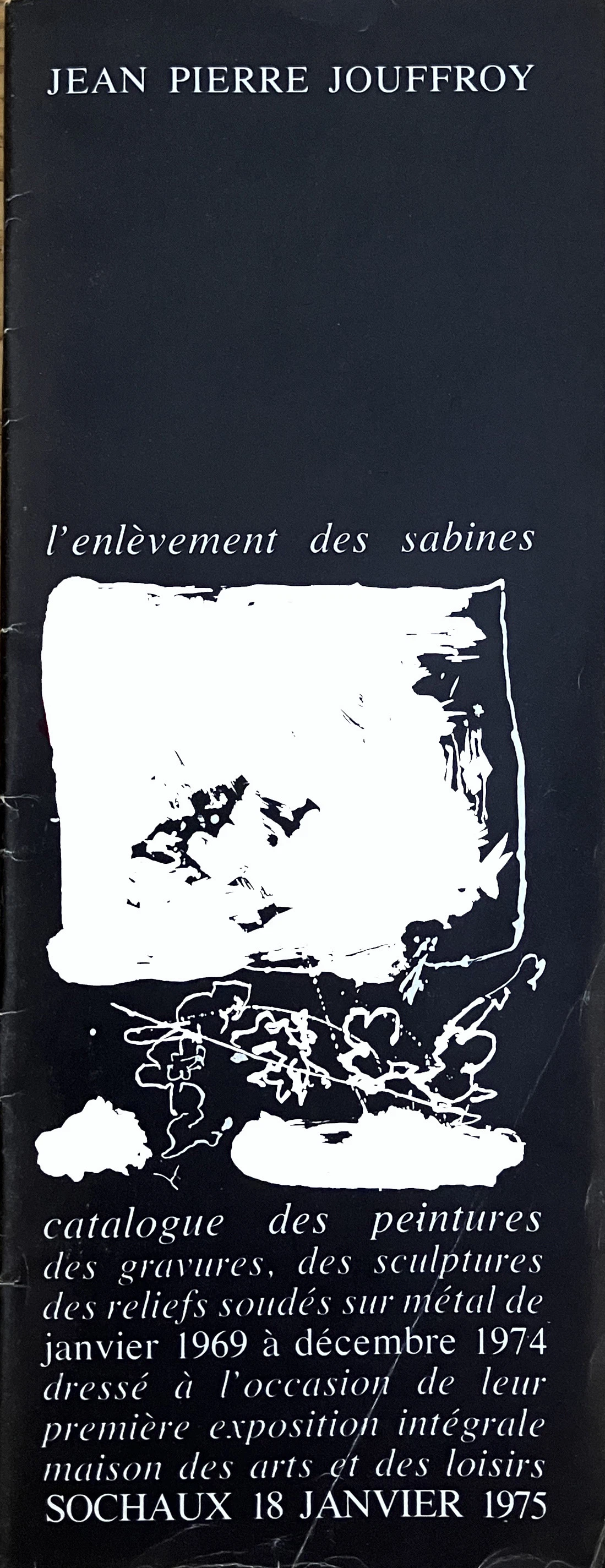
  • 1969: Engraves a suite of fifty intaglio plates, ‘L’Enlèvement des Sabines’ (fifty copies printed), for an exhibition at the Youth and Cultural Centre in Saint-Ouen. This suite later features in numerous exhibitions around France. He is elected General Secretary of the Union des Arts Plastiques and works with Ladislas Kijno to bring together forty-eight French artists’ organisations to demand the right to social security, obtained via legislation passed in December 1975. At the same time, he occupies the workshops in the Cité Fleurie in Paris, fighting to save them from demolition (1973 to 1982).
  • 1970: ‘Trente tableaux’, Château de Saint-Ouen.
  • 1971:  ‘L’Enlèvement des Sabines’ (suite of 50 engraved plates), Corbeil-Essonne, Bezançon.
  • 1972:La Sphynge’, thirty metal reliefs, Galerie 55, Paris. ‘L’Enlèvement des Sabines’, exhibition of the suite of engravings and start of pre-paid prints for the series, Galerie 55, Paris.
  • 1973: ‘Chant funèbre pour un Indien des Andes’, twenty-seven canvases, Maxime Gorki Cultural Centre, in Petit-Quevilly. First invitation to the Salon de Mai exhibition (then every year until 2002).
  • 1974:  ‘10 Ans d’Œuvre Graphique et de Publicité Politique de Jean-Pierre Jouffroy’ (Ten years of Jean-Pierre Jouffroy’s graphic and political work), Saint-Étienne-du-Rouvray.
  • 1975: ‘L’Enlèvement des Sabines, 185 Peintures, Gravures et Sculptures’, Sochaux.
  • 1976: ‘Gravures’, Saint-Étienne-du-Rouvray.
  • 1977: ‘Prologue pour un Baisemain’, Art Affaires gallery, Paris. ‘Atalante’ on the theme of ‘the girl who could outrun the boys’: monumental commission for the Lenain de Tillemont middle school in Montreuil.
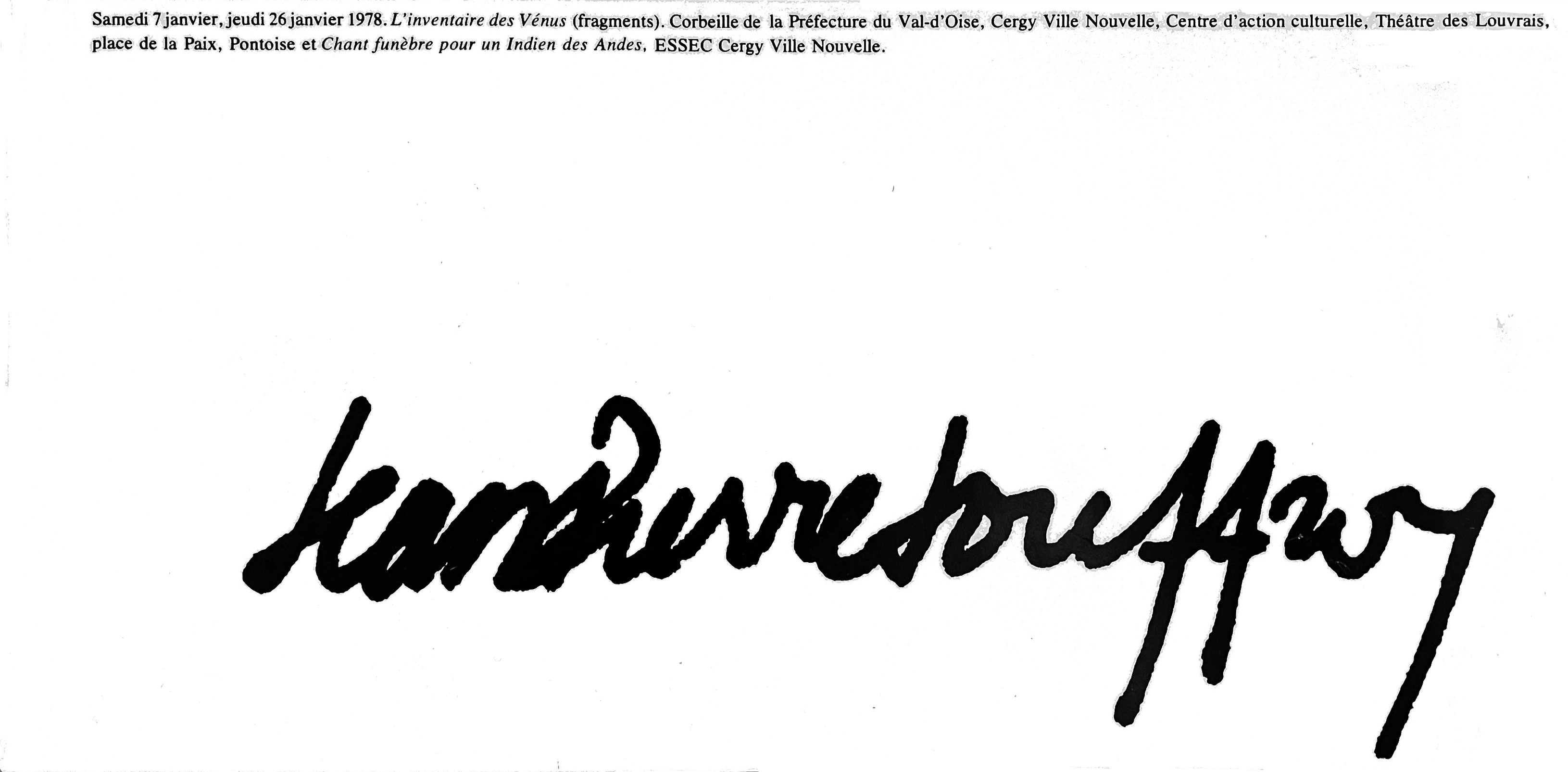
  • 1978: ‘L’Inventaire des Vénus’ large-format retrospective, mezzanine of the Cergy-Pontoise Prefecture. ‘Chant Funèbre pour un Indien des Andes’, ESSEC business school, Cergy-Pontoise.
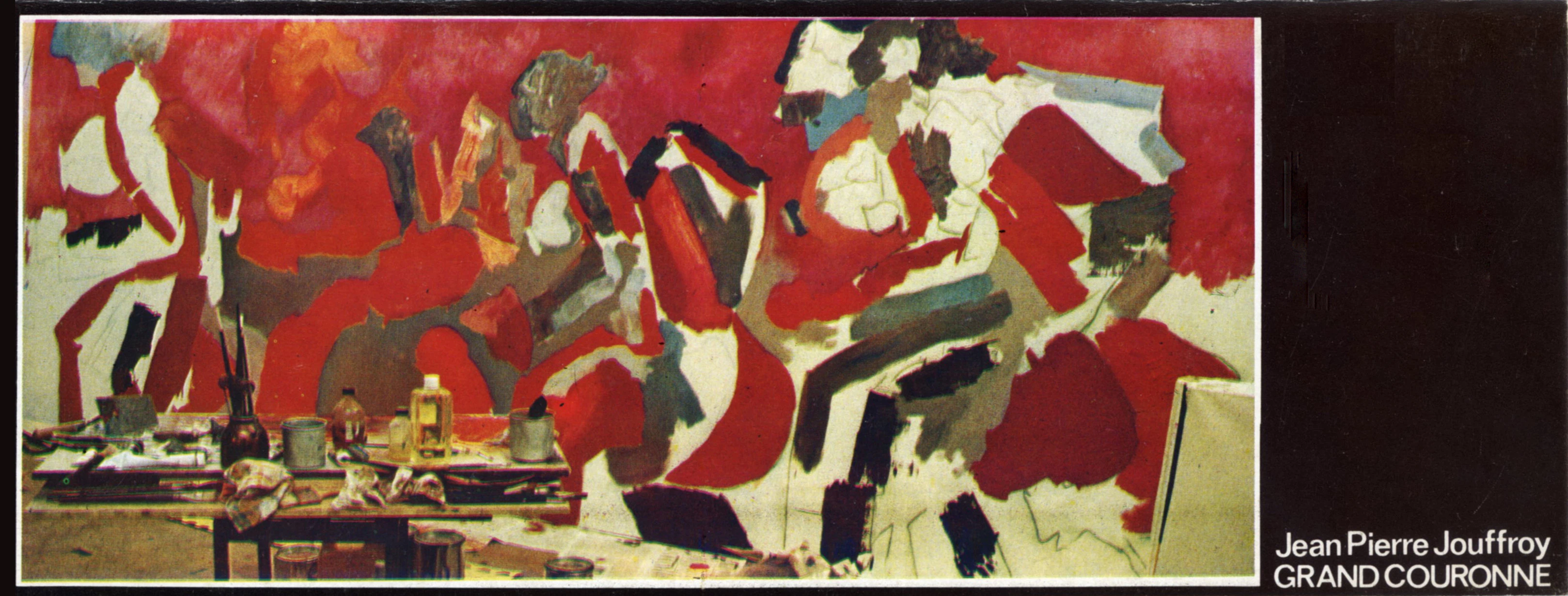
  • 1981:  ‘La Danse, Delacroix, ses Filles et ses Fils, un Orchestre, etc.’, Grand-Couronne Cultural Centre. ‘50 Figures Humaines’, Lillers Cultural Centre.
  • 1982: ‘50 Figures Humaines et Quelques Choses Encore’, Salaumines.
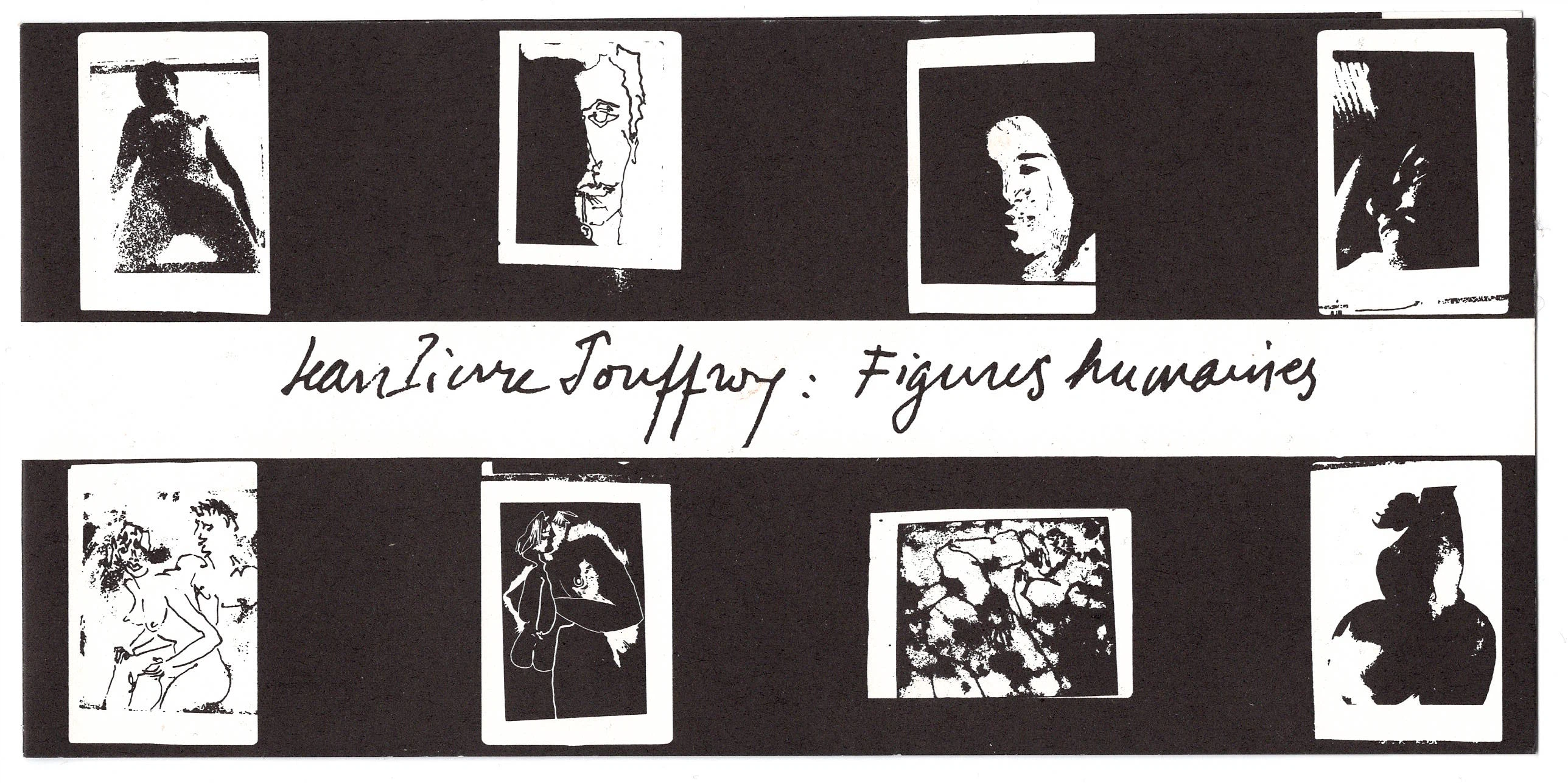
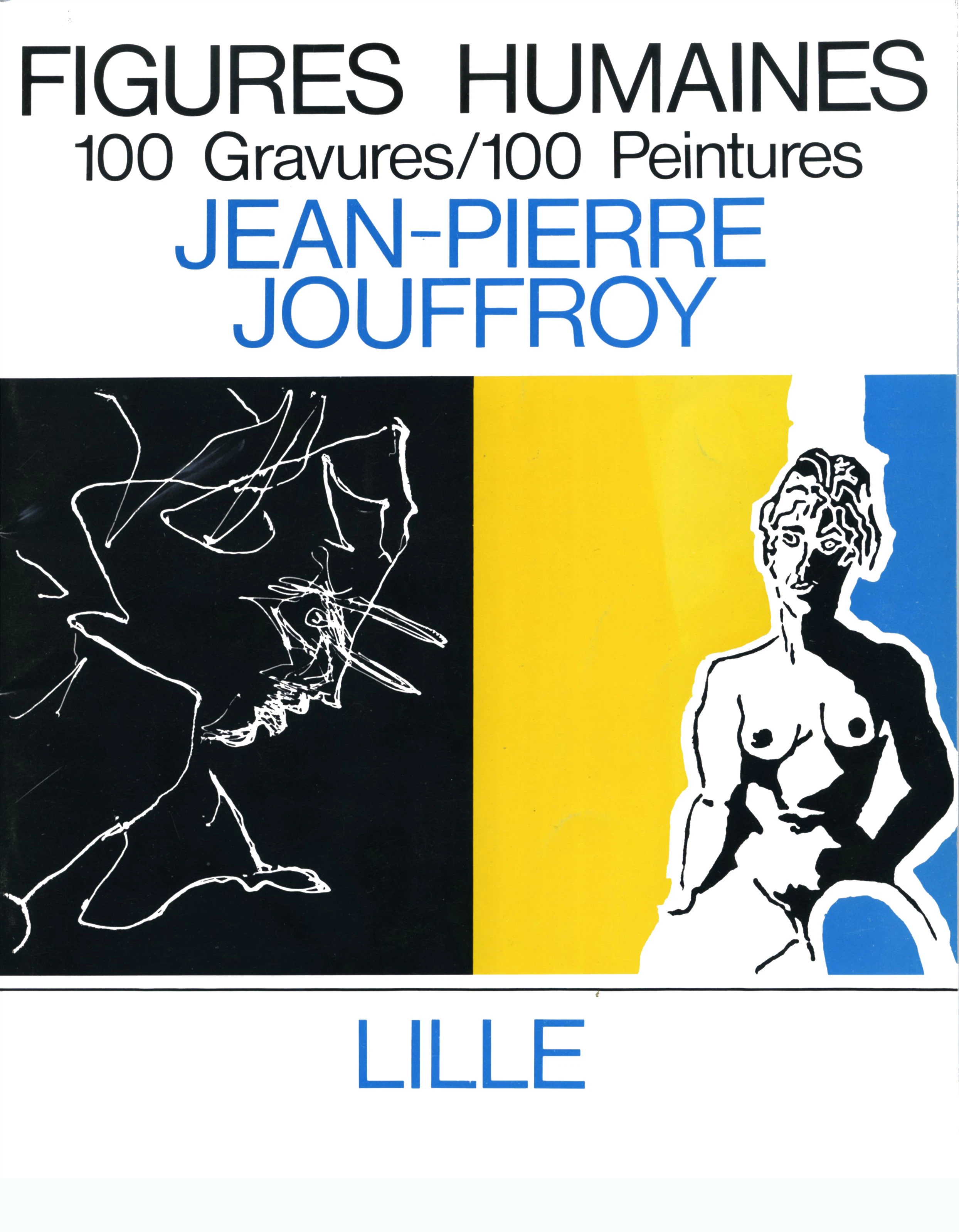
  • 1983: ‘Figures Humaines, Retrospective 1962-1984 », Le Creusot. Numerous lectures throughout the region on modernity. Engraves one hundred plates using myriad engraving techniques for the exhibition in Lille, at the Palais Rihour and exhibits one hundred paintings at the same time at the École Régionale des Arts Plastiques: ‘Figures Humaines’, 100 engravings/100 paintings. The City of Lille acquires ‘Concert’, a 2.4 m x 2 m canvas.
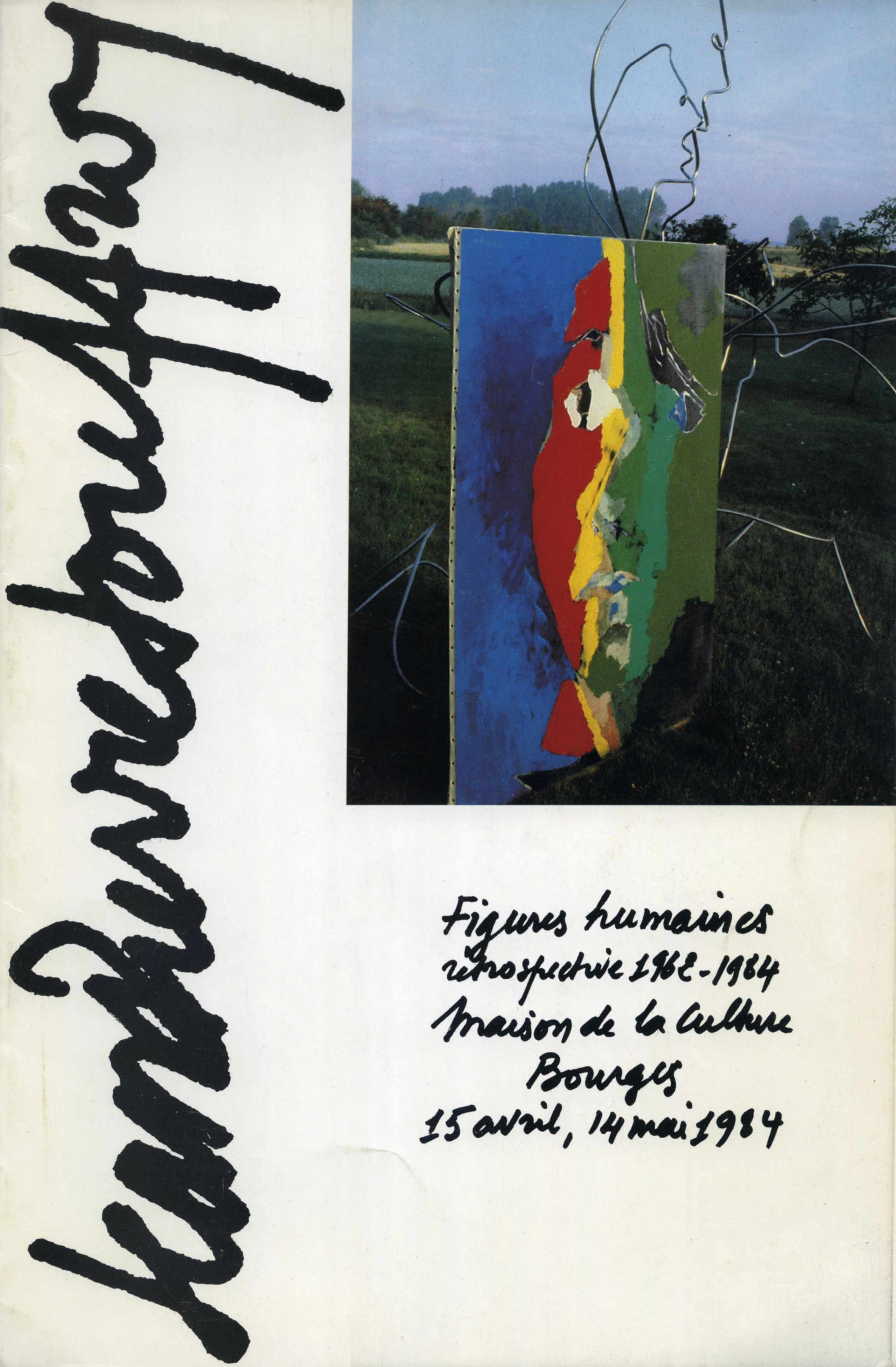
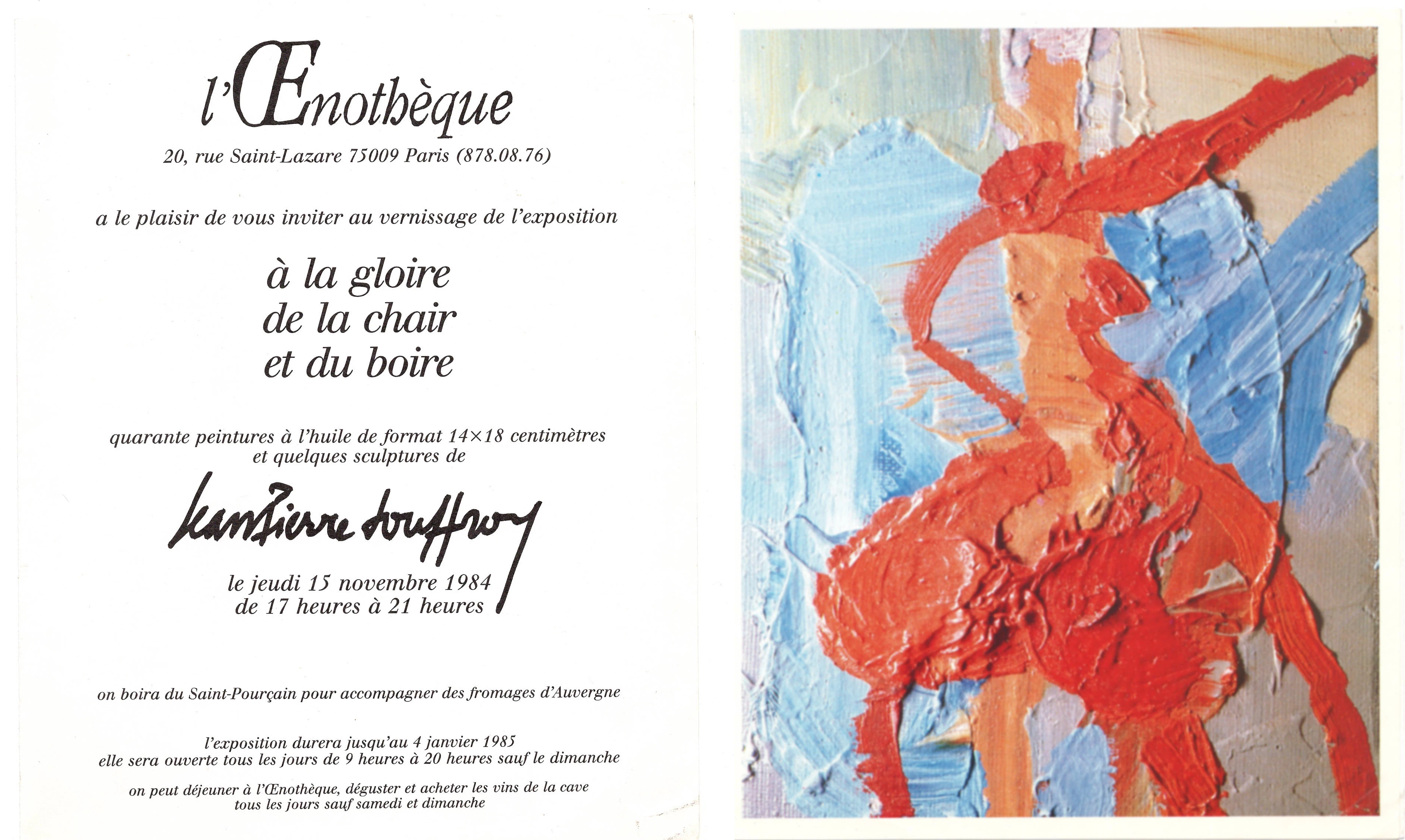
  • 1984: ‘Figures Humaines, Retrospective 1962-1984’ », Maison de la Culture, Bourges. ‘À la Gloire de la Chair et du Boire’, Œnothèque, Paris. Thirty Engravings’, Galata Galerisi, Istanbul (Turkey).
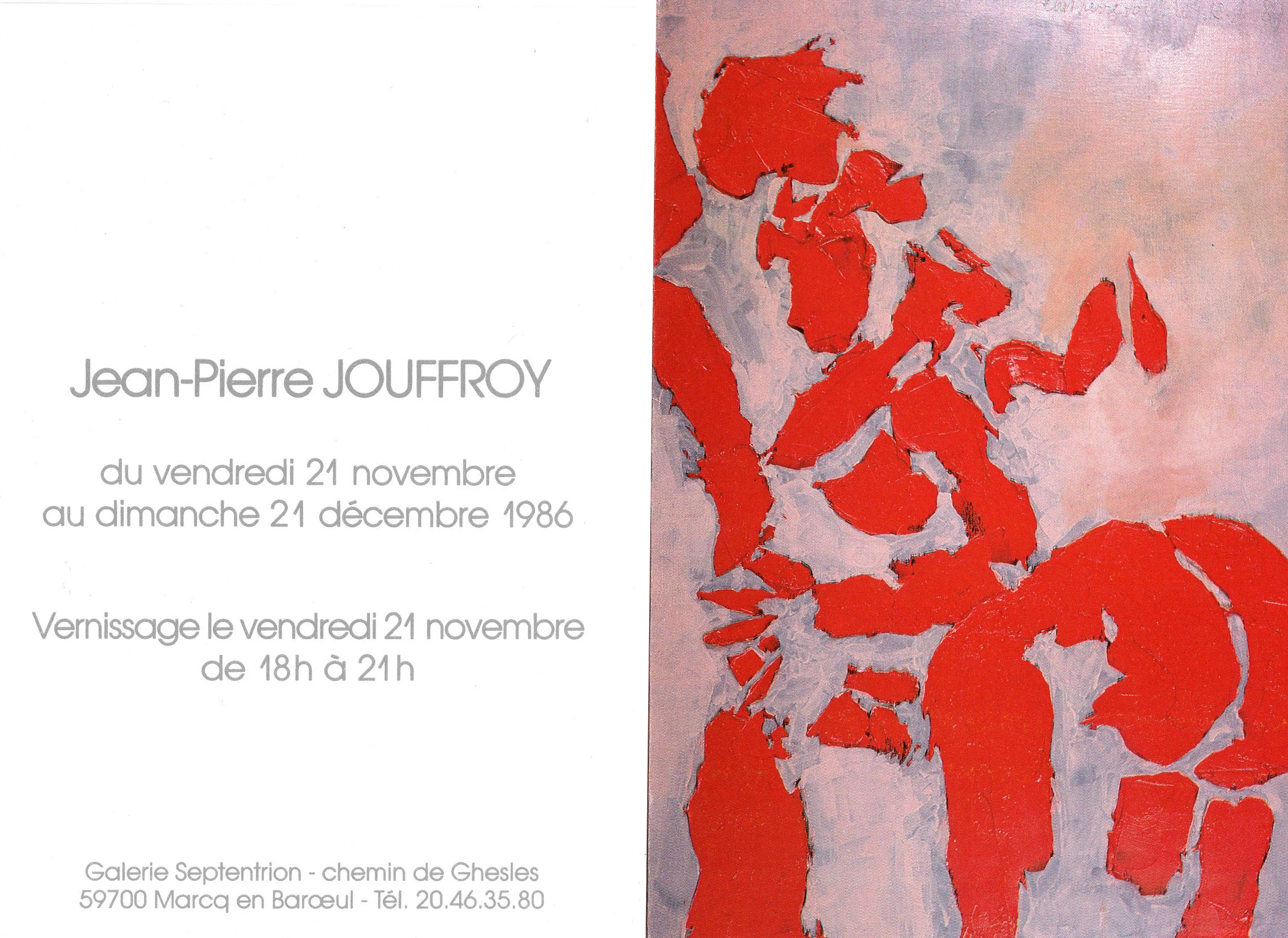
  • 1986: ‘Jean-Pierre Jouffroy’ Galerie Septentrion, Marcq-en-Barœul.
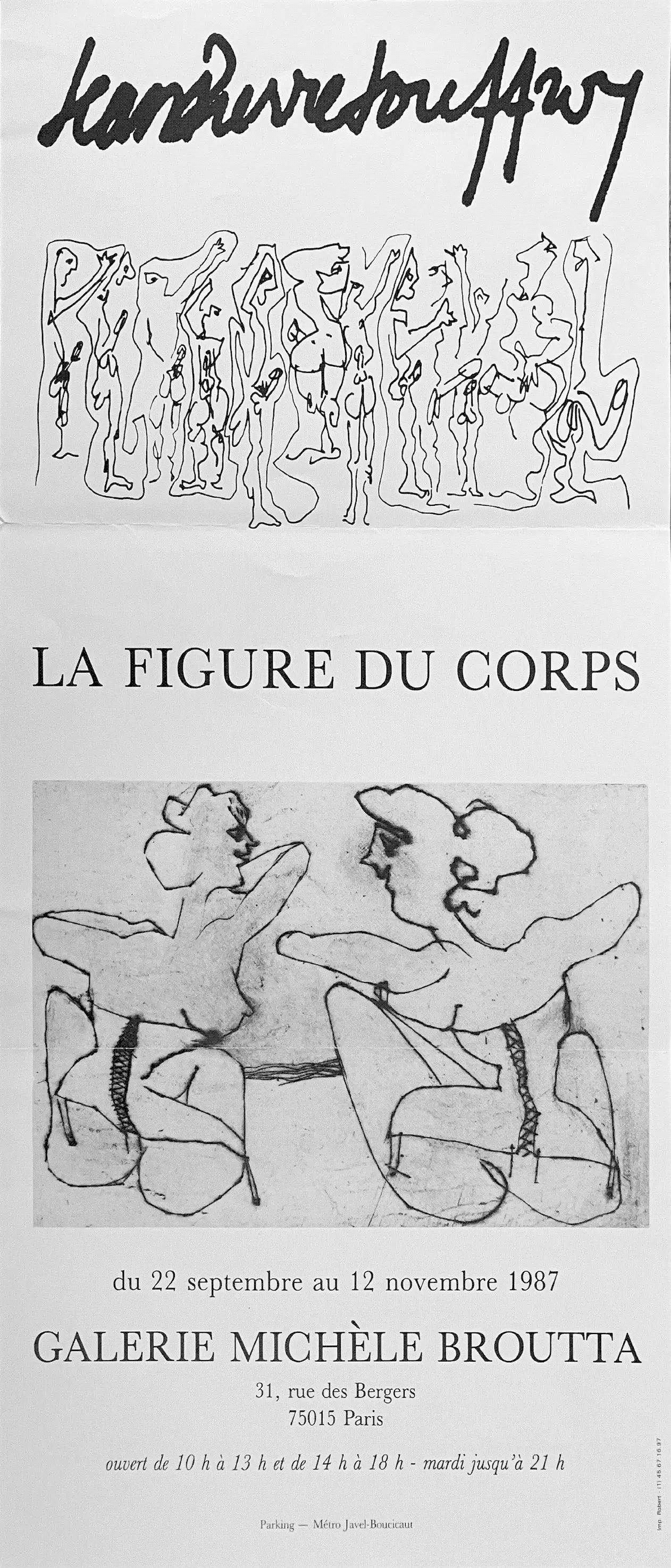
  • 1987: ‘La Figure du Corps’, engravings and drawings, Galerie Michèle Broutta, Paris. ‘Le Cœur et la Chair’, Ronchin town hall.
  • 1988: ‘Retrospective’, Maison Descartes, Amsterdam; Imago Gallery, Amsterdam; engravings at the French Institute, The Hague (Netherlands).
  • 1989: ‘La Naissance de Gavroche’, Galerie Septentrion, Marcq-en-Barœul; Atelier d’Arts Plastiques, Feignies (59). Creation of the backdrop for the Fête de l’Humanité festival with thirteen 10 x 4 m canvases celebrating the bicentenary of the French Revolution, three of which were bought by the departmental council of Seine-Saint-Denis, along with one hundred preparatory drawings.
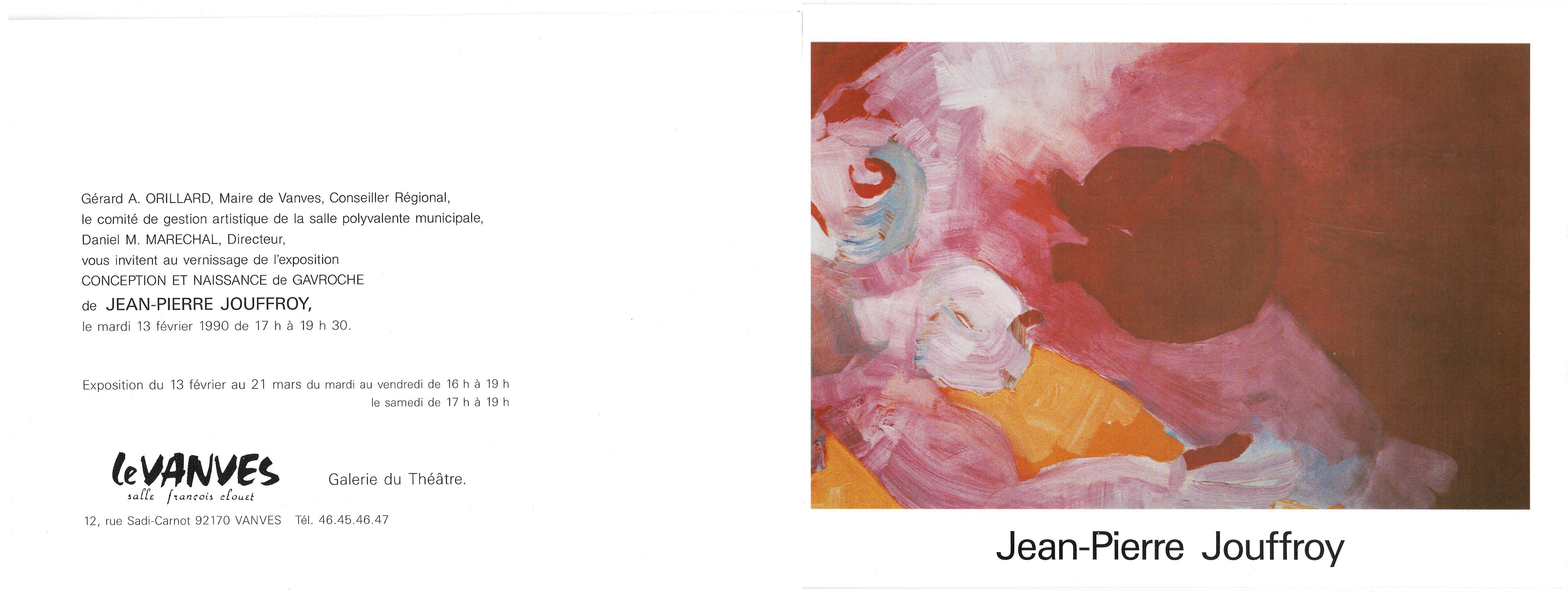
  • 1990: ‘Conception et naissance de Gavroche’, Vanves Cultural Centre.
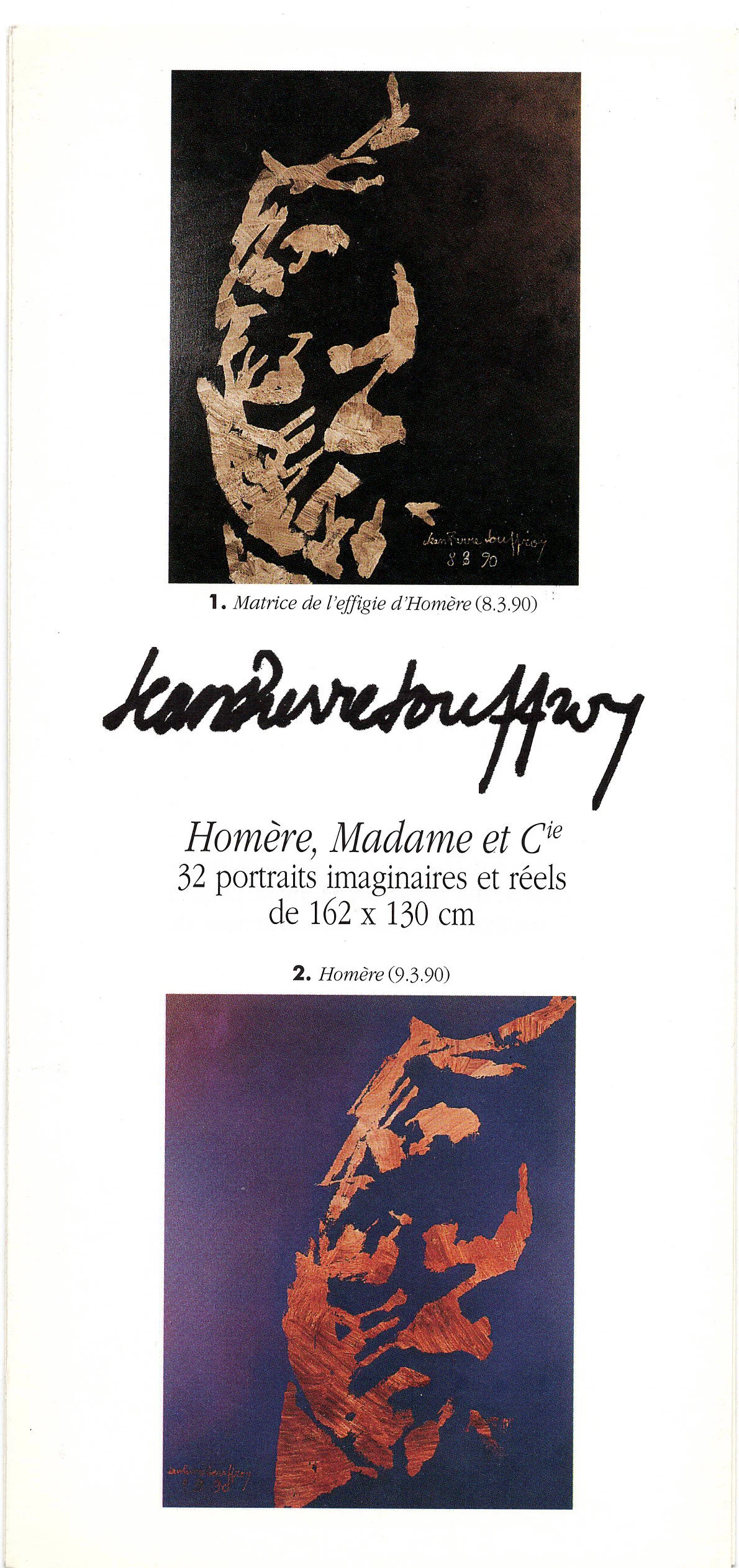
  • 1993: ‘Homère, Madame et Cie , 32 Portraits Imaginaires et Réels’, 1.62 x 1.30 m, Galerie Julio-Gonzalez, Arcueil (94).
  • 1994 : Exhibition with Ladislas Kijno , Feignies (59).
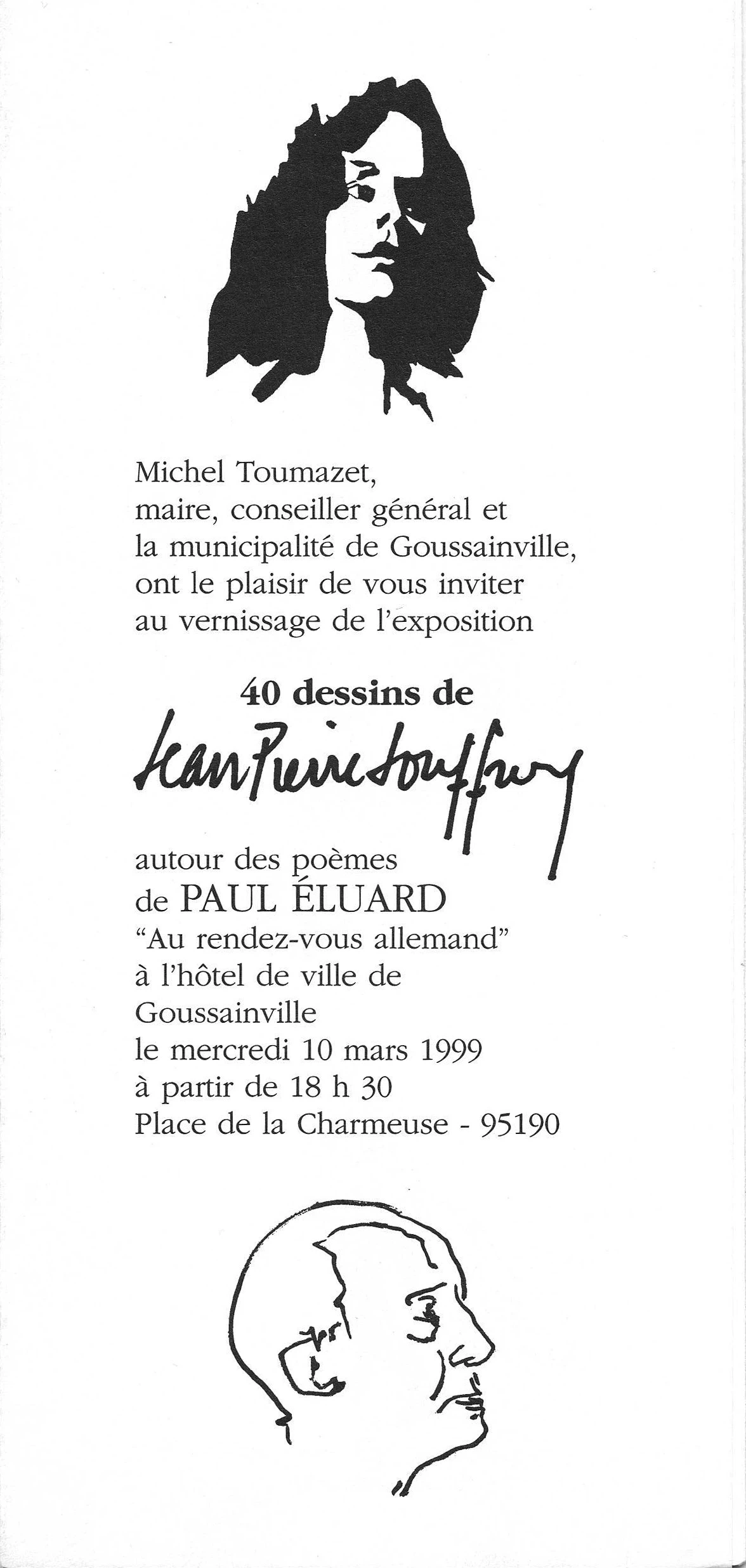
  • 1995: ‘Homère, Madame et Cie’, Maison des Arts et Loisirs, Sochaux. Monumental fresco in enamelled tempered glass for the Dulcie September secondary school, Arcueil (monument destroyed). Engraving of forty plates for ‘Au Rendez-Vous Allemand’, twenty-seven poems by Paul Éluard (centenary of the poet’s birth).
  • 1998: ‘Jean-Pierre Jouffroy, Œuvres de Plusieurs Temps’, a retrospective of two hundred paintings including the thirteen monumental formats from 1989 in the hall of the Confédération Générale du Travail in Montreuil (93).
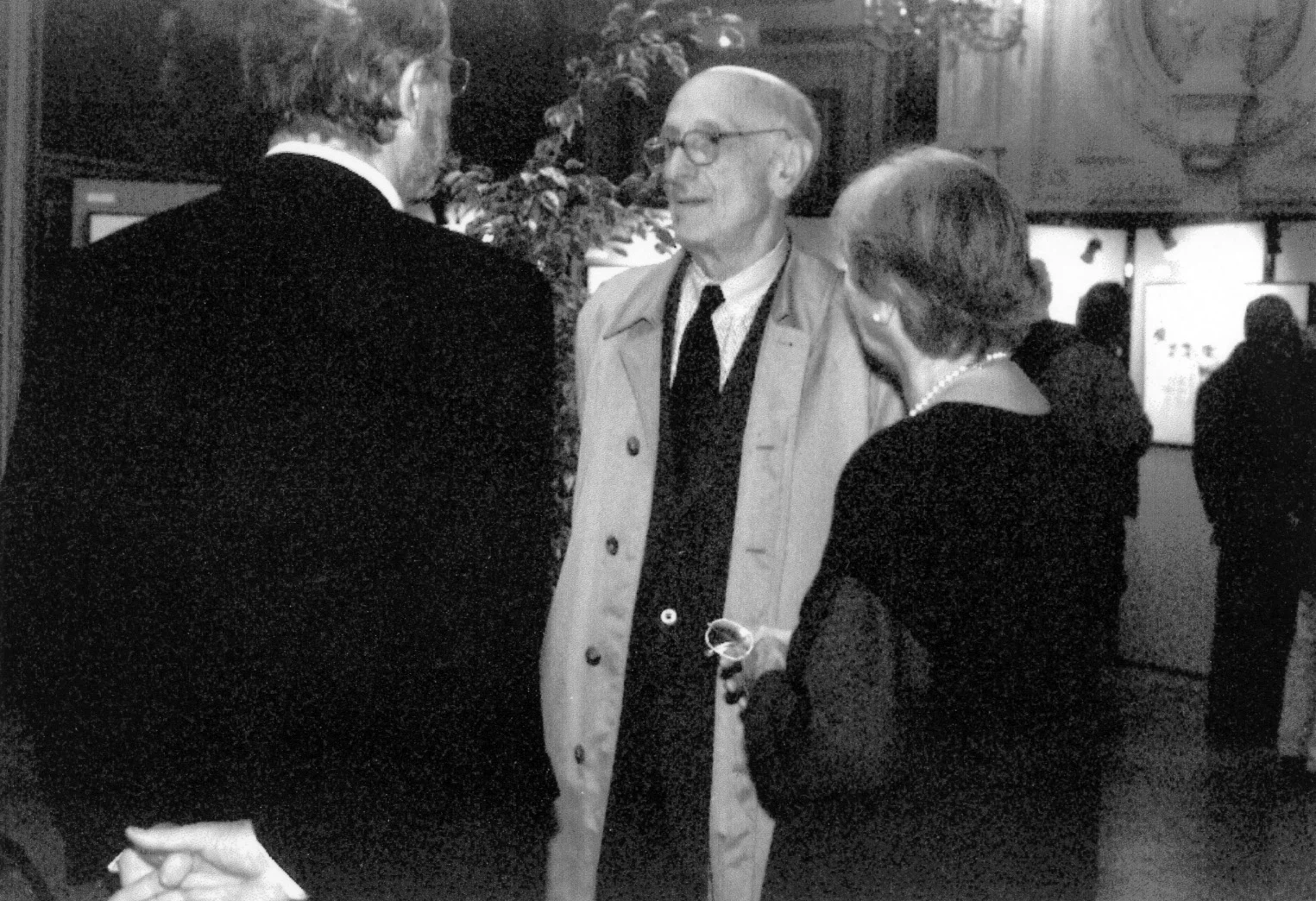
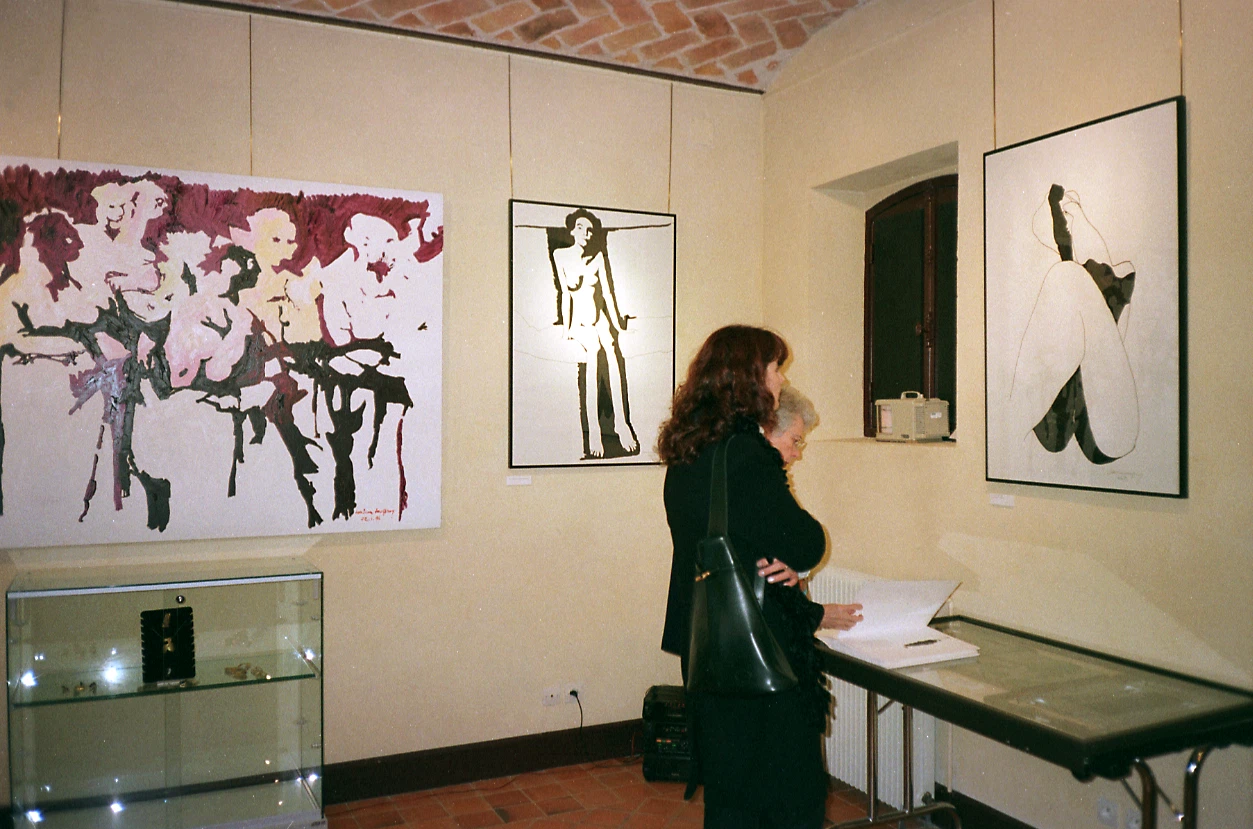
  • 1999: ‘Au Rendez-Vous Allemand’, forty large original drawings, Goussainville Cultural Centre. Contract for a book published by Camino Verde in ninety-nine copies and printed by Imprimerie Nationale.. Numerous exhibitions of the book and original drawings, including one in October 1999 at the Paris 11th district town hall in the presence of Georges Sarre, mayor of the district and Jérôme Lindon (Éditions de Minuit, publisher of the aforementioned poems by Paul Éluard). Maison Elsa-Triolet-Aragon.
  • 2000: ‘Au Rendez-Vous Allemand’. Memorial to the unknown Jewish martyr, Champigny town hall (94).
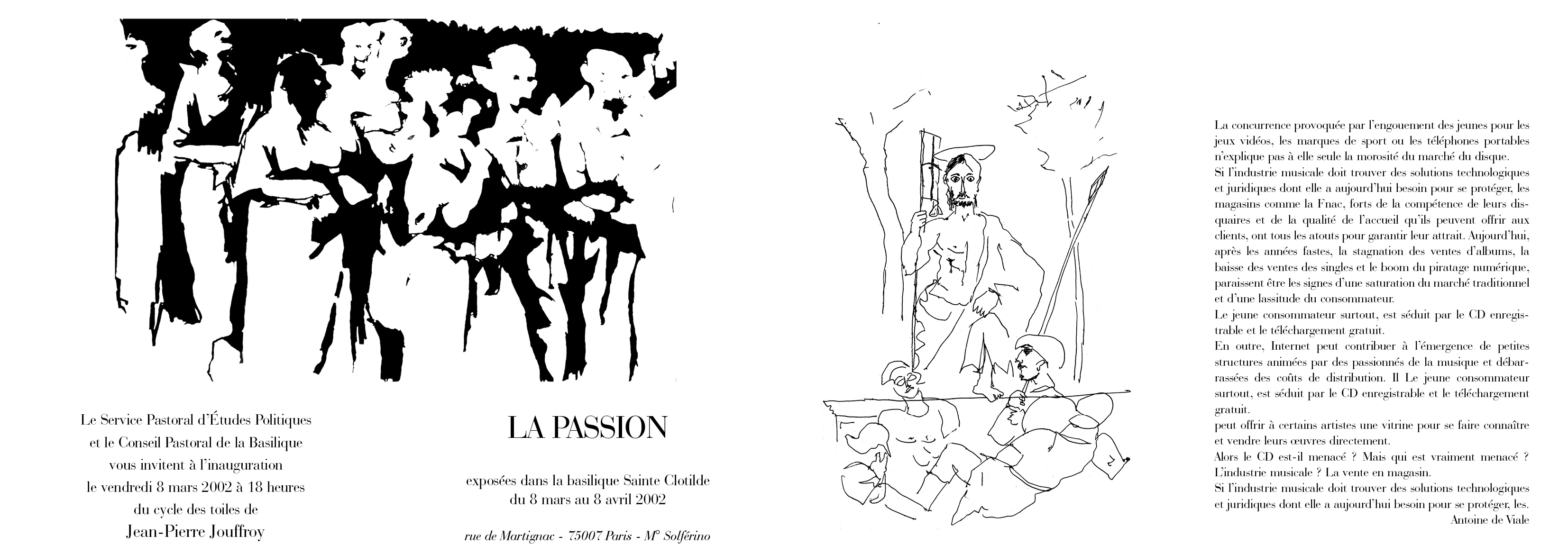
  • 2002: ‘La Passion’, basilique Sainte-Clotilde, Paris.
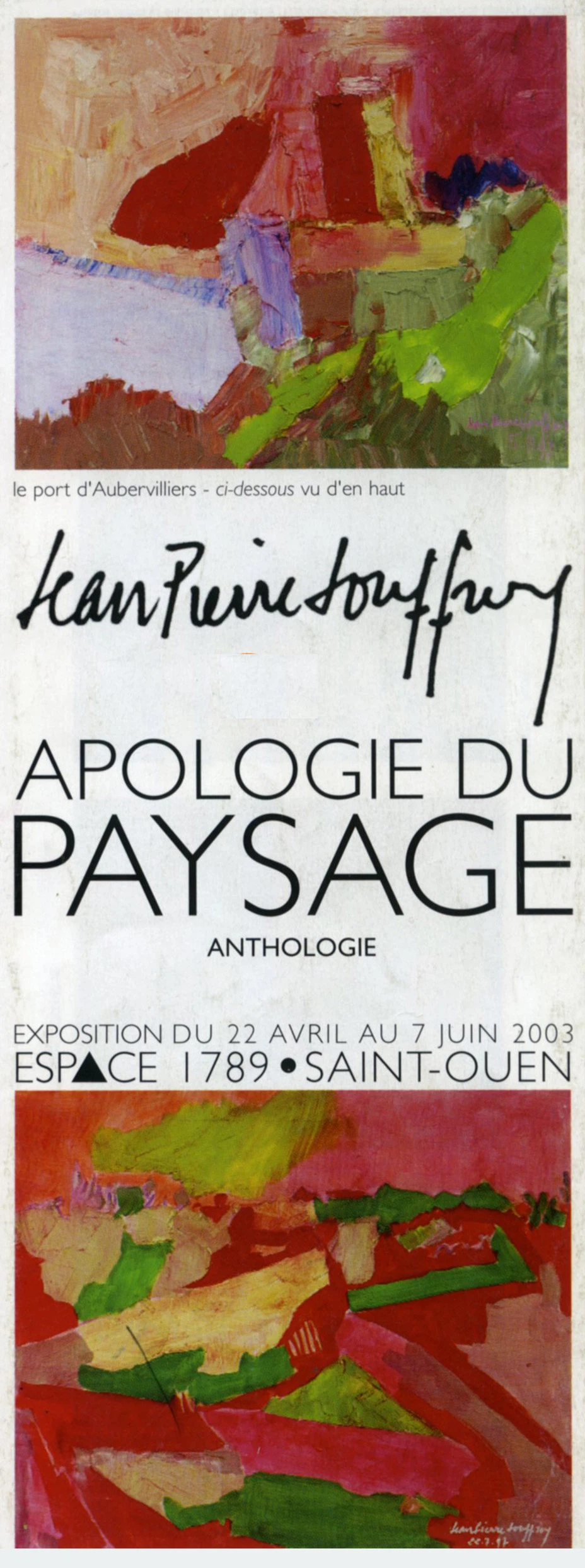
  • 2003: ‘Apologie du Paysage’, one hundred canvases, Espace 1789, Saint-Ouen (93).
  • 2004: ‘Madame Matisse et Cie’, engravings and paintings, Galerie Sérénade, Dinard (35). ‘Au Rendez-Vous Allemand’, Médiathèque Maupassant, Bezons.
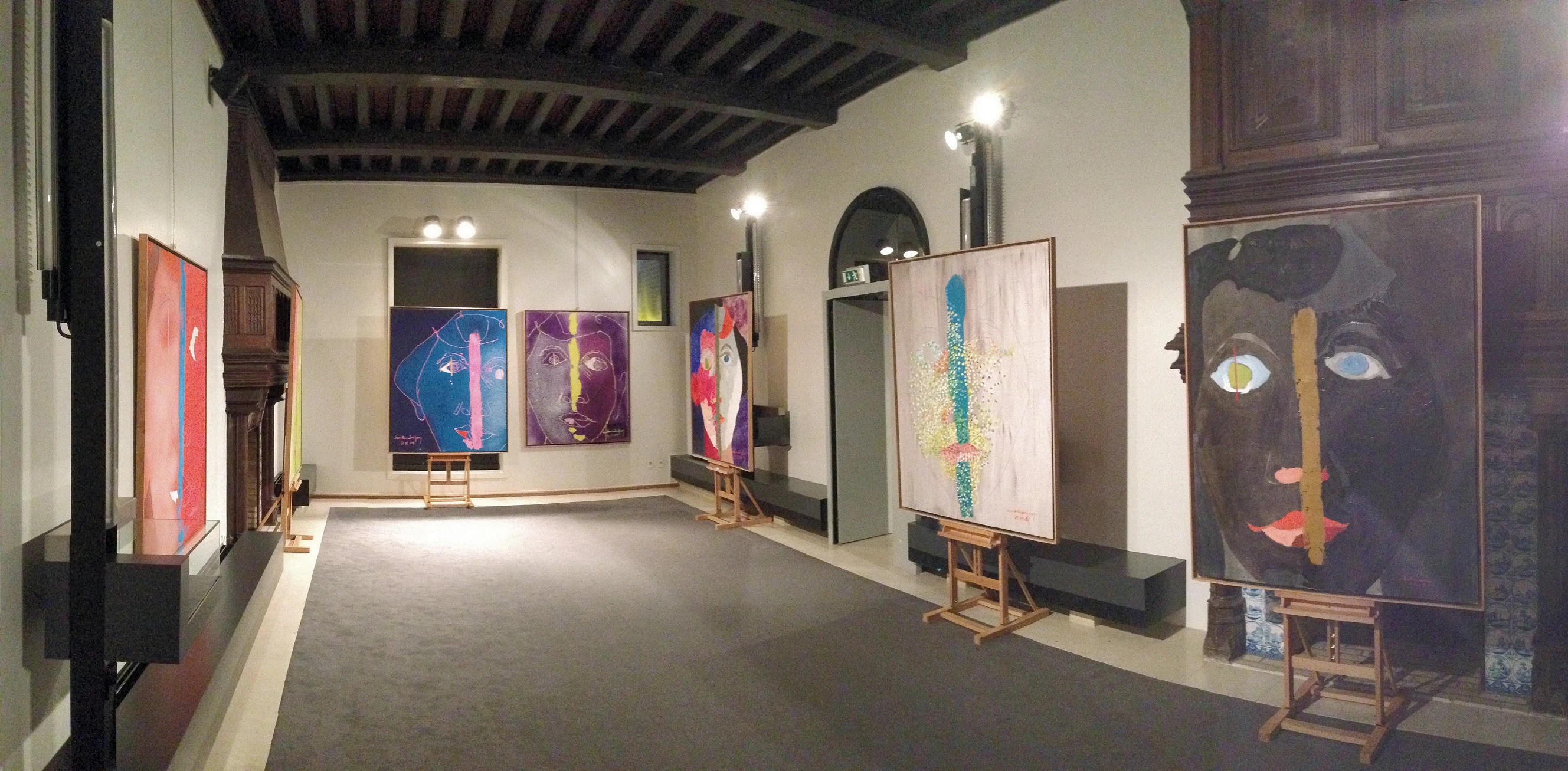
  • 2005: ‘Hommage à Madame Matisse’, twelve canvases measuring 1.60 m x 1.32 m, Municipal Arts Centre, Feignies (59).
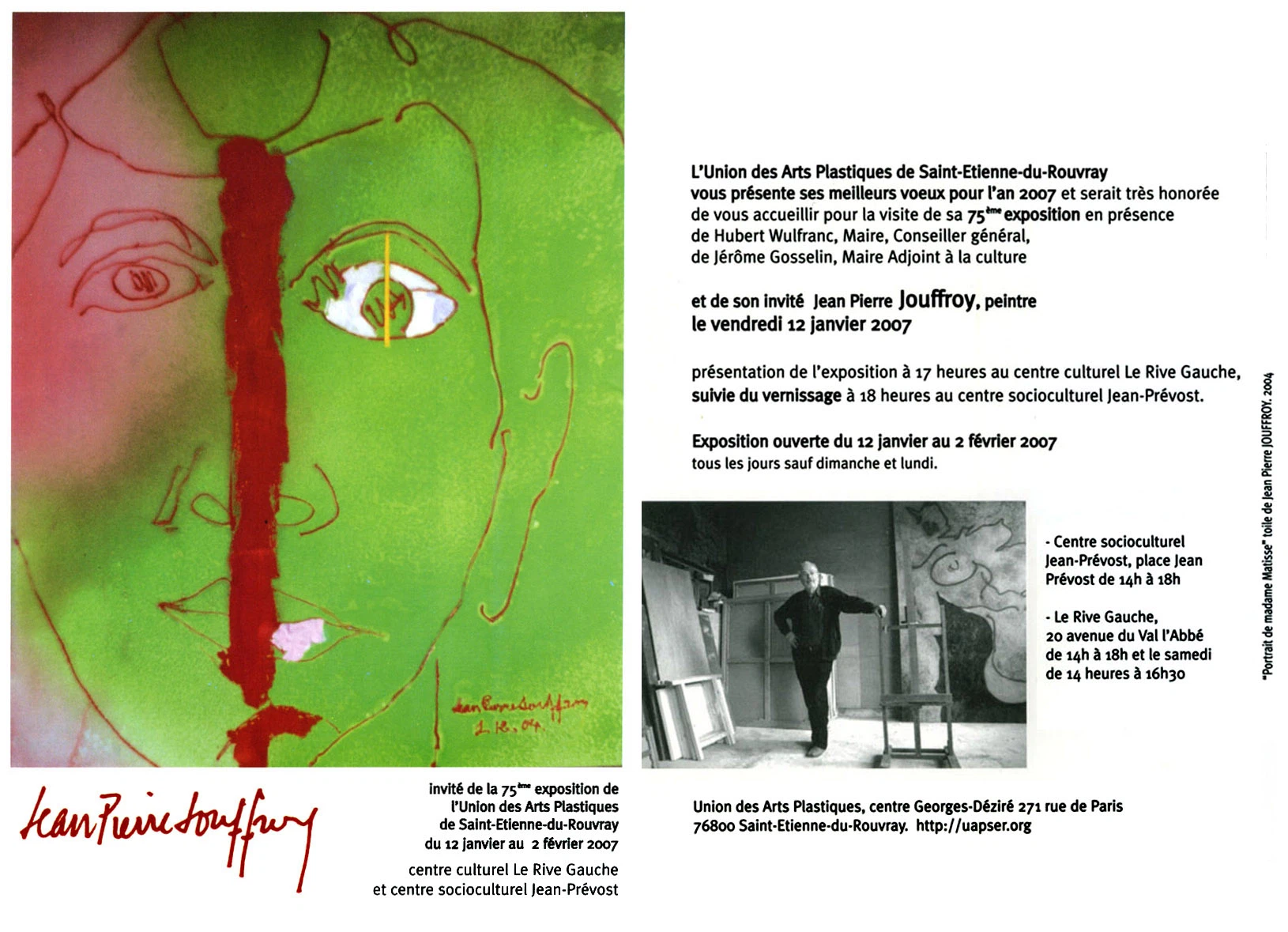
  • 2007: Guest of honour at the Union des Arts Plastiques, Saint-Étienne-du-Rouvray (76).
  • 2008: ‘Petits formats’, Galerie de la Butte-aux-Cailles, Paris (75). ‘Painters and the Algerian Revolution’, Algiers (Algeria). One-week course on printmaking techniques in Feignies (59).
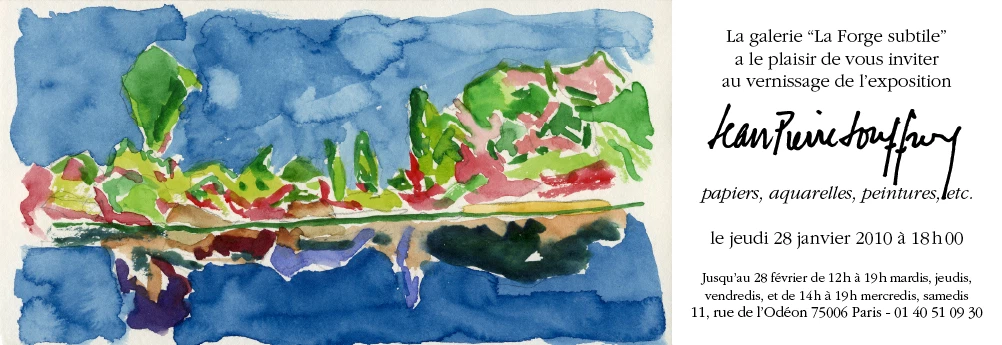
  • 2010: ‘Papiers, Peintures, Aquarelles, etc.’, Galerie La Forge subtile, Paris (75).
  • 2012: Lecture in Sorgues on Braque and Picasso in 1912. ‘Postures’, Pôle culturel Camille Claudel, Sorgues.
  • 2013: ‘Stationnement Interdit, Olympia l’Instant d’Après’ Saint-Maximin (60). Galerie Rodolphe de Spoelberch, Brussels (Belgium). ‘Paintings, Engravings’, Galerie du Château de l’Étang, Saran (45).  ‘Trajectoires’, retrospective at the headquarters of the French Communist Party, Paris (75).
  • 2014: ‘Hommage à Mme Matisse, Olympia l’Instant d’Après’, Julio-Gonzalez Municipal Gallery, Arcueil (94).

WORKS IN PUBLIC COLLECTIONS

  • Centre Pompidou (Georges Pompidou National Centre of Art and Culture), Paris. City of Paris.
  • City of Paris.
  • Val-de-Marne Museum of Contemporary Art (Vitry-sur-Seine 94)
  • Chicago Art Institute (USA).
  • Brandeis University (USA).

EXHIBITIONS AT THE Fête de l'humanité Festival

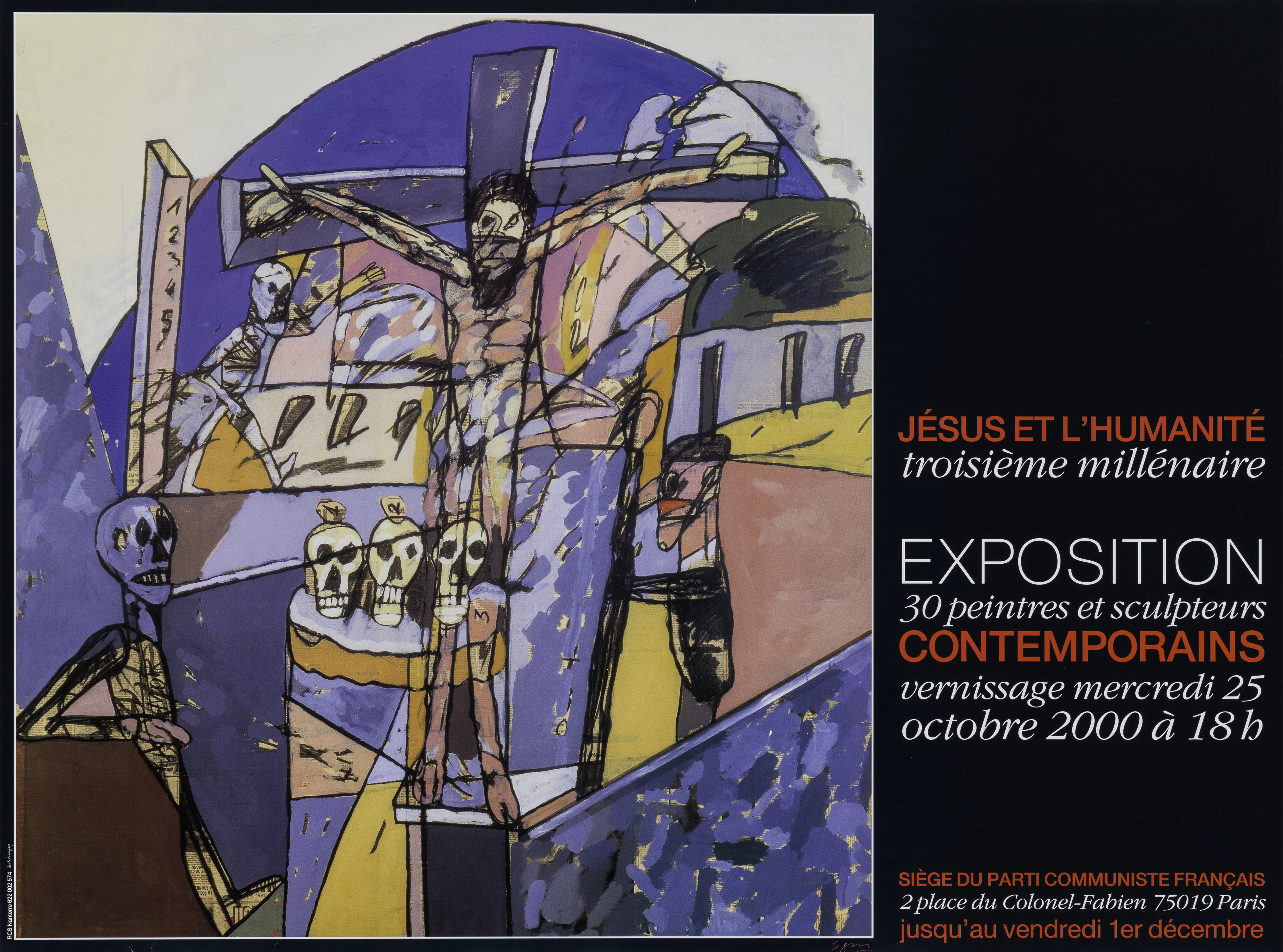
Curator of the « ‘Jesus and Humanity’ » exhibition in 2000 at the headquarters of the French Communist Party.

DISTINCTIONS

  • 1957: Prix Pacquement from the Société des Amis du Musée d’Art Moderne.
  • 1977: Prix de l’Académie Française for the book ‘Le Jardin des Délices de Jérôme Bosch, Grandeur Nature’.
  • 1999: Knight of the National Order of Merit.
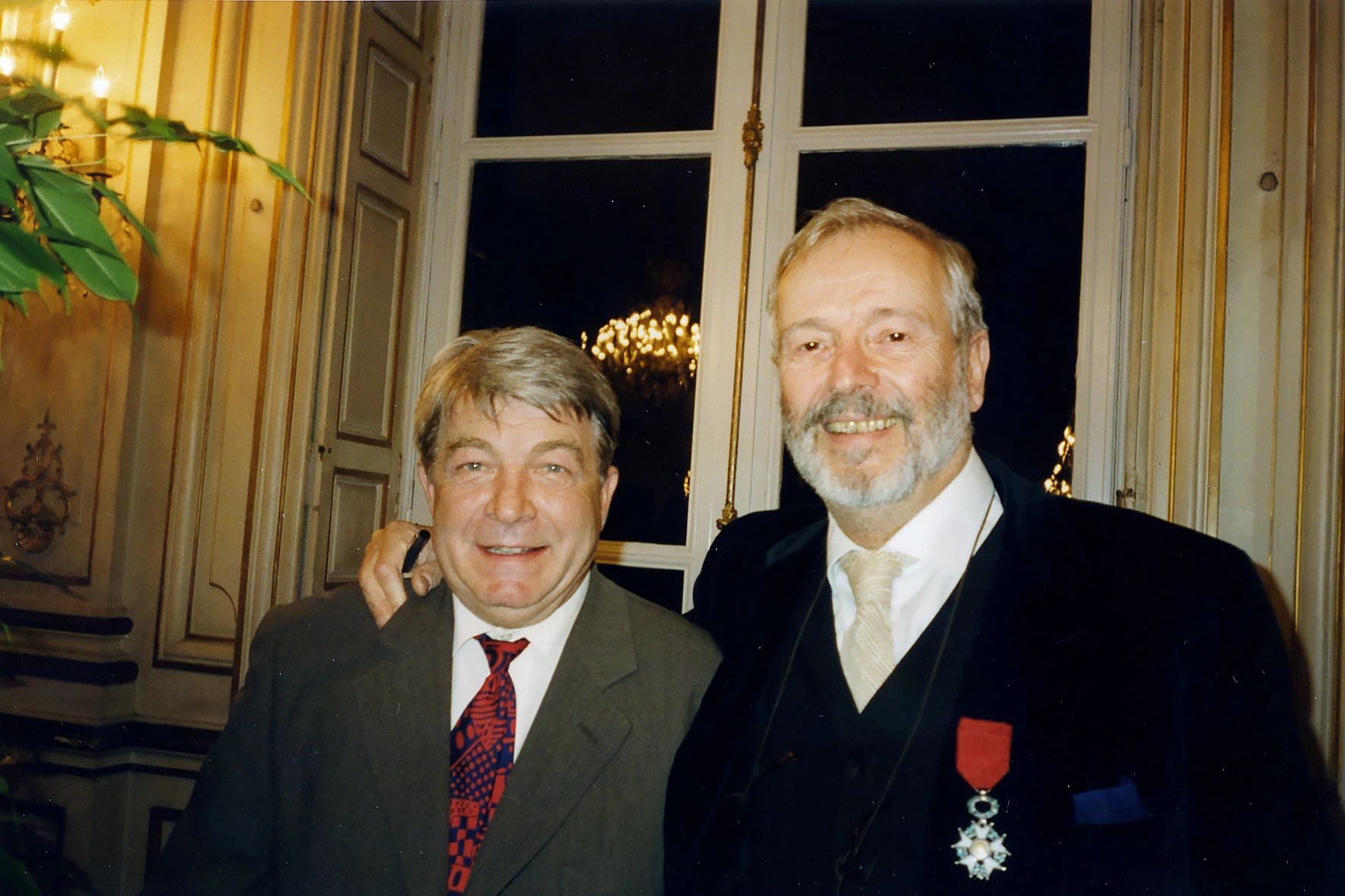
  • 2001: Knight of the Legion of Honour.
Our warmest thanks go to the photographers and creators without whom there would be no images on this site, and to everyone who helped us gather together the content, with a special mention for: Isabelle Repiton Bloncourt for Gérald Bloncourt, Ivan Chaumeil, Maxime Courban, Michel Dumoulin, François Féret, Claude Guibert, the INA, Daniel Lemaitte, Valérie Manuel and Présence Protestante, Chantal Marfaing, Alberto Martinez, Pierre Trovel, Sophie, Iban and Sylvain Sangla for Raoul Sangla, Jean Daniel Verhaeghe.